Akita Rose Academy
Discover Rosa damascena, Rose Water and Natural Skincare Through Science

About the Course
Discover the Rose Through Science, Tradition and Experience
Akita Rose Academy is an educational platform created to provide clear, reliable and accessible information about Rosa damascena, Isparta rose water, rose distillation, rose essential oil, natural skincare and botanical cosmetics.
The Academy brings together scientific knowledge, traditional rose-growing culture and Akita’s more than 30 years of production experience. Its purpose is to help consumers, skincare professionals and everyone interested in roses understand what genuine rose water is, how it is produced and why botanical origin and production methods matter.
From the Rose Fields of Isparta to the Bottle
The quality of rose water begins long before the distillation process. It starts in the rose field with the correct botanical species, suitable growing conditions, careful cultivation and harvesting at the appropriate time.
Akita Rose Academy explores every stage of this journey:
The botanical identity and characteristics of Rosa damascena
The importance of Isparta as a rose-growing region
Traditional cultivation and early-morning harvesting
Water and steam distillation methods
The relationship between rose water and rose essential oil
The natural composition and aroma of rose distillate
Laboratory analysis and quality-control practices
The use of rose water in skincare and personal-care routines
The correct interpretation of cosmetic labels and INCI names
By following the rose from the field to the finished product, readers can better understand the factors that influence the identity, aroma, composition and quality of rose water.
Understanding Rosa damascena
Not every fragrant rose is the same. Many roses are cultivated primarily for their colour, flower shape or decorative appearance. Rosa damascena, commonly known as the Damask rose, is valued for the naturally occurring aromatic compounds found in its delicate flowers.
In Isparta, Türkiye, Rosa damascena has been cultivated for generations as an oil-bearing rose. The region’s climate, altitude, agricultural traditions and specialized production knowledge have contributed to its internationally recognized rose culture.
The Academy explains why Rosa damascena is important, how it differs from ornamental roses and why its botanical identity should be considered when evaluating rose-derived products.
What Is Genuine Rose Water?
The term “rose water” is used for products made in very different ways. Some products are genuine flower distillates, while others may be water-based formulations made with added fragrance, rose aroma, essential oil, preservatives or other ingredients.
For this reason, products carrying the same general name may differ considerably in their composition, concentration, aroma and intended use.
Akita Rose Academy helps readers understand:
How authentic rose distillate is produced
The difference between distilled rose water and fragranced water
What happens when rose essential oil is separated
What remains when the naturally occurring rose oil is not removed
Why transparency about ingredients and production is important
How to read the ingredient list on a rose water product
This knowledge allows consumers to make more informed and confident product choices.
Rose Distillation and Production Methods
Distillation is at the heart of traditional rose-water production. However, the resulting product can vary depending on the amount of flowers used, the distillation system, processing conditions and whether the rose essential oil is separated after distillation.
The Academy examines the science and practice of distillation in understandable language. It also explains how harvest time, transportation, temperature, storage and processing speed can influence the preservation of naturally occurring aromatic components.
Understanding these details is essential because the quality of finished rose water cannot be evaluated by fragrance alone.
The Importance of Laboratory Analysis
Sensory qualities such as fragrance, clarity and freshness provide useful information, but they do not replace scientific analysis.
Laboratory testing can help evaluate the physical, chemical and microbiological characteristics of a rose-water product. Depending on the purpose of the analysis, testing may examine factors such as pH, density, microbiological quality, stability and volatile aromatic composition.
Akita Rose Academy explains laboratory terminology in clear language so that readers can better understand what analysis reports show, and what they do not show.
The Academy also emphasizes the importance of interpreting results in relation to the product’s botanical source, production method, intended use and applicable cosmetic requirements.
Rose Water in Skincare
Rose water has a long history of use in beauty and personal-care traditions. Today, it is used in facial mists, toners, cleansers, masks, creams, serums, haircare products and many other cosmetic formulations.
Akita Rose Academy explores practical ways of incorporating rose water into a skincare routine while distinguishing traditional use, cosmetic function and scientific evidence.
Topics include:
Using rose water as a facial mist
Applying it after cleansing
Using it before moisturizers or facial oils
Incorporating it into clay and powder masks
Refreshing the skin throughout the day
Using rose water in hair and scalp routines
Storing rose water correctly
Understanding individual skin compatibility
Because every person’s skin is different, cosmetic products should always be used according to their directions and individual needs.
Reading Cosmetic Labels and INCI Names
Cosmetic labels can sometimes be difficult to understand. The Academy explains ingredient terminology such as Rosa Damascena Flower Distillate, the INCI name commonly used to identify distilled water obtained from Rosa damascena flowers.
Readers will learn why the botanical name matters, how ingredients are presented on cosmetic labels and why a familiar product name does not always reveal the complete formulation.
This section of the Academy is designed to make cosmetic information more transparent and easier to evaluate.
Tradition Supported by Knowledge
Rose water belongs to a rich cultural heritage extending across generations and regions. Traditional knowledge remains valuable, but modern consumers also need accurate information, transparent production practices and responsible communication.
Akita Rose Academy respects the cultural history of the rose while examining it through botany, chemistry, cosmetic science and laboratory analysis.
The goal is not to make exaggerated promises. It is to explain what is known, distinguish evidence from tradition and help readers recognize the importance of quality, origin and production.
The Akita Approach
Akita Rose Water is produced from oil-bearing Rosa damascena flowers cultivated in Isparta. The flowers are distilled while their naturally occurring aromatic components are still present, and the naturally occurring rose oil is not separated from the resulting rose water.
This production approach reflects Akita’s commitment to preserving the relationship between the flower, its geographical origin and the resulting distillate.
Through Akita Rose Academy, we share the knowledge and experience behind this journey—from the rose fields of Isparta to the bottle.
Begin Your Rose Academy Journey
Explore the Academy section by section to discover:
The botanical world of Rosa damascena
Isparta’s rose-growing heritage
Rose harvesting and distillation
Rose water and rose essential oil
Scientific analysis and quality
Natural skincare applications
Cosmetic ingredients and terminology
Frequently asked questions about rose-derived products
Whether you are discovering rose water for the first time or seeking a deeper understanding of its production and composition, Akita Rose Academy invites you to explore the rose with curiosity, knowledge and confidence.
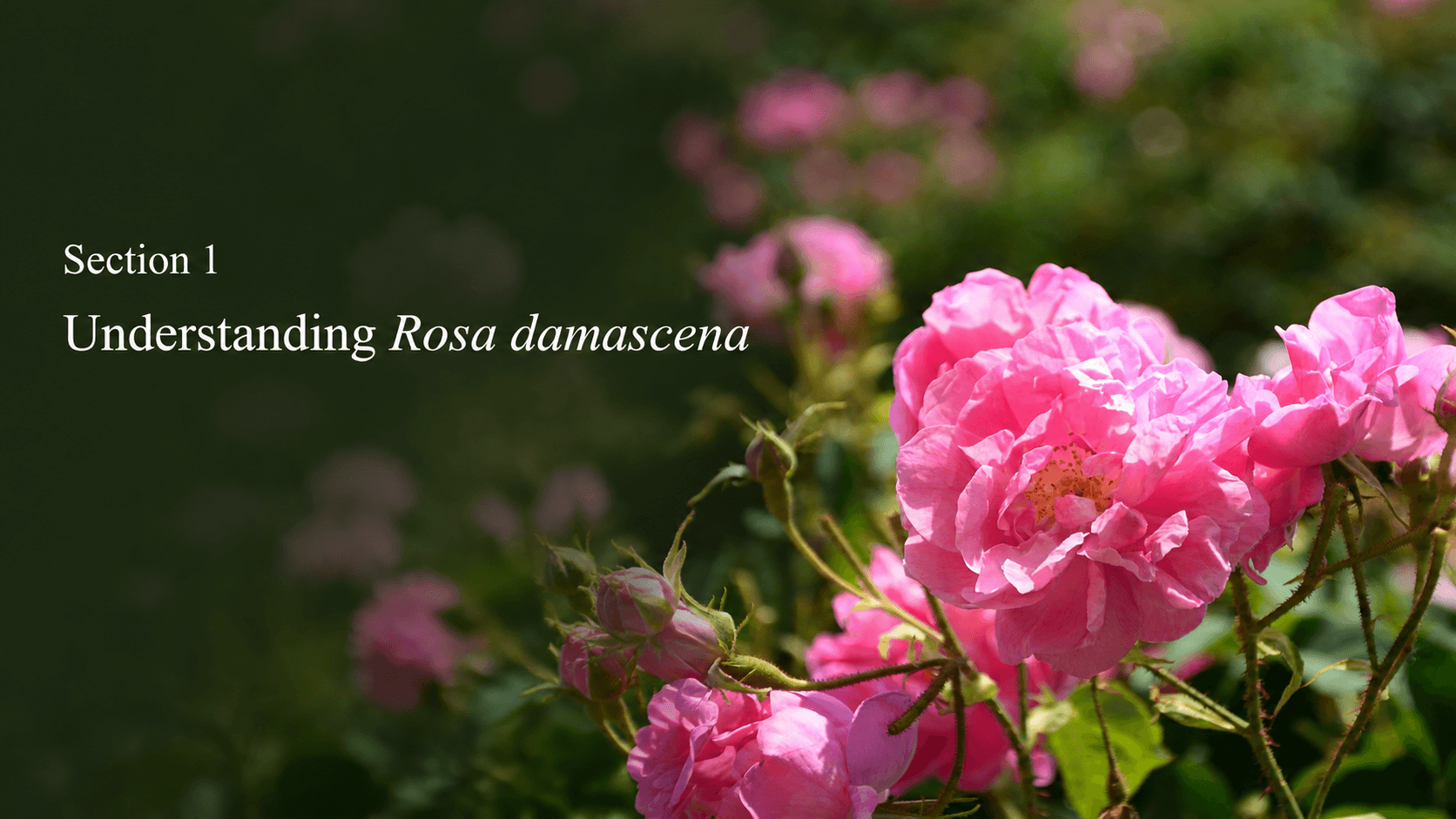
Understanding Rosa damascena
Begin your journey into the world of Rosa damascena, the treasured aromatic rose cultivated in Isparta, Türkiye.
In this section, you will discover the botanical identity and characteristics of Rosa damascena, why it is known as the Isparta Rose, its importance around the world and how it differs from other fragrant and ornamental roses.
You will also learn how botanical origin, climate, growing conditions, harvesting traditions and production knowledge contribute to the identity and quality of rose-derived products.
This section provides the scientific and botanical foundation needed to better understand genuine rose water, rose essential oil and the journey of the Isparta rose from the field to the bottle.
Understanding Rosa damascena
The Botanical Identity, Global Importance and Distinctive Characteristics of the Isparta Rose
The History of Rosa damascena
A Journey from Damascus to Anatolia, from the Rose Fields of Isparta to the World
Why Is the Isparta Rose Famous Around the World?
A Rose Whose Fragrance Comes from Its Geography, Production Knowledge and Science
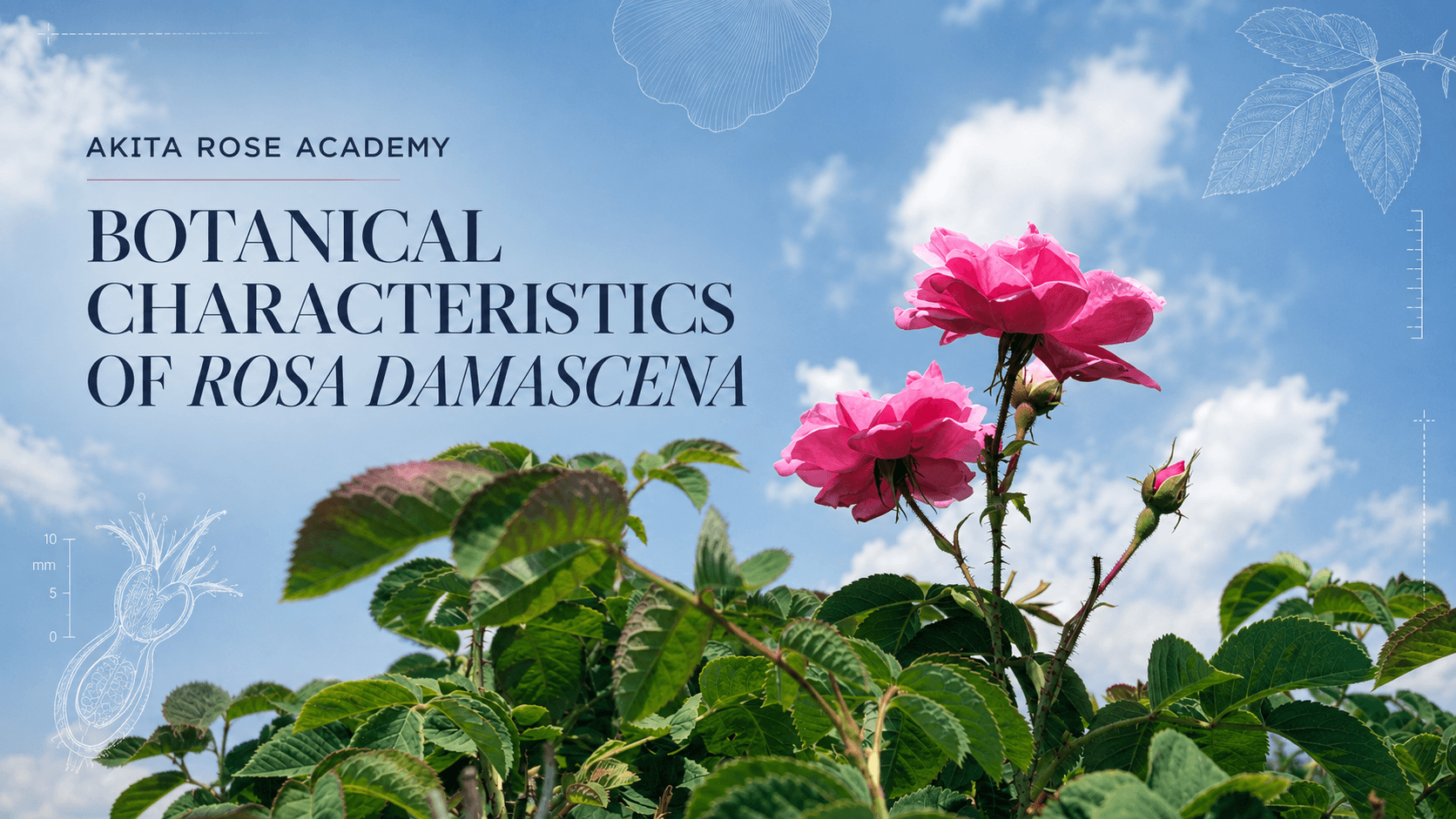
Botanical Characteristics of Rosa damascena
A Scientific Look at the Isparta Rose—from Plant Structure and Flowers to Rose Hips and Seeds
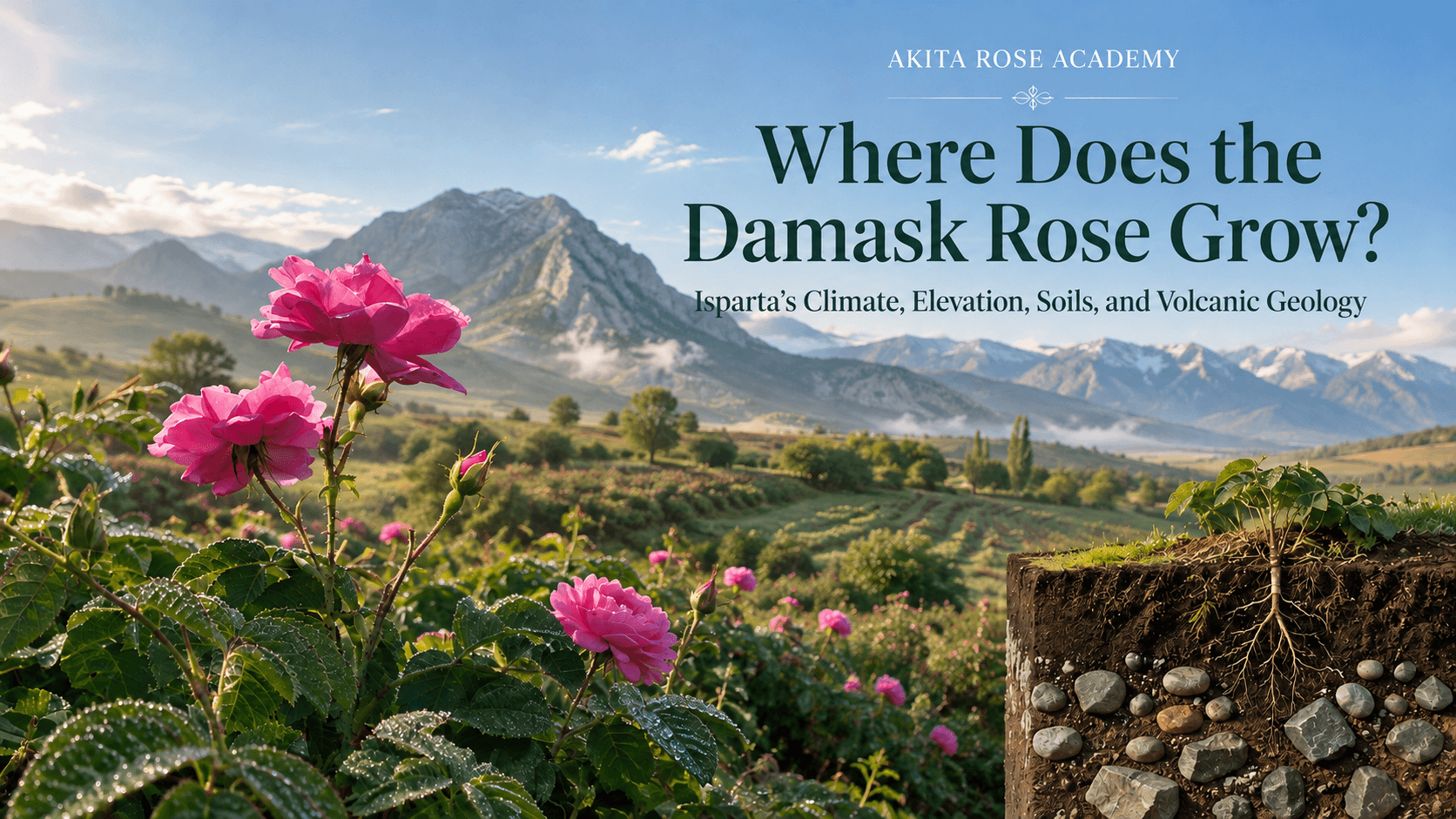
Where Does the Oil-Bearing Rose Grow?
Isparta’s Climate, Elevation, Soils, and Volcanic Geological History
How to Establish a Rose Garden
From Site Selection to Post-Planting Care for Oil-Bearing Rosa damascena
How to Care for Oil-Bearing Roses
Pruning, Irrigation, Fertilization, Soil Cultivation, and Weed Management
Rose Diseases and Pests
A Guide to Recognizing Rose Rust, Powdery Mildew, Aphids and Two-Spotted Spider Mites in Damask Rose Fields
Why Are Rose Flowers Harvested Early in the Morning?
How Morning Coolness, Dew, Temperature, and Post-Harvest Waiting Time Affect the Essential Oil Yield and Composition of Oil-Bearing Rose Flowers
How Are Roses Harvested?
A step-by-step guide to harvesting oil-bearing roses, from selecting the right flowers and using the proper picking technique to workforce planning and yield calculations
How Should Fresh Rose Flowers Be Stored?
How holding time, temperature, fermentation, and cold storage affect the essential oil yield and composition of oil-bearing rose flowers
Botany and Growing Conditions
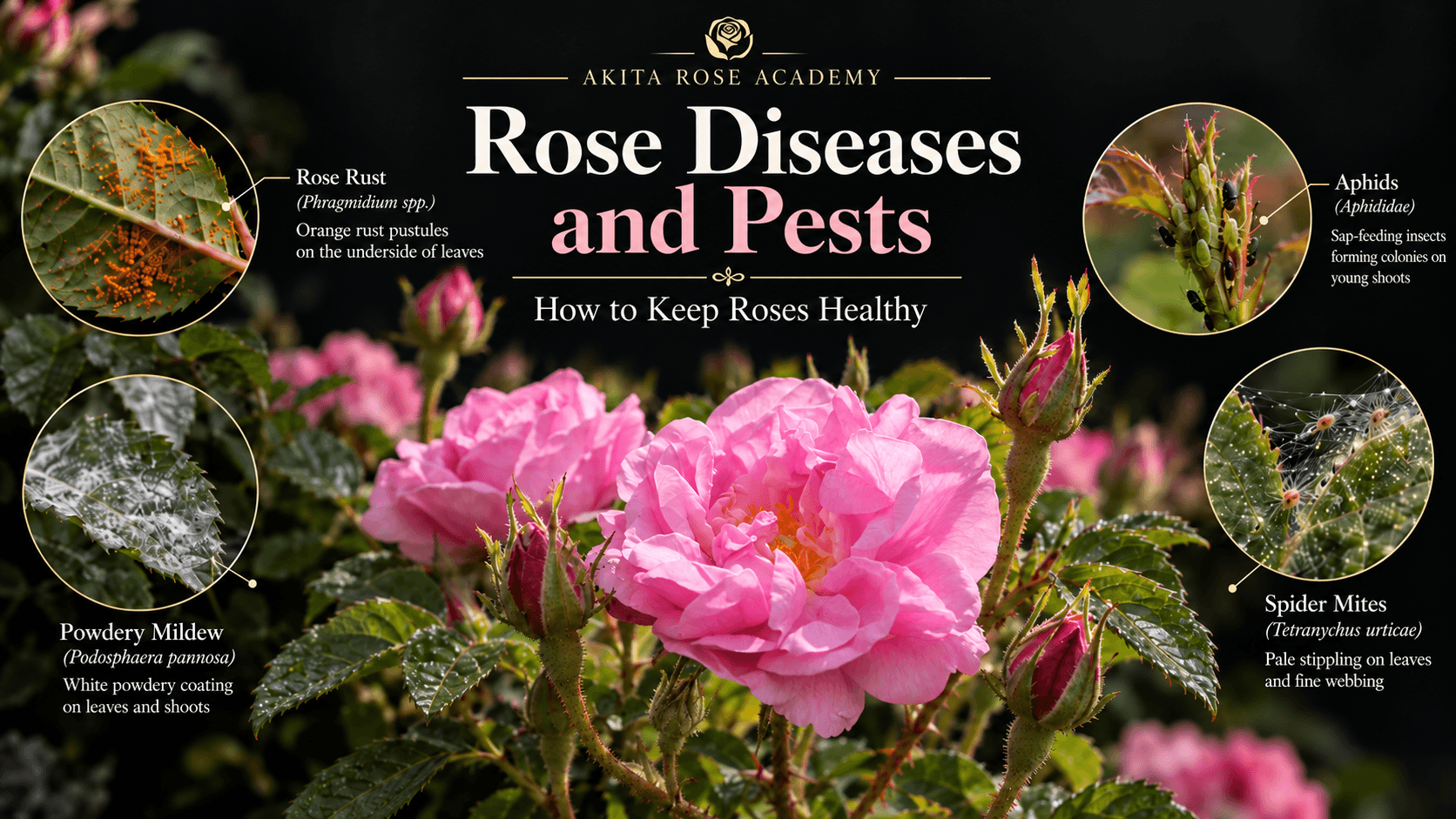
Rose Diseases and Pests | Akita Rose Academy
Learn to identify rose rust, powdery mildew, aphids and spider mites, with practical prevention and eco-friendly rose care tips for Canadian gardens.
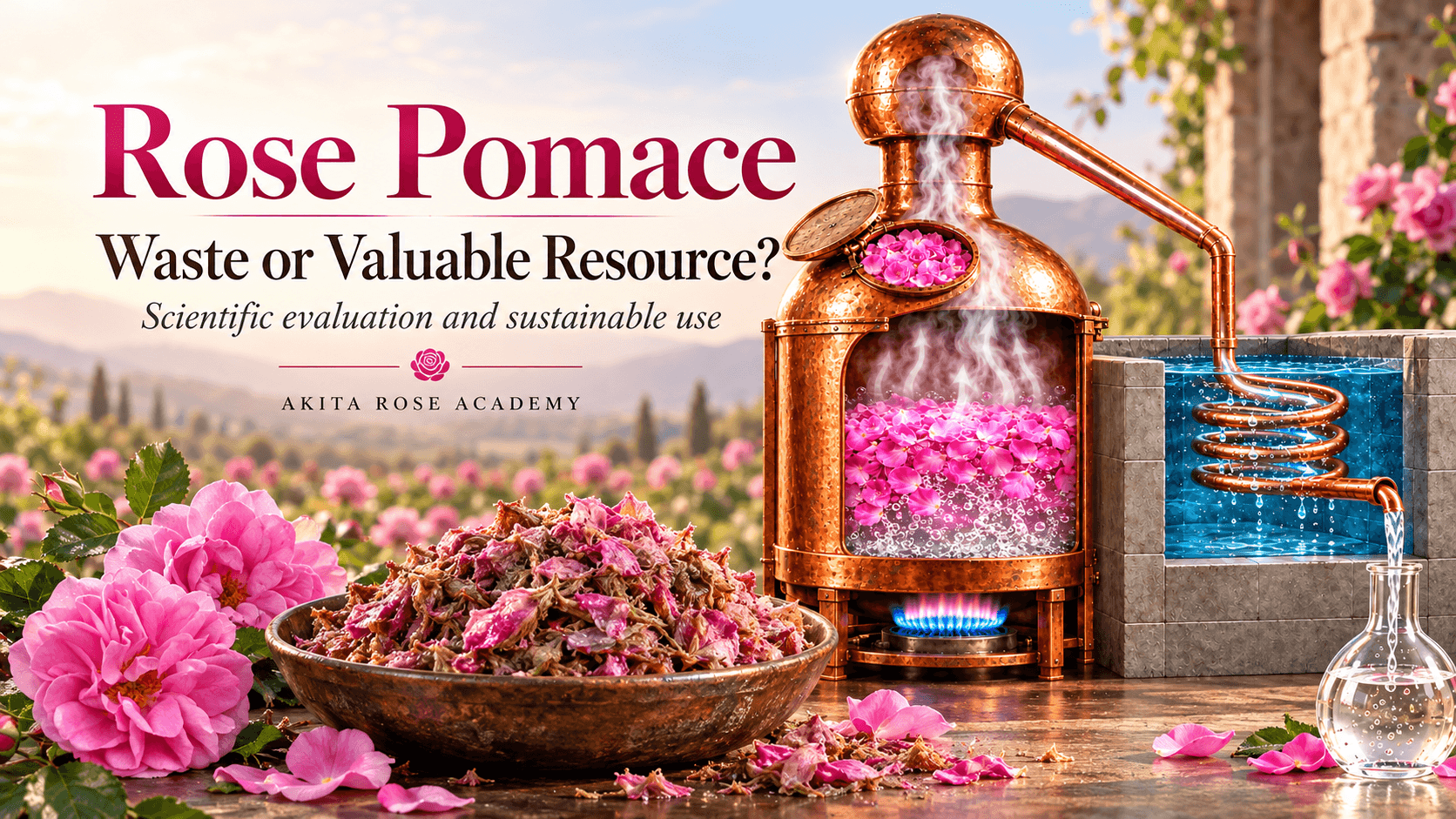
What Is Rose Pomace? A Scientific Perspective on Turning Waste into a Valuable Resource
The Composition, Environmental Impacts and Sustainable Applications of Residues from Rosa damascena Distillation
Oil-Bearing Rose Cultivation
Begin your journey into the world of Rosa damascena, the treasured aromatic rose cultivated in Isparta, Türkiye.
In this section, you will discover the botanical identity and defining characteristics of Rosa damascena, why it is known as the Isparta Rose, its global importance, and how it differs from other fragrant and ornamental roses.
You will also learn how botanical origin, climate, growing conditions, harvesting traditions, and production expertise contribute to the identity and quality of rose-derived products.
This section provides the scientific and botanical foundation needed to better understand authentic rose water, rose essential oil, and the journey of the Isparta Rose from the field to the bottle.
How Is an Oil-Rose Garden Established?
Rose Products and Production Methods
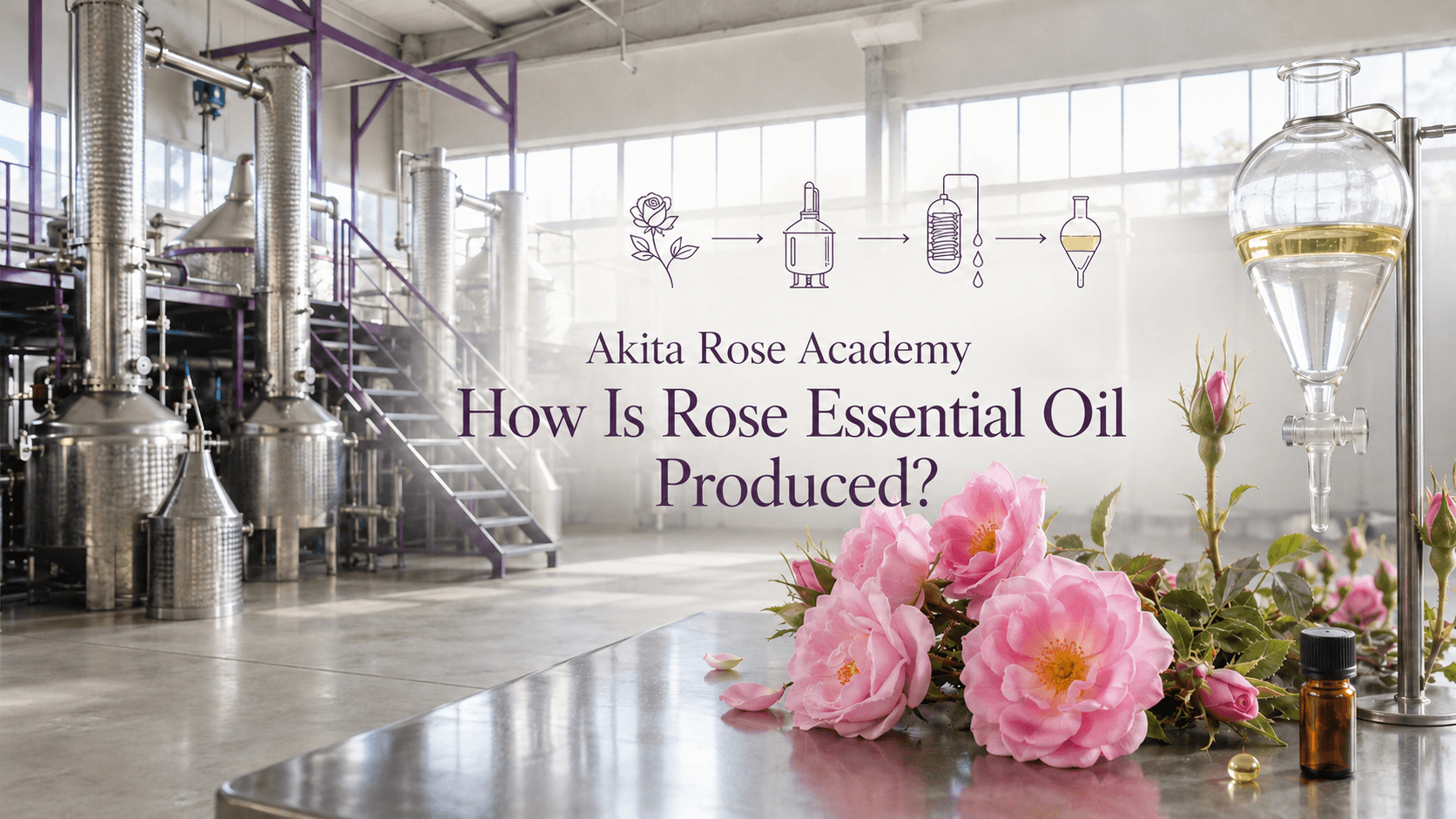
How Is Rose Essential Oil Produced?
Discover how Rosa damascena flowers are transformed into precious rose essential oil through harvesting, distillation, separation, cohobation and quality control.
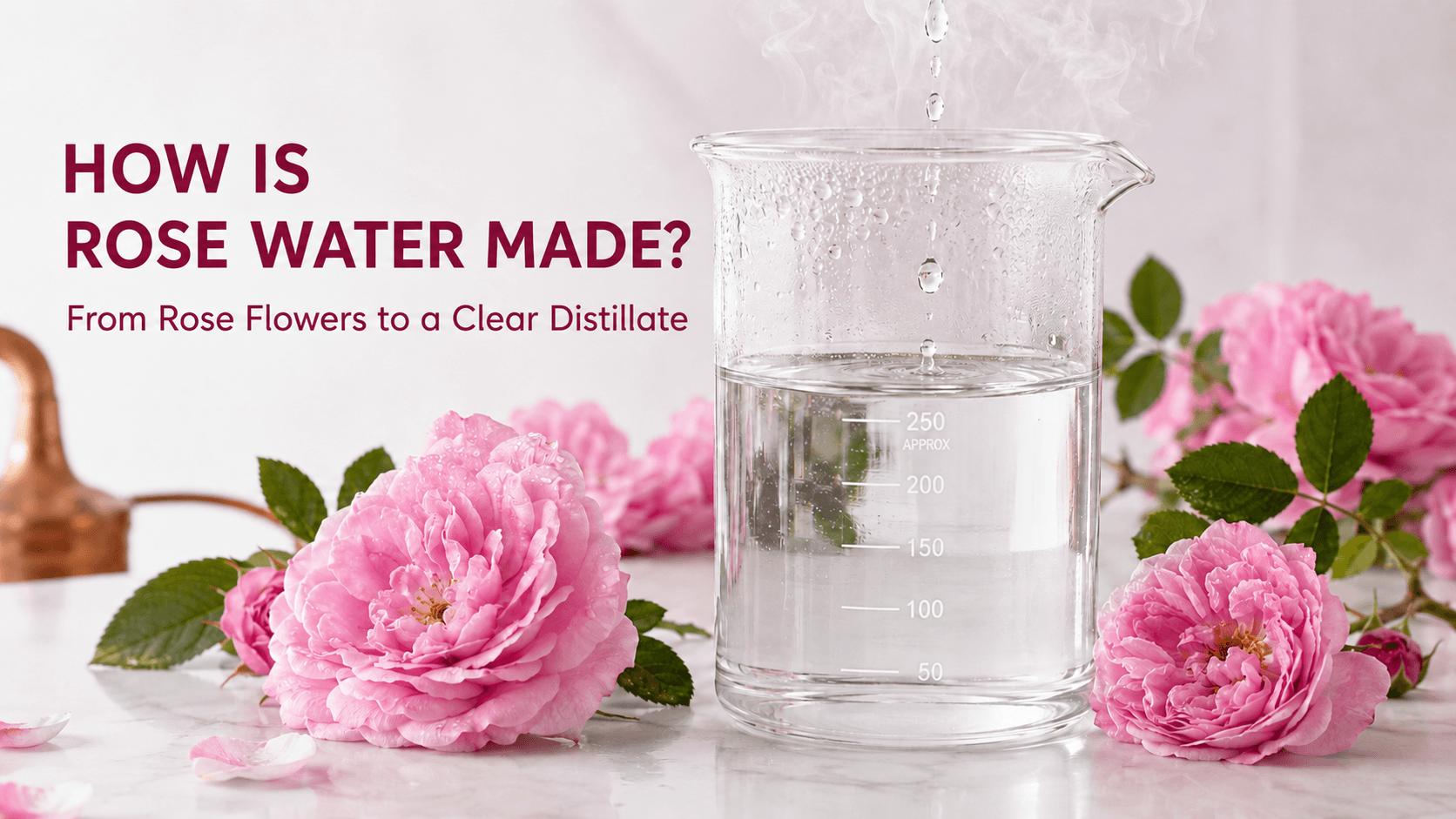
How Is Rose Water Produced?
From harvesting Rosa damascena flowers to distillation, condensation and hygienic bottling, discover how genuine rose water is produced and what determines its quality.
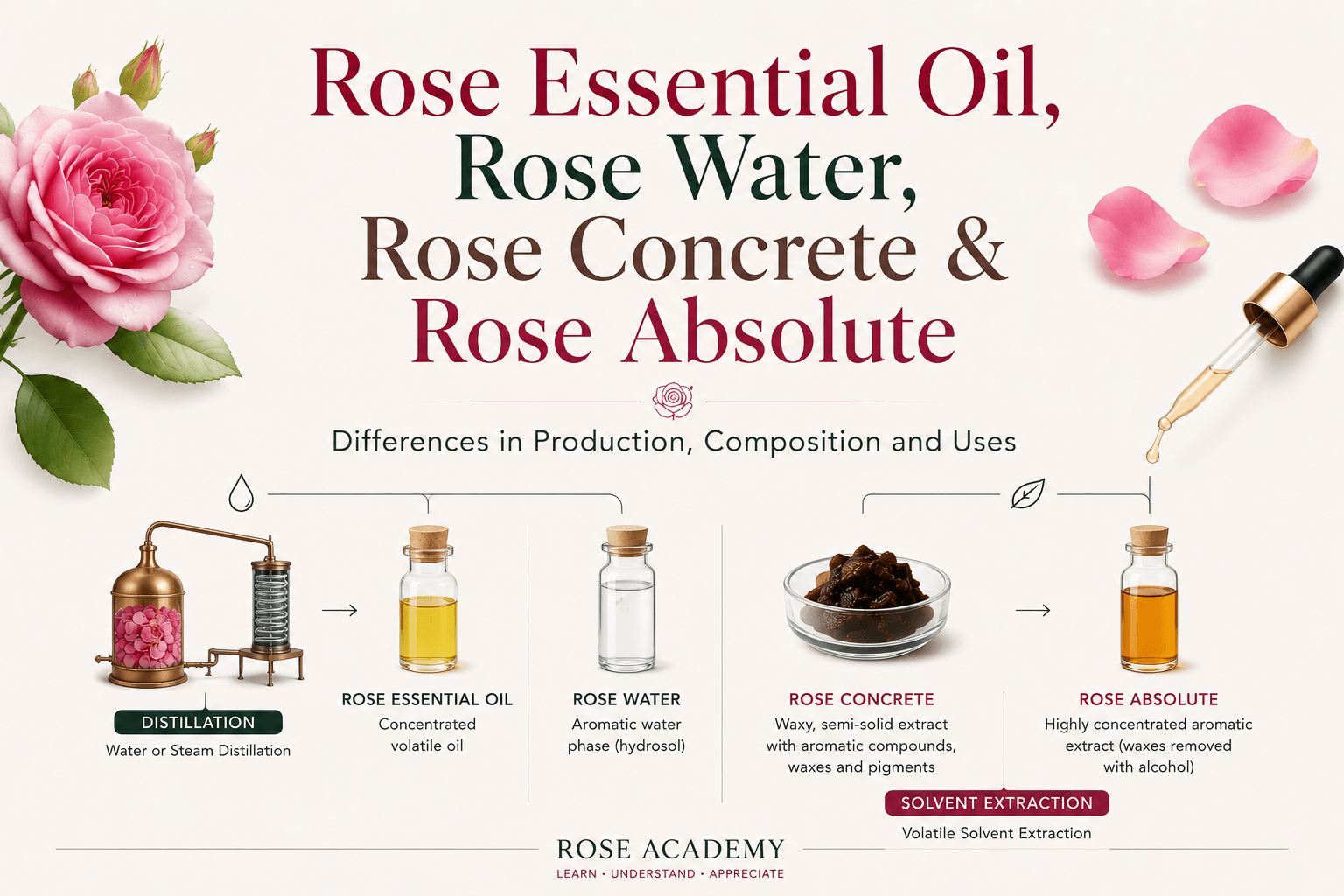
Rose Essential Oil, Rose Water, Rose Concrete and Rose Absolute: What Is the Difference?
Understanding How Distillation and Extraction Transform Rosa damascena into Distinct Aromatic Products
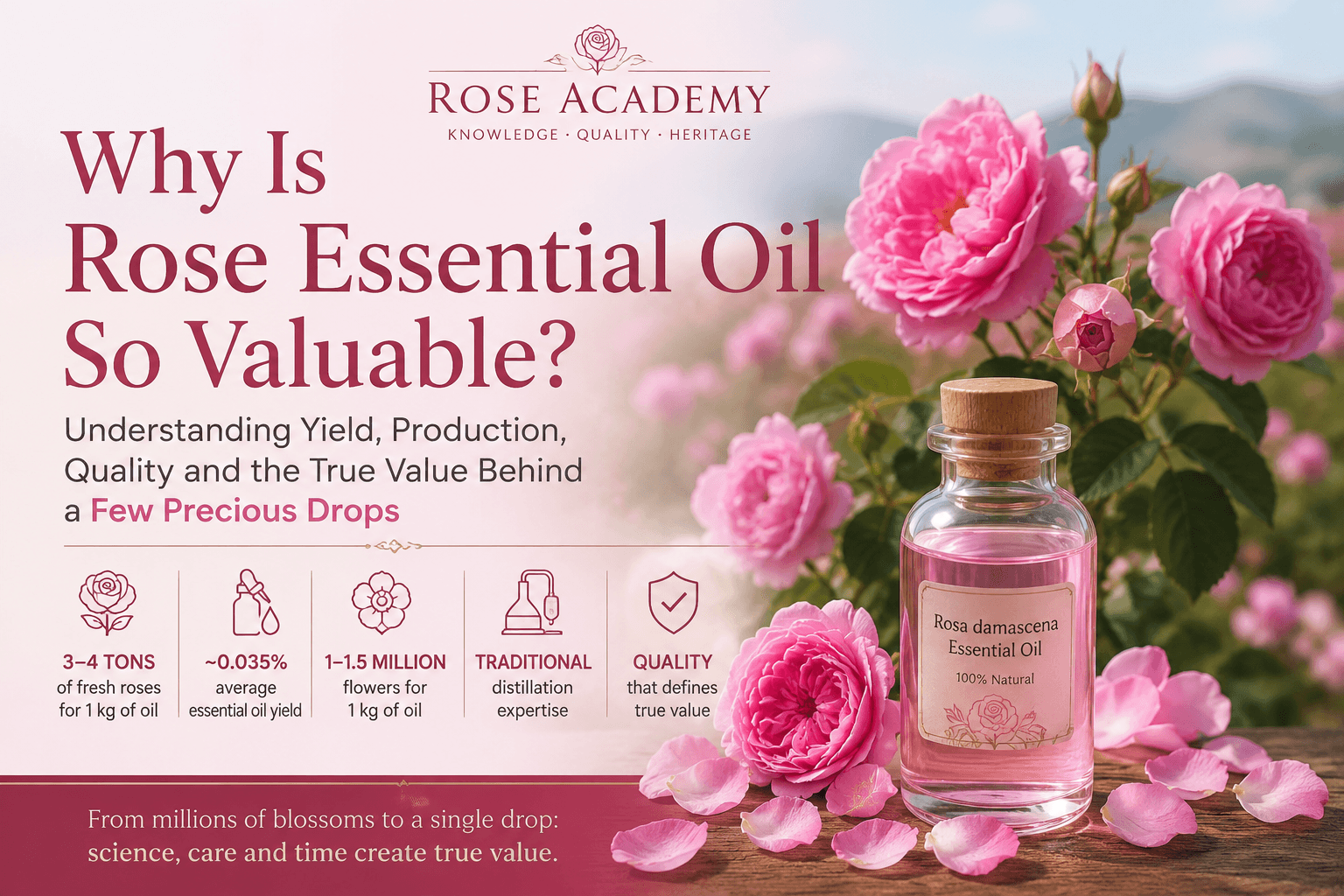
Why Is Rose Essential Oil So Valuable?
From Millions of Rosa damascena Blossoms to a Few Precious Drops: Understanding Rose Oil Yield, Distillation, Quality and Value
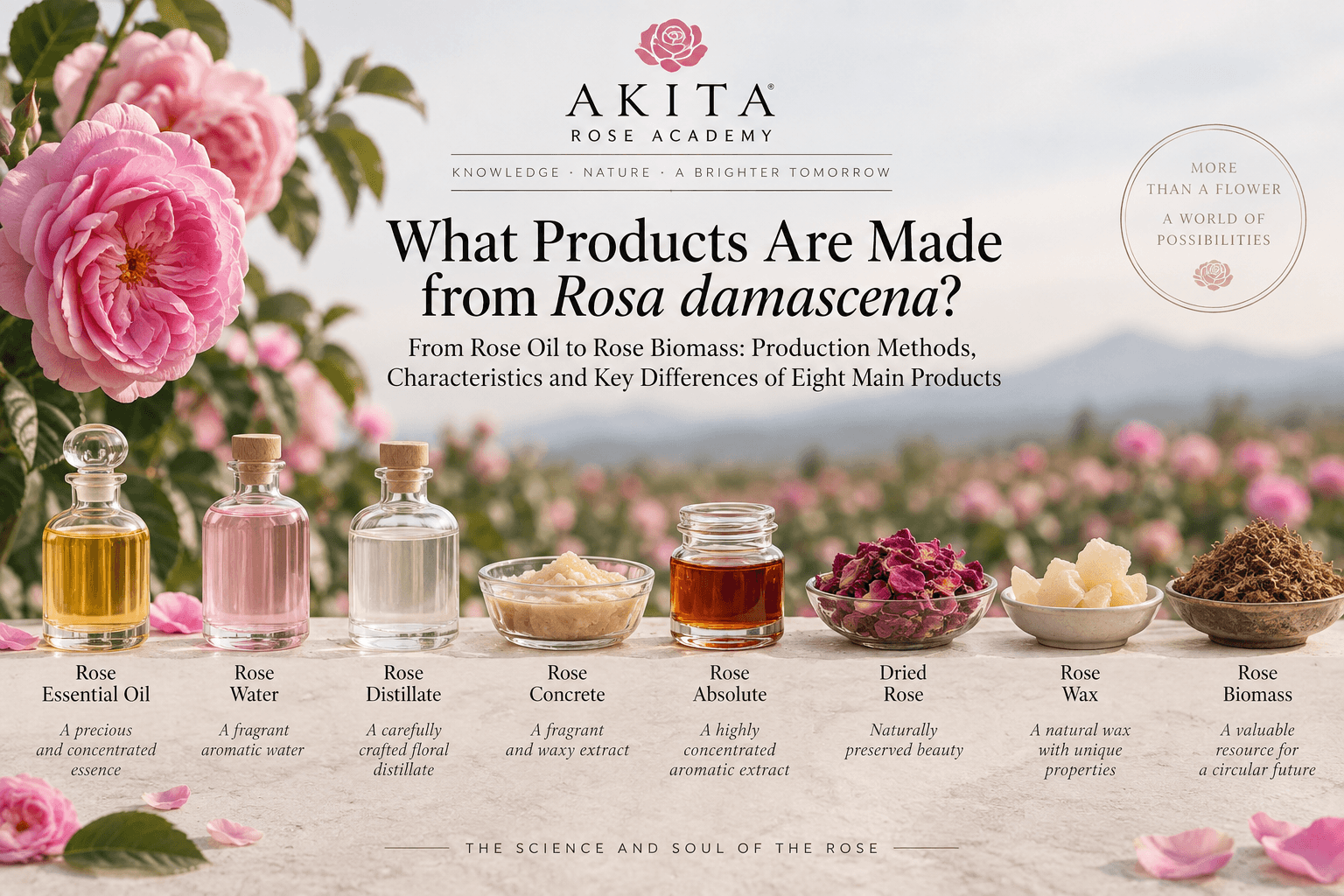
What Products Are Made from Rosa damascena Flowers?
From Rose Essential Oil to Rose Biomass: Production Methods, Characteristics, and Key Differences Among Eight Essential Rosa damascena Products
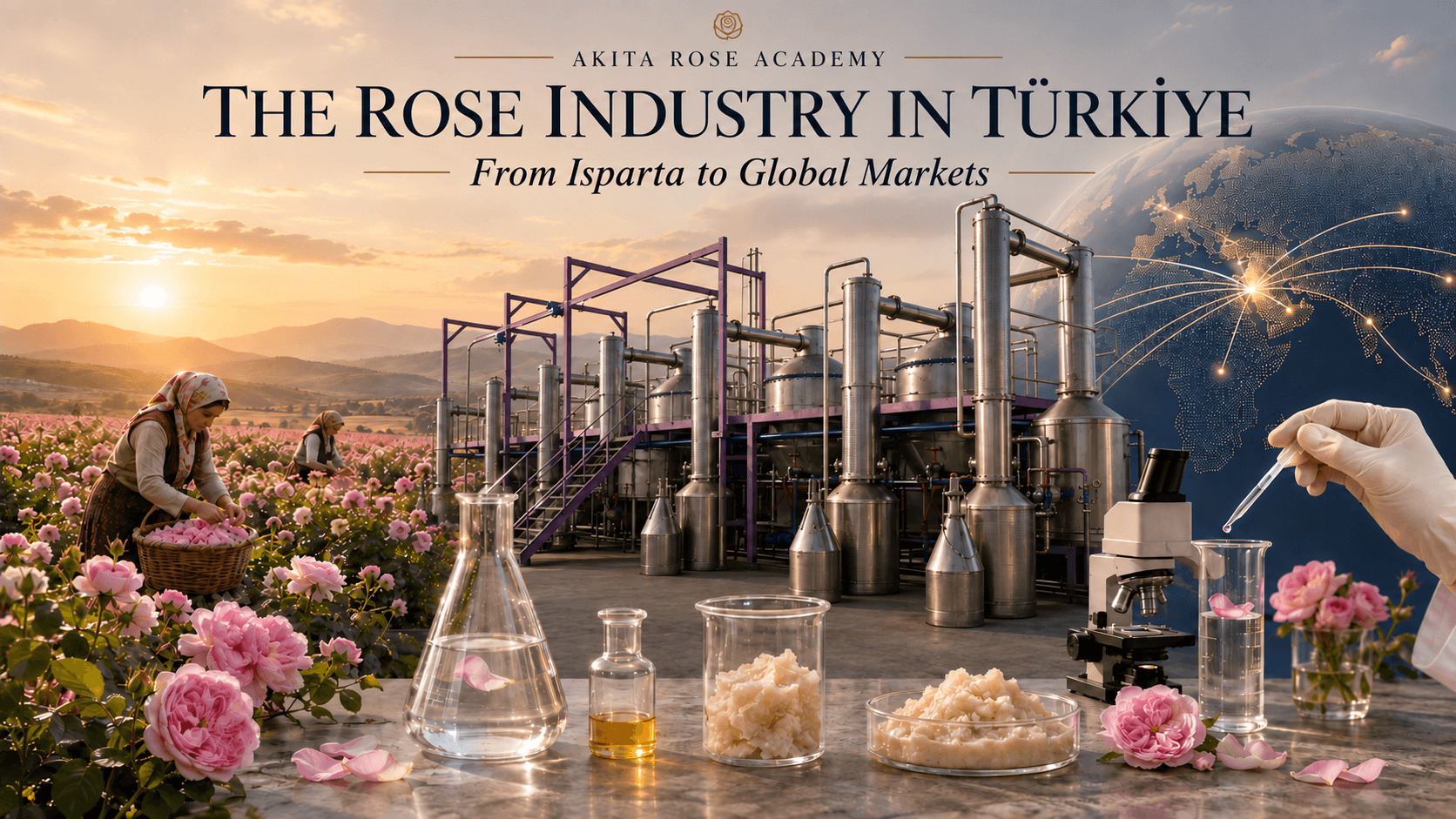
The Rose Industry in Türkiye: From Isparta to Global Markets
From Rosa damascena Cultivation to Rose Oil, Rose Water, Extracts and High-Value Products
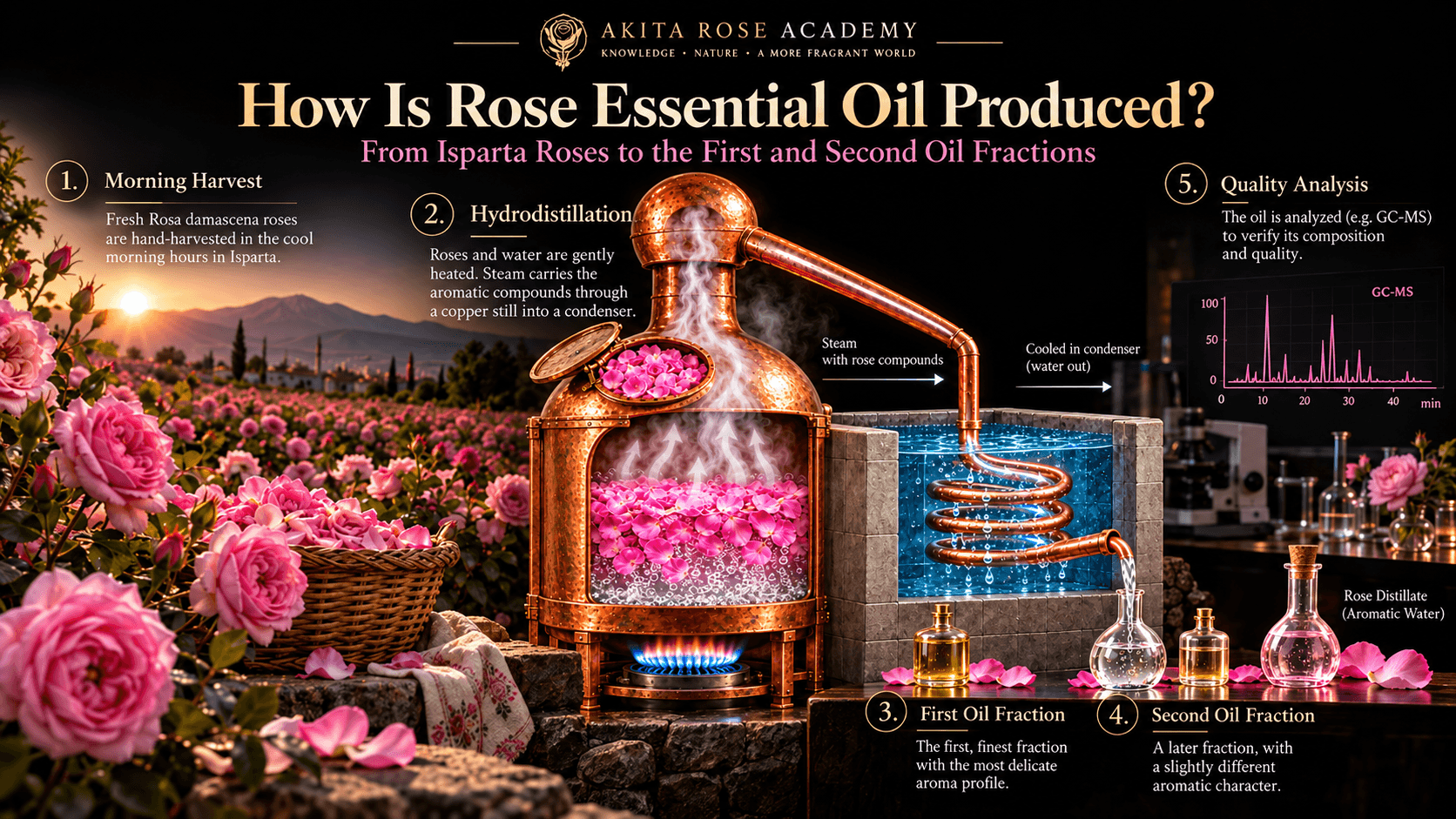
How Is Rose Essential Oil Produced? From Isparta Roses to the First and Second Oil Fractions
The Science of Rosa damascena Harvesting, Hydrodistillation, Oil Separation, Cohobation and Quality Analysis
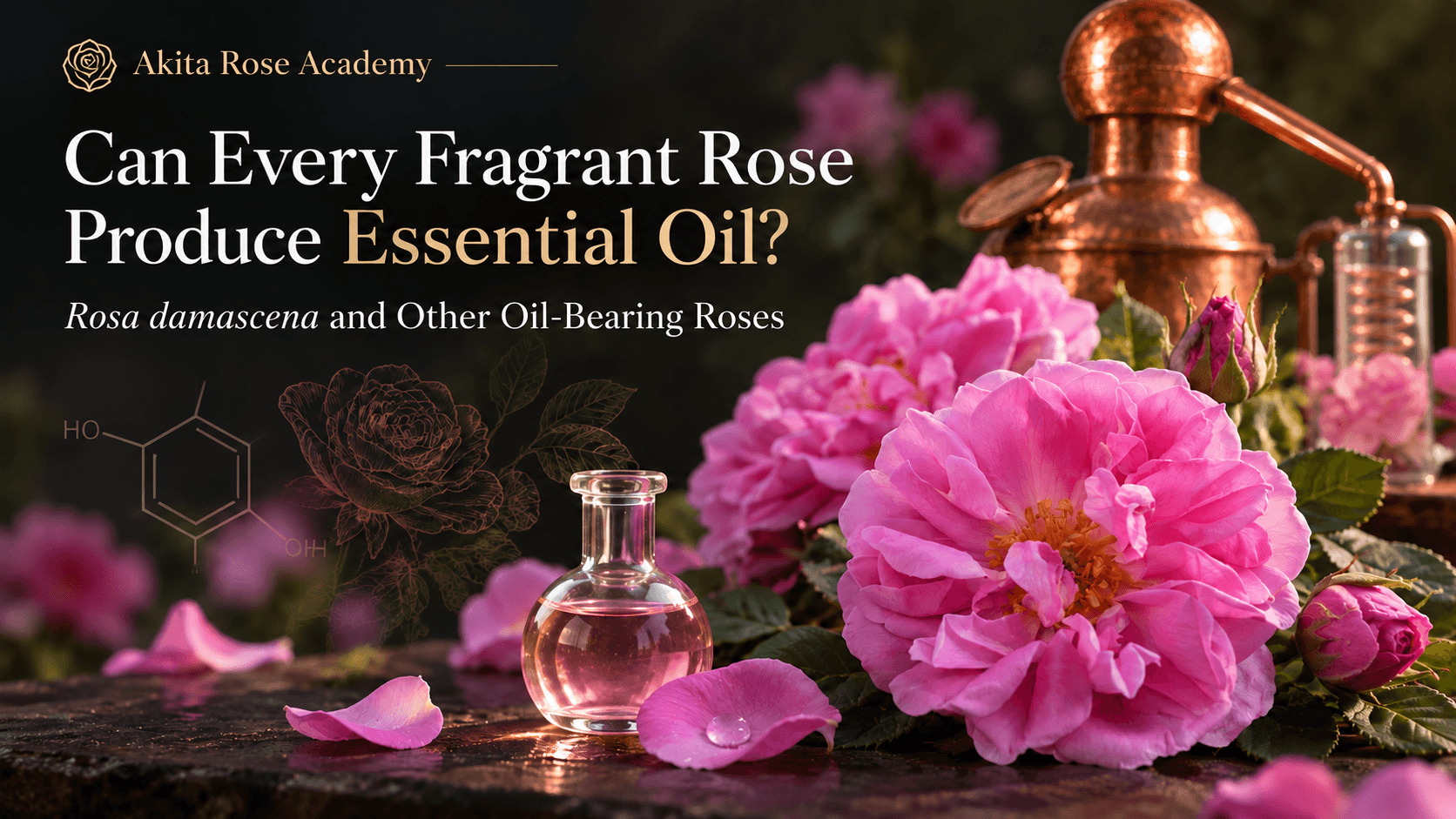
Can Every Fragrant Rose Produce Essential Oil?
A Scientific Comparison of Rosa damascena and Other Oil-Bearing Roses: Essential Oil Yield, Chemical Composition and Commercial Value
Rose Water, Rose Hydrosol, and Rose Distillate: What Is the Difference?
Understanding Rosa damascena distillation, chemical composition, and how essential oil separation influences the final product.
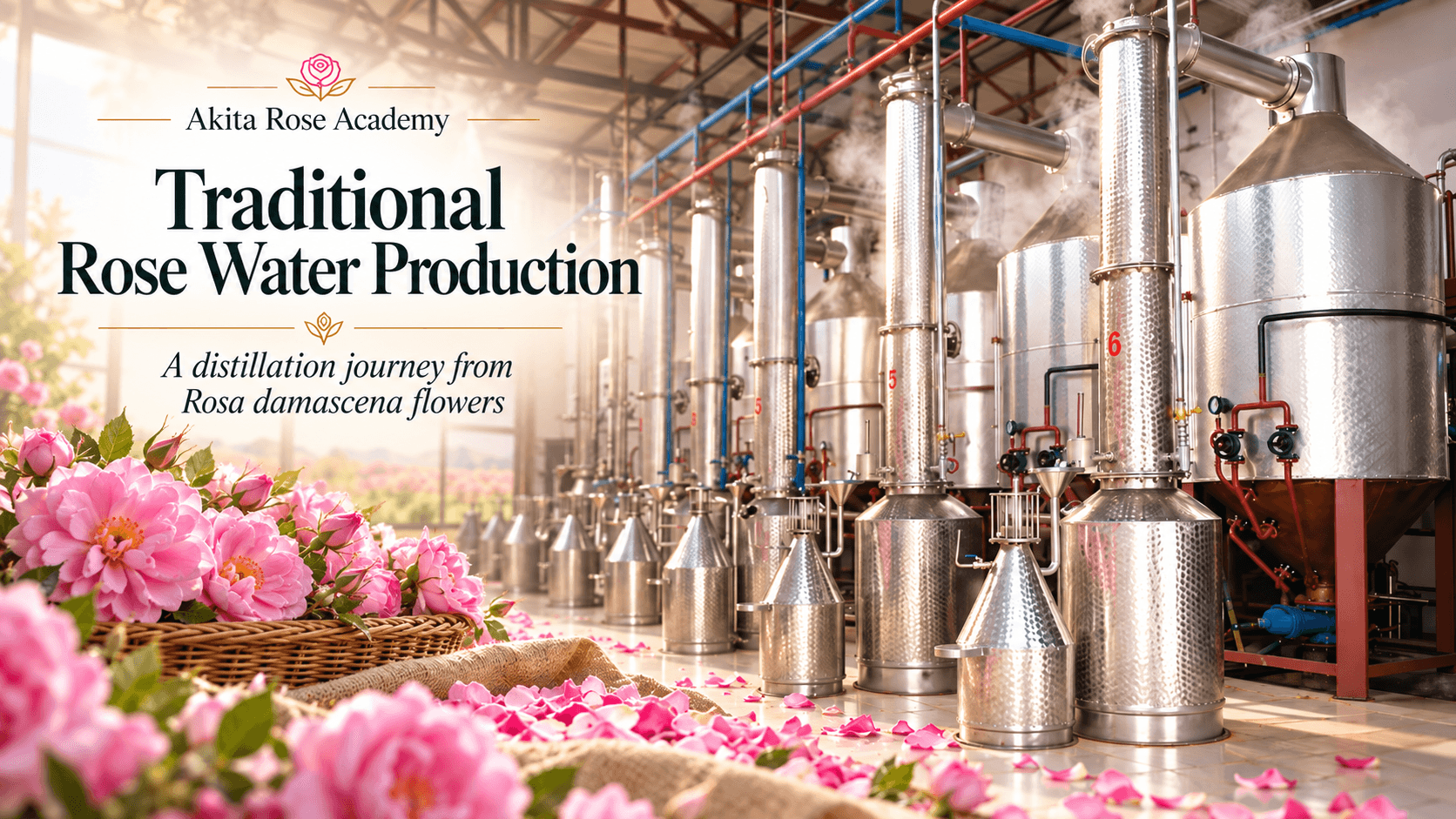
How Is Rose Water Produced? The Rosa damascena Distillation Process
From the rose fields of Isparta to the final distillate, discover the science of Rosa damascena harvesting, distillation, and essential oil separation.
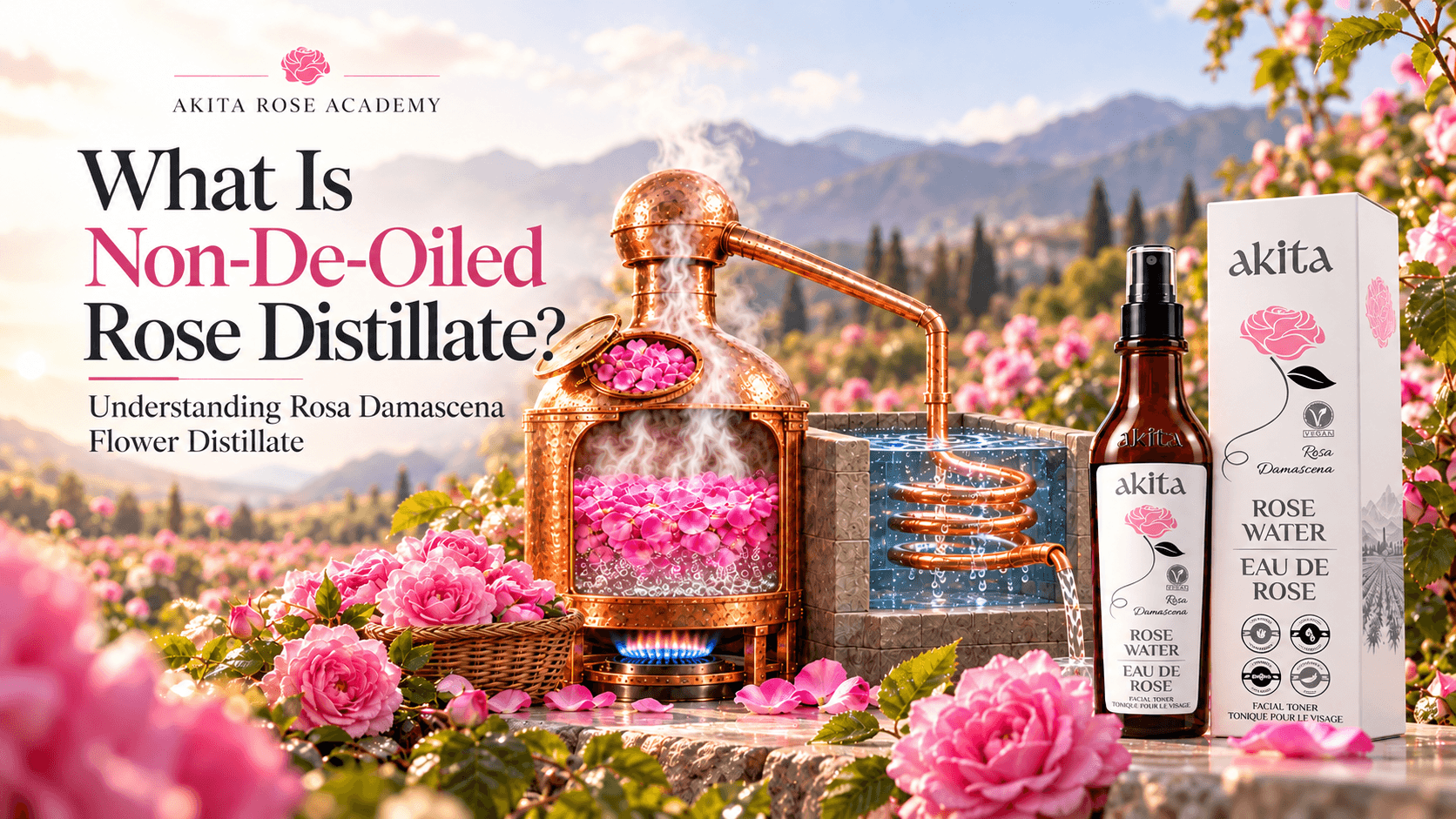
What Is Non-De-Oiled Rose Distillate? Understanding Rosa Damascena Flower Distillate
Explore Akita’s non-de-oiled rose distillation process, its contribution to international INCI nomenclature, and the science behind GC–MS analysis of its aromatic compounds.
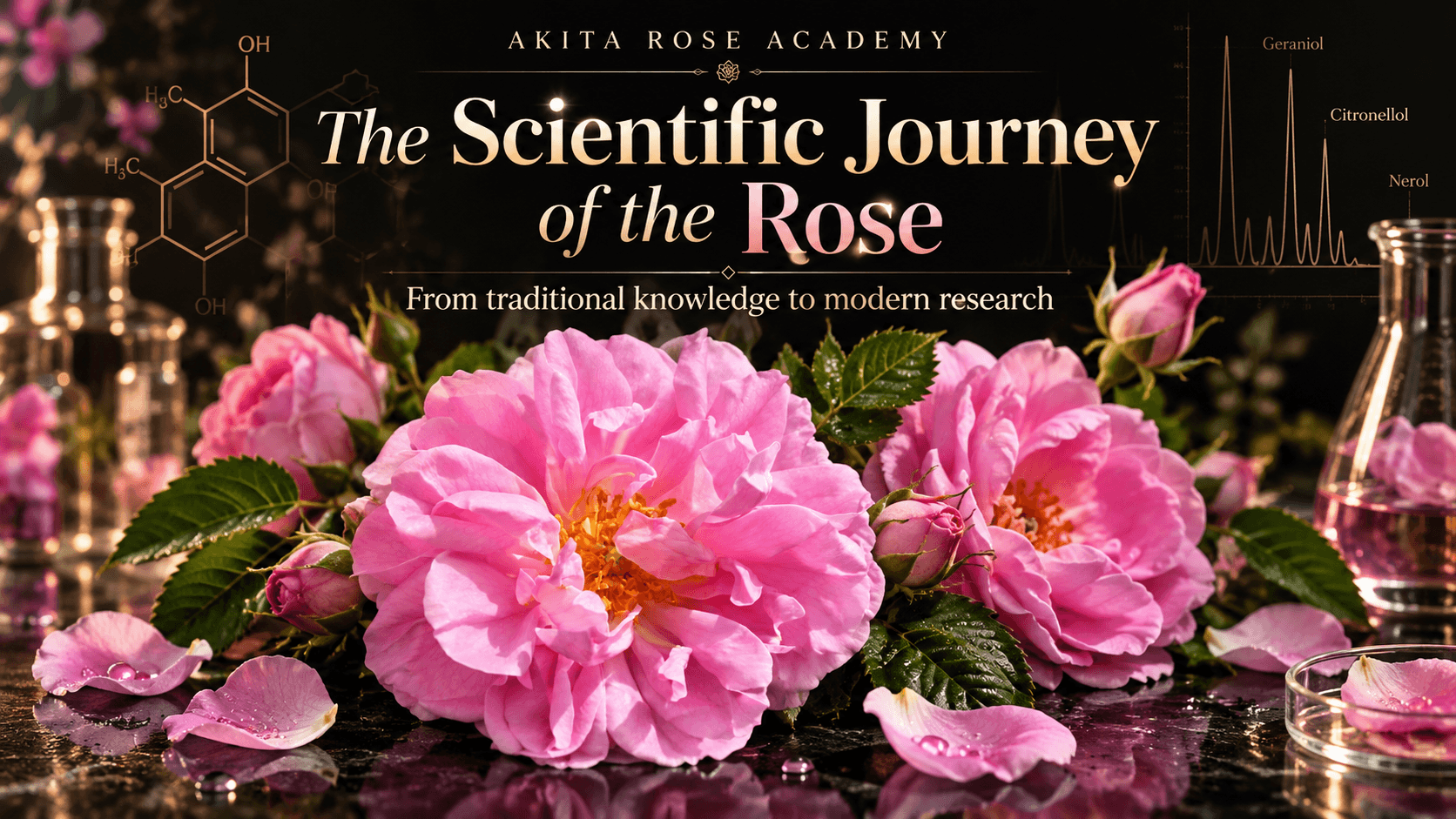
The Scientific Journey of the Rose: From Traditional Knowledge to Modern Research
From traditional uses to chemical analysis, from laboratory experiments to human studies: explore the scientific evidence surrounding Rosa damascena, the methods used to investigate it, and the future of rose research.
Rose Science and Scientific Research
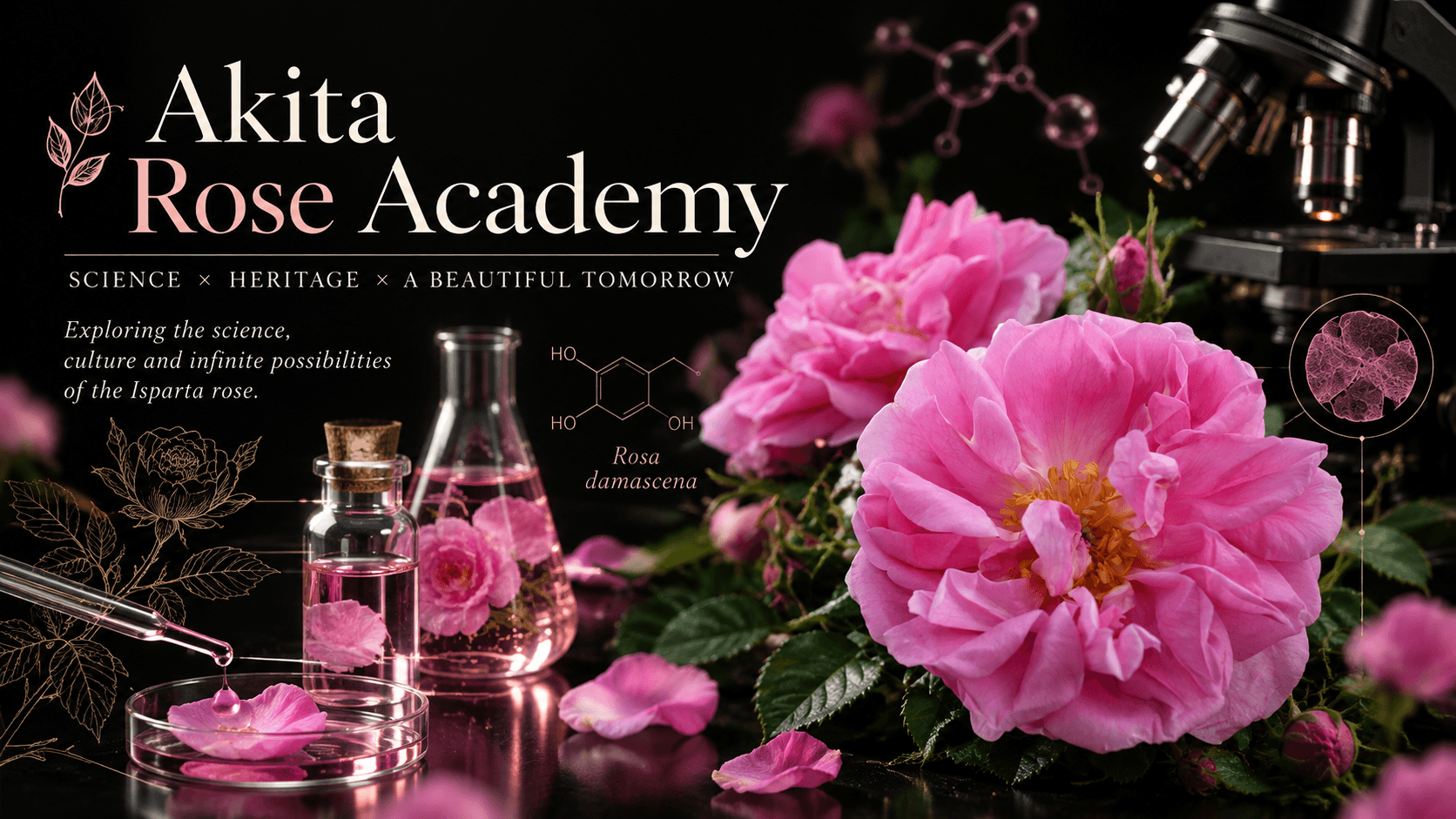
What Does Science Tell Us About Rosa damascena?
From Botanical Research to Product-Specific Testing: Antioxidant Activity, Skin Science, Eye Safety and Emerging Analytical Methods
How to Evaluate Scientific Research on Rosa damascena
From traditional knowledge to human studies: learn how to interpret research on rose-derived products and understand the limits of scientific evidence.
The Antioxidant Potential of Rosa damascena: What Science Reveals
Explore the antioxidant compounds in Damask rose, what laboratory studies show, and why research on rose extracts cannot automatically be applied to rose water or skincare products.
Do Rose Essential Oil, Rose Extracts and Rose Water Have the Same Antimicrobial Effects?
Explore antibacterial, antifungal and antiviral research on Rosa damascena, and discover why findings differ between rose essential oil, extracts and hydrosols.
How Is Rosa damascena Rose Oil Used in Human Studies?
From controlled inhalation to topical application and standardized oral preparations, learn what clinical research measures and why study protocols are not everyday use instructions.
Roses and Skin Aging: What Does Scientific Research Really Show?
Explore studies on Rosa damascena essential oil, rose petal extracts, rosehip and rose distillates, and what the evidence reveals about wrinkles, collagen and hydration.
Rose Scent, Emotions, and Well-Being: What Does Scientific Research Reveal?
From traditional experience to neuroscience and clinical research, explore what studies reveal about Rosa damascena, anxiety, relaxation, sleep and memory.
How Does a Rose Develop Its Fragrance, Why Does It Change, and How Does Science Study It?
Discover the volatile molecules behind Rosa damascena fragrance, how harvesting and distillation shape its aroma, and why rose oil and rose water smell different.
Rose and Memory: Scientific Research on Rosa damascena Essential Oil and Extracts
From animal studies on BDNF and acetylcholine to a small human trial, explore what research reveals about Rosa damascena, learning, memory, and cognition.
Quality, Safety and Analytical Methods
How Is the Quality of Rose Products Evaluated?
A scientific guide to purity, chemical analysis, microbiological quality, stability and traceability in rose essential oil, rose water and rose distillates.
What Does the pH of Rose Water Mean?
Understanding the skin’s natural acidity, why pH matters in daily skincare, and the naturally occurring pH of Akita Non-Deoiled Rose Water.
Does Rose Water Spoil? Production Methods and Stability
How traditional rose water differs from non-deoiled rose distillate, and what product-specific microbiological testing reveals about long-term stability.
How Can You Tell Whether a Rose Product Is Safe and Stable?
Understanding microbiological safety, stability testing, and ISO 11930 preservation efficacy in rose water and non-deoiled rose distillates.
How Is Stability Testing Conducted for Rose Products?
A scientific guide to physical, chemical and microbiological stability, accelerated testing, shelf life and packaging compatibility.
Rose Water and Eye Safety: OECD 491 Testing of Akita Non-Deoiled Rose Water
What Akita’s OECD 491 eye irritation assessment shows, why its findings apply only to the tested rose water, and what remains unknown about dry eye.
How Is Cosmetic Product Efficacy Demonstrated? Understanding Scientific Efficacy Testing
How are claims about skin hydration, elasticity, and appearance scientifically evaluated? Understanding laboratory testing, human studies, and cosmetic claim substantiation.
How Can You Identify Genuine, Natural Rose Water?
A Scientific Guide to Botanical Origins, Distillation Methods, Ingredient Labels, and Rose Water Quality.
How to Read the Label of a Rose Product in Canada
A Practical Guide to Understanding Rose Water, Rose Distillate, Rose Oil and Rose-Based Cosmetics
Akita Research and Innovation
The Scientific Journey of a Rose Distillate: Akita’s Research from 2003 to the Present
From the development of Non-Deoiled Rose Distillate to chemical characterization, cosmetic performance assessments, and exploratory RF research.
Chemical Analyses of Akita Non-Deoiled Rose Distillate
A scientific evaluation of the GC-MS profile of Rosa damascena distillate, its characteristic aromatic constituents, and the influence of production methods on chemical composition.