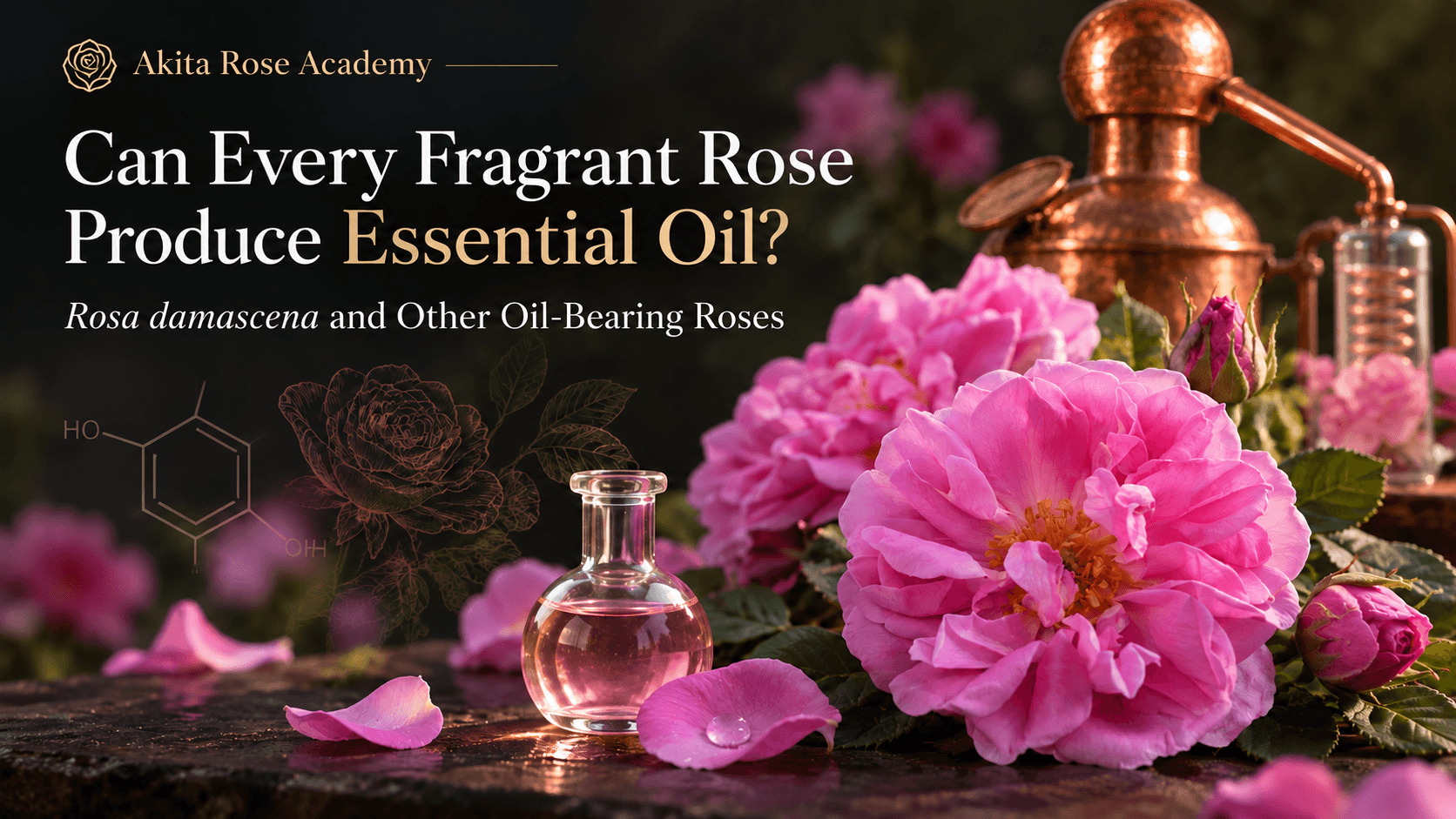
Can Essential Oil Be Produced from Every Fragrant Rose?
A Scientific Comparison of Essential Oil Yield, Chemical Composition and Commercial Value in Rosa damascena and Other Oil-Bearing Roses
When we walk through a rose garden, we encounter flowers of different colours, sizes, shapes and fragrances. Some roses release an exceptionally strong scent, while others have barely any noticeable fragrance.
This raises an interesting scientific question:
Can every beautifully scented rose be used to produce genuine rose essential oil?
The answer is not as simple as it may seem.
A rose that smells wonderful does not necessarily produce a high yield of essential oil or an oil that is commercially valuable.
Volatile aromatic compounds can be recovered from many rose species. However, the quantity of essential oil recoverable through distillation, its chemical composition, fragrance characteristics and economic value can vary considerably.
Although hundreds of rose species and thousands of cultivated varieties exist worldwide, commercial essential oil production is concentrated among a relatively small number of oil-bearing roses.
One of the most important is Rosa damascena Mill., commonly known as the Damask rose or Isparta rose, which is extensively cultivated for essential oil production in the Isparta region of Türkiye.
However, Rosa damascena is not the only rose from which essential oil can be obtained.
Other species, including Rosa alba, Rosa gallica, Rosa centifolia, Rosa rugosa and certain hybrid roses, are also used or investigated for the production of aromatic materials.
In this Akita Rose Academy article, we explore several important questions through scientific research:
What is the difference between a rose's fragrance intensity and its essential oil yield?
What makes a rose suitable for commercial essential oil production?
Why has Rosa damascena become one of the world's most important oil-bearing roses?
How do the essential oils of different rose species differ chemically?
How do genetics, harvesting conditions and distillation influence essential oil production?
How can the commercial value of an oil-bearing rose be evaluated scientifically?
Understanding these distinctions helps explain why some roses are cultivated primarily for their beauty, others for their fragrance in gardens, and a relatively small number for the industrial production of essential oils.
1. First, What Exactly Is Rose Essential Oil?
Rose essential oil is not a fixed vegetable oil like olive oil or sunflower oil.
Instead, rose essential oil is a natural mixture of volatile aromatic compounds recovered from rose flowers, usually through distillation.
This mixture may contain numerous compounds belonging to different chemical classes.
Important examples include:
Citronellol
Geraniol
Nerol
Linalool
Phenethyl alcohol
Nonadecane
Heneicosane
Various other terpenes and aromatic compounds
Trace constituents present in very small amounts
The proportions of these substances can vary according to the botanical species and production conditions.
It is also important to understand that not every volatile compound responsible for the fragrance of a fresh rose flower necessarily ends up in the separated essential oil.
Some compounds may remain dissolved in the aromatic water produced during distillation.
This helps explain why the fragrance of a fresh rose flower, the aroma of distilled rose essential oil and the scent of rose distillate are not chemically or sensorially identical.
Rose Academy Note
Rose fragrance, rose essential oil and rose distillate are closely related, but they do not represent exactly the same chemical mixture.
Producing essential oil from a fragrant flower does not mean that every molecule responsible for the flower's scent is transferred completely into a bottle of oil.
2. Why Can a Strongly Fragrant Rose Produce Very Little Essential Oil?
To understand this question, we must distinguish between two important concepts:
Fragrance intensity and essential oil yield.
What Is Fragrance Intensity?
Fragrance intensity refers to how strongly a scent is perceived by the human olfactory system.
Our sense of smell can detect certain molecules even when they are present at extremely low concentrations.
As a result, a flower may release only a small quantity of aromatic molecules into the air while still producing a fragrance that we perceive as powerful.
However, the strength of that perceived fragrance does not directly indicate how much essential oil can be recovered through distillation.
What Is Essential Oil Yield?
Essential oil yield refers to the amount of oil obtained from a specified quantity of botanical material using a particular extraction or distillation method.
It is commonly expressed as a percentage of the fresh or dry weight of the plant material.
For example, two rose varieties may produce different quantities of essential oil when equal weights of their flowers are distilled.
Their resulting oils may also have different fragrances.
Why Are Fragrance Intensity and Oil Yield Different?
There are several reasons:
Fragrance perception depends on aromatic molecules entering the air and interacting with our olfactory receptors.
Essential oil yield depends on how much recoverable volatile material is present in the plant and how effectively the production method extracts it.
Some aromatic compounds are relatively soluble in water.
Certain constituents may undergo chemical changes during distillation.
Some rose species may contain volatile compounds in quantities too small to form a readily recoverable separate oil phase.
Consequently, an exceptionally fragrant rose may produce only a very small quantity of essential oil.
That does not mean the rose has no value.
The same flower may be highly desirable for ornamental cultivation, botanical extracts, perfumery ingredients or other aromatic applications.
Did You Know?
Headspace analysis, which examines volatile compounds released into the air surrounding a flower, is not the same as analysing the essential oil obtained through distillation.
Headspace analysis investigates the volatile substances present around the flower.
Essential oil analysis examines the compounds recovered in the distilled oil.
These methods provide different but complementary information.
A strong floral fragrance is therefore not direct evidence of a high essential oil yield.
3. What Makes a Rose Suitable for Commercial Essential Oil Production?
A beautiful fragrance is not enough to make a rose suitable for industrial oil production.
Its agricultural, chemical and economic characteristics must be considered together.
3.1. It Must Contain a Sufficient Quantity of Recoverable Essential Oil
Rose flowers generally contain very low concentrations of essential oil.
For this reason, even relatively small differences in oil yield between varieties can significantly influence production costs.
A researcher may be able to recover a small quantity of essential oil from a particular rose variety in the laboratory.
However, processing several tonnes of the same flowers in an industrial facility may not be economically practical.
The key consideration is not simply whether volatile compounds are present.
It is how much essential oil can be recovered using an economically viable industrial process.
3.2. The Recovered Oil Must Have a Valuable Fragrance Profile
The value of an essential oil cannot be determined by quantity alone.
The identity, proportions and interactions of its aromatic constituents are also important.
Monoterpene alcohols such as citronellol, geraniol and nerol contribute significantly to the characteristic fragrance of many rose essential oils.
However, a higher concentration of any single compound does not automatically indicate superior quality.
A fragrance may be evaluated for its:
Floral character
Balance
Complexity
Persistence
Suitability for specific perfumery applications
Trace compounds present in very small amounts may also make important contributions to the overall sensory character.
3.3. Its Aromatic Constituents Must Be Suitable for the Production Method
Not every volatile aromatic compound behaves in the same way during distillation.
Some compounds:
Are readily carried with water vapour
Remain dissolved in the aromatic water
May be affected by prolonged heating
Can undergo transformations during processing
May be present at relatively low concentrations in the recovered oil phase
Consequently, a rose with an exceptionally desirable fresh-flower fragrance may not produce a distilled essential oil with exactly the same scent.
For some roses, alternative methods such as solvent extraction may be more appropriate.
3.4. The Plant Must Produce Enough Flowers per Unit of Cultivated Area
The essential oil concentration of individual flowers is only one factor influencing commercial production.
The total quantity of flowers harvested from a field is also important.
For example, a rose variety with a relatively high oil concentration but poor flower production may produce less total essential oil per hectare than a variety with a lower oil concentration but much greater flower yield.
Researchers must therefore evaluate both:
The essential oil content of the flowers
The total flower yield per unit of cultivated area
3.5. Its Flowering Pattern Must Be Suitable for Harvesting
Harvest timing is particularly important in rose essential oil production.
A concentrated flowering period can make it easier to organize harvesting and transport the flowers quickly to the distillery.
Some ornamental roses have irregular flowering patterns or produce flowers in quantities that are not well suited to industrial processing.
However, a concentrated flowering period is not sufficient by itself.
Labour requirements and the daily processing capacity of the distillery must also be considered.
3.6. It Must Be Adapted to Agricultural Conditions
Oil-bearing roses are perennial plants.
A suitable commercial variety should therefore demonstrate characteristics such as:
Adaptation to the regional climate
Tolerance of winter conditions
Adequate resistance to diseases and pests
Reliable flower production
Suitability for pruning and harvesting
A rose that performs well in a laboratory oil-yield test may still be unsuitable for large-scale cultivation if its agricultural performance is poor.
3.7. Its Quality and Market Value Must Be Commercially Sustainable
Commercial production also requires consideration of:
Consistency of chemical composition between production batches
Compliance with applicable quality specifications
Product authenticity and purity
Harvesting and distillation costs
Energy consumption
Labour requirements
Storage conditions
International market demand
A commercially valuable oil-bearing rose is therefore not simply a fragrant flower. It is a plant whose botanical, agricultural, chemical and economic characteristics work together effectively.
4. How Is the Commercial Essential Oil Yield of a Rose Calculated?
To understand the commercial value of an oil-bearing rose, examining the oil concentration of individual flowers is not enough.
One of the most important practical measures is the total quantity of essential oil produced per unit of cultivated area.
This relationship can be expressed in simplified form as:
Total essential oil production = Fresh flower yield × Potential oil content × Industrial recovery efficiency
In this relationship:
Fresh flower yield is the total weight of fresh flowers harvested from a defined cultivated area.
Potential oil content refers to the amount of essential oil estimated to be present in the flowers according to a specified measurement method.
Industrial recovery efficiency describes the proportion of that potential oil that can be recovered using the actual production system.
For this simplified calculation, oil content should be expressed as a mass fraction and recovery efficiency as a factor between zero and one.
If the measured oil percentage already represents the final yield obtained from the same industrial system, an additional recovery factor should not be applied.
Why Does This Matter?
A rose variety may:
Have a high oil concentration but produce relatively few flowers.
Have a lower oil concentration but produce a very large quantity of flowers.
Perform well under laboratory conditions but achieve a lower recovery rate in an industrial distillery.
Commercial comparisons must therefore consider essential oil production per unit of land together with quality and cost.
Rose Academy Note
A high essential oil percentage measured in the laboratory does not, by itself, demonstrate commercial production success.
Industrial essential oil production depends on both the biological capacity of the plant and the efficiency of the processing system.
5. Why Is Rosa damascena One of the World's Most Important Oil-Bearing Roses?
Rosa damascena has become an important commercial oil-bearing rose not simply because of its strong fragrance, but because it combines several desirable production characteristics.
These include:
A distinctive essential oil composition
A fragrance profile valued in perfumery
Suitable flower production under favourable conditions
Compatibility with traditional distillation
Adaptation to agricultural cultivation
Extensive historical production knowledge
Established demand in international markets
The Isparta region of Türkiye has a long tradition of rose cultivation and distillation built around these characteristics.
However, the commercial importance of Rosa damascena does not mean that it produces more essential oil than every other rose species under all conditions.
Scientific comparisons must consider species, genotype, cultivation conditions and processing methods.
A 2023 Study: Comparing Essential Oil Yields from Different Roses
In a study published in Resources in 2023, Dobreva, Nedeva and Mileva compared seven rose oil and associated hydrosol samples obtained from industrial plantations of oil-bearing roses in Bulgaria.
The researchers examined the essential oil yields and chemical compositions of different rose species and genotypes.
The measured essential oil yields ranged from 0.015% to 0.048%.
Among the samples investigated, the highest oil yield was recorded for the Rosa damascena sample.
This is an important finding.
However, it applies specifically to the botanical materials and experimental conditions examined in that study.
It should not be interpreted as a universal comparison of every rose species cultivated worldwide.
The Chemical Compositions Also Varied
The researchers identified differences in the proportions of important monoterpene alcohols.
| Compound | Range Reported in the Study |
|---|---|
| Geraniol | 15.85–34.02% |
| Citronellol | 6.70–28.72% |
| Nerol | 5.80–11.90% |
These values refer to the samples investigated in the study.
They are not fixed concentrations that all rose essential oils must contain.
The researchers also reported notable differences in the proportions of long-chain aliphatic hydrocarbons, including nonadecane and heneicosane.
Scientific conclusion: When rose species or genotypes differ, both the amount of essential oil produced and its chemical composition may change.
Reference: Dobreva, Nedeva and Mileva (2023) [1].
6. What Can Genetic Research Tell Us About Rose Essential Oil Production?
Differences in essential oil yield cannot be explained entirely by climate and agricultural practices.
The genetic characteristics of the plant may also influence the biochemical processes involved in producing volatile aromatic compounds.
A study published in BMC Plant Biology in 2026 provided valuable information on this subject.
The 2026 Study: Comparing High- and Low-Oil-Producing Rosa damascena Genotypes
Ahadi and colleagues compared gene expression patterns in two different Rosa damascena genotypes.
Using RNA sequencing, the researchers investigated genes associated with essential oil biosynthesis in rose petals.
In the G2 genotype, which was associated with higher essential oil production, certain genes related to monoterpene biosynthesis showed higher expression levels.
These included:
NUDX1
HMGCS
ispH
GCPE
GPS
The researchers also reported higher expression of certain transcription factors belonging to the MYB and NAC families in the G2 genotype.
What Do These Findings Mean?
The formation of essential oil constituents in plants involves numerous interconnected biochemical processes.
Genes are involved in producing and regulating proteins that participate in these processes.
Different rose genotypes may therefore vary in how efficiently they synthesize particular aromatic compounds.
However, an important scientific distinction must be made.
Higher expression of a gene does not, by itself, prove that the gene directly causes higher essential oil yield.
The study identified associations between gene expression and essential oil production, as well as candidate genes that may be investigated further.
Additional functional experiments are needed to establish stronger causal relationships.
Rose Academy Note
To understand essential oil production, we must examine not only the fragrance of the flower but also the biochemical processes through which the plant produces its aromatic compounds.
The value of an oil-bearing rose is connected not only to its visible floral characteristics, but also to the biochemical processes taking place within the plant.
Reference: Ahadi et al. (2026) [4].
7. Which Rose Species Other Than Rosa damascena Can Produce Essential Oil?
Scientific research shows that various Rosa species and hybrids can be used to produce essential oils or other aromatic materials.
However, these products should not be considered chemically identical.
| Rose Species or Group | Essential Oil and Aromatic Product Potential | General Characteristics |
|---|---|---|
| Rosa damascena | Distilled essential oil, rose water and other aromatic products | One of the world's principal commercial oil-bearing roses |
| Rosa alba | Essential oil and rose water | An important white-flowered oil-bearing rose; its chemical profile may differ |
| Rosa gallica | Essential oil and aromatic extracts | Oil yield and fragrance composition may vary by genotype |
| Rosa centifolia | Essential oil, concrete and absolute | Particularly important for aromatic extracts used in perfumery |
| Rosa rugosa | Essential oil and other aromatic products | Studied and utilized in China and other parts of Asia |
| Kushui rose | Essential oil | A hybrid-origin oil-bearing rose cultivated in China |
| Modern garden roses | Varies by cultivar | Most have not been developed specifically for commercial essential oil production |
This comparison does not establish that one rose species is universally superior to another.
The value of each species must be assessed in relation to the desired product and the method used to obtain it.
8. What Makes Rosa alba Essential Oil Different?
Rosa alba is a white-flowered rose species traditionally used in oil-bearing rose cultivation.
It is particularly associated with the production of aromatic rose materials in Bulgaria.
Essential oil can be obtained from Rosa alba flowers, but its composition may differ from that of Rosa damascena essential oil.
Some scientific studies have reported Rosa alba samples in which the proportion of geraniol was higher than that of citronellol.
This difference may contribute to a distinct fragrance character.
However, it would be inaccurate to assign one fixed chemical profile to every Rosa alba plant.
Different genotypes, growing regions and distillation conditions can produce different results.
Why Can White Rose Essential Oil Smell Different?
The colour of a rose flower and the chemical composition of its essential oil are separate characteristics.
A white-flowered rose does not smell different simply because its petals are white.
Differences in aroma arise from the identities and proportions of the aromatic compounds present.
References: Dobreva et al. (2023) [1]; Mileva et al. (2021) [5].
9. What Are the Characteristics of Rosa gallica Essential Oil?
Rosa gallica is an important rose species from both historical and botanical perspectives.
Its flowers can be used to obtain aromatic materials and, under suitable conditions, essential oil.
However, the following characteristics may differ from those of Rosa damascena:
Chemical composition
Proportions of monoterpene alcohols
Fragrance character
Essential oil yield
Certain studies have reported Rosa gallica samples with notable geraniol-rich profiles.
Nevertheless, different Rosa gallica genotypes and related hybrids should be distinguished from one another.
An Important Scientific Detail
The 2023 comparative study carried out in Bulgaria included not only individual rose species but also hybrid materials involving Rosa damascena and Rosa gallica ancestry.
Consequently, results obtained from a particular hybrid genotype should not automatically be generalized to the entire pure Rosa gallica species.
Reference: Dobreva et al. (2023) [1].
10. Why Is Rosa centifolia Important in Rose Concrete and Absolute Production?
Rosa centifolia is a highly valued fragrant rose species in the world of perfumery.
Although essential oil can be obtained from its flowers through distillation, this species is particularly recognized for its role in producing rose concrete and rose absolute.
What Is Rose Concrete?
Rose concrete is an aromatic extract obtained from rose flowers using suitable solvents.
It contains aromatic substances together with waxy and other extractable constituents.
What Is Rose Absolute?
Rose absolute is a concentrated aromatic extract generally obtained by treating rose concrete with ethanol, followed by appropriate purification steps.
The chemical composition of rose concrete and rose absolute differs from that of distilled essential oil.
What Did the 2023 Study Find About Rosa centifolia?
In their comparative study of oil-bearing roses cultivated in Bulgaria, Dobreva and colleagues reported that the Rosa centifolia oil sample contained lower proportions of certain major terpene alcohols and higher proportions of long-chain hydrocarbons than the Rosa damascena sample.
The researchers suggested that the observed chemical profile could limit the suitability of the distilled oil for certain perfumery applications.
However, this finding does not mean that all Rosa centifolia flowers or aromatic products have lower value in perfumery.
Several considerations are important:
The study examined specific samples.
Other genotypes may have different compositions.
Distillation and solvent extraction produce different aromatic products.
Desired fragrance characteristics vary according to the application.
The most appropriate conclusion is therefore:
A particular rose species may be especially valuable for concrete or absolute production even when its distilled essential oil is less suited to certain applications.
This does not mean that one rose is universally superior to another.
References: Dobreva et al. (2023) [1]; Mileva et al. (2021) [5].
11. Are Essential Oils Produced from Rosa rugosa and Kushui Roses?
Yes.
In China, several oil-bearing roses are cultivated and investigated scientifically, including Rosa rugosa and the Kushui rose.
The Kushui rose is associated in the research literature with hybrid ancestry involving Rosa sertata and Rosa rugosa.
A 2023 Chinese Study: Comparing Three Types of Rose Essential Oil
In a study published in Molecules in 2023, Dobreva and Nedeltcheva-Antonova compared essential oils obtained from:
Rosa damascena
Rosa rugosa 'Plena'
Kushui rose
The researchers used GC-MS and GC-FID analytical techniques.
These methods enabled the separation, identification and comparison of volatile chemical constituents.
What Did the Researchers Discover?
Important terpene compounds were identified in all three rose oils.
However, their proportions of monoterpene alcohols and long-chain hydrocarbons differed.
In the samples examined, the reported citronellol content was approximately:
| Rose Oil Sample | Citronellol Content |
|---|---|
| Rosa damascena | 36.69% |
| Rosa rugosa | 48.32% |
These percentages refer to the particular samples investigated in the study.
They should not be regarded as fixed values for all Rosa damascena or Rosa rugosa essential oils.
Does More Citronellol Mean Better Rose Oil?
No.
Citronellol is an important constituent of rose essential oil, but it does not explain the entire fragrance character of the oil.
Quality assessment must also consider other monoterpene alcohols, long-chain hydrocarbons, trace compounds, physical characteristics and the overall sensory profile.
Therefore:
A higher citronellol concentration does not automatically mean that an essential oil is of higher quality or greater commercial value.
This research illustrates how rose species can be distinguished by their chemical profiles and how different roses may produce oils with characteristic compositions.
Reference: Dobreva and Nedeltcheva-Antonova (2023) [2].
12. A 2025 Study: Can Different Rose Essential Oils Be Distinguished Through Chemical Analysis?
Another study, published in Molecules in 2025, investigated three rose groups cultivated in China:
Jinbian rose
Kushui rose
Pingyin rose
Xu and colleagues examined the chemical compositions of essential oils obtained from these roses using gas chromatography–mass spectrometry (GC-MS).
The researchers identified the following numbers of volatile constituents:
| Rose Group | Number of Volatile Compounds Identified |
|---|---|
| Jinbian | 40 |
| Kushui | 48 |
| Pingyin | 40 |
The study also used chemometric methods.
What Is Chemometrics?
Chemometrics involves using statistical and mathematical methods to interpret complex chemical data.
For example, two rose oils may contain many of the same compounds.
However, the relative proportions of those compounds and the patterns they create may differ.
Chemometric analysis can help identify these differences.
The study used approaches including:
Principal component analysis (PCA)
Hierarchical cluster analysis (HCA)
These methods help researchers explore relationships among samples and identify differences in chemical composition.
Why Is This Research Important?
The study demonstrated that rose groups can be compared and distinguished through measurable chemical profiles, rather than relying exclusively on their perceived fragrances.
However, the number of compounds identified in an oil does not automatically indicate its quality.
Chemical diversity, fragrance quality and commercial value are related but distinct characteristics.
Reference: Xu et al. (2025) [3].
13. Why Are Most Fragrant Garden Roses Not Used for Commercial Essential Oil Production?
Most modern garden roses have not been developed primarily for essential oil production.
Rose breeding priorities depend on the intended use of the plant.
For ornamental and cut-flower roses, commonly selected characteristics include:
Flower colour
Flower size
Petal count
Flower shape
Vase life
Repeat flowering
Disease resistance
Adaptability to garden conditions
Fragrance remains an important breeding objective for some modern roses.
However, the yield and chemical quality of essential oil recovered through distillation are not always primary selection criteria.
As a result, a beautifully scented garden rose may present several commercial challenges.
For example:
The recoverable essential oil content per flower may be extremely low.
The plant may not produce enough flowers.
Harvesting may require excessive labour.
The flowering pattern may not suit industrial production.
The fragrance of the distilled oil may differ from that of the fresh flower.
Production costs may exceed the commercial value of the recovered oil.
Maintaining a consistent chemical profile between batches may be difficult.
For these reasons, not every beautifully scented garden rose is a commercially suitable oil-bearing rose.
Common Misconception
Misconception: The strongest-smelling rose produces the most essential oil.
Scientific explanation: Fragrance intensity, essential oil content and recoverable oil yield are different characteristics.
A rose may have a powerful scent while producing only a very small quantity of oil through distillation.
14. Is Rose Essential Oil Quality Determined Only by Citronellol, Geraniol and Nerol?
No.
Citronellol, geraniol and nerol are important constituents of many rose essential oils.
However, natural rose essential oil is a much more complex chemical mixture.
Quality assessment may consider:
The proportions of major volatile compounds
The balance between different constituents
The presence of long-chain aliphatic hydrocarbons
Trace aromatic compounds
Undesirable substances or foreign additives
Physical properties
Sensory fragrance characteristics
Botanical origin
Production method
What Are Monoterpene Alcohols?
Compounds such as citronellol, geraniol and nerol belong to the monoterpene alcohol group.
These compounds make important contributions to the characteristic fragrance of rose essential oil.
What Are Long-Chain Aliphatic Hydrocarbons?
Compounds such as nonadecane and heneicosane consist of long chains of carbon and hydrogen atoms.
Some contribute to the fraction of rose essential oil that can partially solidify at lower temperatures.
In rose oil research, these compounds may also be described as paraffinic hydrocarbons.
However, long-chain aliphatic hydrocarbons is a more chemically descriptive term.
Why Are Trace Compounds Important?
A relatively small number of major constituents may account for a large proportion of the composition of a rose essential oil.
However, certain compounds present at very low concentrations can still make meaningful contributions to its perceived fragrance.
For this reason, measuring only the major constituents may not fully explain the sensory character of an oil.
Rose Academy Note
Two rose essential oils containing similar amounts of citronellol may smell different because their other constituents are present in different proportions.
15. Why Can Rose Essential Oil Yield and Fragrance Change from Year to Year?
Rose flowers are living botanical materials.
Their essential oil content and chemical composition are not perfectly constant.
Even when the same species or cultivar is grown, results may differ from one year to another.
Important influencing factors include:
Species and genotype
Temperature
Rainfall
Humidity
Soil conditions
Altitude
Plant nutrition
Stage of flower development
Harvesting time
Post-harvest storage duration
Distillation method and duration
Why Does Flower Development Matter?
Rosebuds, appropriately opened flowers and overly mature flowers may contain different quantities of essential oil.
The comparative Bulgarian study published in 2023 emphasized the importance of flower developmental stage in essential oil production.
The researchers also discussed the significance of morning harvesting for oil yield and quality.
However, quantitative results from one study should not be treated as fixed values for every species, genotype or climate.
Why Are Isparta Roses Harvested Early in the Morning?
Temperatures are generally cooler during the early morning.
The flowers have not yet experienced the higher temperatures of the day.
These conditions may help reduce circumstances that contribute to the loss of certain volatile constituents.
Rapid processing after harvesting is also important.
Flowers stored for extended periods or compressed into large piles may experience heat accumulation, biological changes and fermentation.
These conditions can influence essential oil yield and chemical composition.
Scientific Conclusion
High-quality rose essential oil depends not only on choosing the right botanical species, but also on appropriate harvesting conditions, careful handling and controlled distillation.
References: Dobreva et al. (2023) [1]; Pal (2013) [6].
16. Can Essential Oil from Another Rose Species Be Labelled as Rosa damascena Oil?
No.
The botanical identity of a plant-derived ingredient must be represented accurately.
An essential oil obtained from Rosa rugosa should not be identified as Rosa damascena essential oil.
The species may differ in their:
Botanical identities
Genetic characteristics
Chemical profiles
Product properties
Scientific publications therefore identify rose materials by their Latin botanical names whenever possible, rather than referring to all of them simply as “rose.”
Why Are INCI Names Important?
In cosmetic products, botanical ingredients are identified using recognized ingredient nomenclature.
Names such as the following illustrate the importance of both botanical identity and ingredient type:
Rosa Damascena Flower Oil
Rosa Alba Flower Oil
Rosa Centifolia Flower Extract
Rosa Rugosa Flower Oil
These names should not be considered interchangeable.
However, the official status and exact wording of any INCI designation should be checked against the relevant recognized ingredient nomenclature before it is used on a commercial label.
The distinction is not limited to the botanical species.
Flower Oil and Flower Extract do not necessarily describe materials obtained by the same production method.
When identifying a rose-derived ingredient, important considerations include:
Botanical source
Plant part used
Production or extraction method
Applicable ingredient nomenclature
Product labels must also comply with the relevant cosmetic regulations in the country where the product is marketed.
Rose Academy Note
Botanical identity is fundamental to the scientific identification of rose-derived products.
Treating oils, waters and extracts from different rose species as chemically identical simply because they are all described as “rose products” can obscure important differences.
17. How Are International Standards Used to Evaluate Rose Essential Oil Quality?
Sensory assessment and laboratory analysis are important in the evaluation of rose essential oil.
Analytical methods may include:
Gas chromatography (GC)
GC-FID
GC-MS
Physical property measurements
Comparisons with appropriate reference standards
However, a single analytical method may not answer every question concerning quality and authenticity.
The Current ISO Standard for Rosa damascena Essential Oil
One of the international standards relevant to the evaluation of essential oil obtained from Rosa × damascena is:
ISO 9842:2024 — Essential Oil of Rose (Rosa × damascena Miller)
This standard specifies certain characteristics of essential oil obtained from Rosa × damascena cultivated in Türkiye, Bulgaria and Morocco.
The 2024 edition replaced ISO 9842:2003.
However, the existence of a standard for Rosa × damascena does not mean that essential oils from every other rose species should automatically be assessed using exactly the same chemical specifications.
An Important Distinction
Three related but separate questions must be considered:
Is the botanical identity of the product authentic?
Does the product comply with the applicable quality specification?
Is the product safe for its intended use?
These questions require appropriate evaluation and should not be treated as interchangeable.
Reference: ISO 9842:2024 [7].
18. What Does Scientific Research Tell Us?
The studies discussed in this article support three broad conclusions.
1. Essential Oil Can Be Obtained from More Than One Rose Species
Rosa damascena is not the only rose species capable of producing essential oil.
Rosa alba, Rosa gallica, Rosa centifolia, Rosa rugosa and certain hybrids are also used or investigated for different aromatic products.
However, their essential oil yields and commercial importance vary.
2. Not All Rose Essential Oils Have the Same Chemical Profile
When the rose species, genotype or production method changes, the chemical composition of the recovered essential oil may also change.
The relative proportions of compounds such as:
Citronellol
Geraniol
Nerol
Other monoterpenes
Long-chain hydrocarbons
Trace aromatic constituents
can vary.
These differences may influence fragrance characteristics and potential applications.
3. The Commercial Importance of Rosa damascena Cannot Be Explained by One Characteristic Alone
The position of Rosa damascena in the global rose oil industry cannot be explained simply by its essential oil percentage.
Under suitable cultivation and production conditions, this species combines several important characteristics:
A valuable chemical profile
Commercially relevant essential oil yield
Adequate flower production
Suitability for distillation
Agricultural adaptability
Established demand in perfumery
The combination of these characteristics has helped make Rosa damascena one of the world's leading commercial oil-bearing roses.
Common Misconceptions About Rose Essential Oil
“Only Rosa damascena can produce essential oil.”
Incorrect. Essential oils can also be obtained from other Rosa species and hybrids, although their yields and chemical profiles differ.
“The strongest-smelling rose produces the most essential oil.”
Incorrect. Fragrance intensity and the amount of essential oil recovered through distillation are different characteristics.
“The more citronellol an essential oil contains, the better its quality.”
Incorrect. Rose essential oil quality cannot be determined by the concentration of a single compound. The overall chemical profile and intended application matter.
“Every rose that produces oil in the laboratory can be processed economically in a factory.”
Incorrect. Commercial production requires consideration of flower yield, essential oil content, operating costs and consistency of quality.
“Rose essential oil yield can be determined by whether the flower is red or white.”
Incorrect. Flower colour alone does not establish botanical species or essential oil yield.
“All rose essential oils can be marketed under the same botanical name.”
Incorrect. Botanical origin and ingredient type must be represented accurately.
Frequently Asked Questions (FAQ)
Can Essential Oil Be Obtained from Red Roses?
A red rose can contain volatile aromatic compounds.
However, the colour of its petals cannot tell us how much essential oil can be recovered.
Its suitability for essential oil production depends on its botanical species, genetic characteristics, flower yield and the chemical composition of the recovered oil.
Can Essential Oil Be Produced from White Roses?
Yes.
Rosa alba is a white-flowered rose species used in essential oil production.
However, its essential oil may have a different chemical profile from that of Rosa damascena.
Is Every Strongly Fragrant Rose an Oil-Bearing Rose?
No.
A powerful fragrance does not, by itself, indicate suitability for commercial essential oil production.
Essential oil content, flower yield, production costs and the characteristics of the oil after distillation must also be evaluated.
Can Rose Water Be Produced from Every Rose?
Many fragrant roses can be distilled to obtain aromatic water using suitable methods.
However, the fragrance, chemical composition and characteristics of the resulting distillate vary according to the rose species and production process.
Not every aromatic rose distillate is a Rosa damascena distillate.
Why Is Rosa centifolia Considered Valuable?
Rosa centifolia is particularly important in perfumery for the production of rose concrete and rose absolute.
Differences between its distilled essential oil and that of Rosa damascena do not mean that Rosa centifolia has less overall value.
How Does Rosa rugosa Essential Oil Differ from Rosa damascena Oil?
Scientific studies have reported differences in the proportions of monoterpene alcohols and long-chain hydrocarbons between oils obtained from these species.
Their chemical profiles and fragrance characteristics may therefore differ.
Does More Citronellol Mean Better Rose Essential Oil?
No.
Citronellol is an important aromatic constituent, but essential oil quality also depends on the proportions of other compounds and the intended application.
Why Does Essential Oil Yield Vary from Year to Year?
Temperature, rainfall, humidity, soil conditions, flower maturity, harvesting time and distillation methods can influence essential oil yield.
Even the same genotype may therefore produce different results in different years.
Is a Rose with High Laboratory Oil Yield Automatically Suitable for Commercial Production?
No.
Commercial suitability also depends on flower yield per unit of land, industrial recovery efficiency, labour, energy costs and the market value of the finished product.
Can Chemical Analysis Identify the Botanical Species of a Rose?
Chemical analyses can help researchers compare essential oil profiles and distinguish certain rose groups.
However, chemical composition alone may not always provide definitive botanical species identification.
Where necessary, botanical identification should be supported by traceable production records and genetic methods.
Key Takeaways
Not every beautifully scented rose is suitable for commercial essential oil production.
Fragrance intensity and essential oil yield are different characteristics.
Rosa damascena is not the only rose species from which essential oil can be obtained.
Rosa alba, Rosa gallica, Rosa centifolia, Rosa rugosa and certain hybrids are also used or investigated for aromatic products.
Different species and genotypes may produce different chemical profiles.
In the 2023 Bulgarian comparative study, essential oil yields ranged from 0.015% to 0.048% among the samples investigated.
Studies published in 2023 and 2025 demonstrated that rose oils from different groups can be compared using chemical analysis.
A 2026 genetic study reported differences in the expression of certain biosynthesis-related genes between Rosa damascena genotypes with different oil production characteristics.
Essential oil production per unit of cultivated area is an important commercial measure.
Some roses, particularly Rosa centifolia, may be especially valuable for concrete and absolute production.
Rose essential oil quality cannot be determined by the proportion of one chemical compound alone.
Botanical identity, harvesting conditions, distillation methods and analytical quality control should all be considered.
Conclusion: What Makes Rosa damascena Special?
Every rose has its own botanical characteristics and aromatic identity.
The fragrance of a rose reflects part of its natural chemical diversity. However, understanding its value for essential oil production requires looking well beyond the scent of the flower.
Its genetic characteristics, the amount of volatile compounds it produces, flower yield, agricultural performance, suitability for distillation and the fragrance profile of its recovered oil must all be considered.
Scientific research demonstrates that essential oils can be obtained from different rose species and that these oils do not necessarily have identical chemical compositions.
Recognizing the importance of Rosa damascena should therefore not mean overlooking the value or potential of other roses.
What makes Rosa damascena one of the most important plants in the global rose essential oil industry is not simply its fragrance or its ability to produce volatile oil.
Its significance lies in the combination of commercially relevant oil yield, characteristic chemical composition, flower production capacity, suitability for distillation and an established fragrance profile valued by international perfumery.
Through these characteristics, the Isparta rose represents much more than a beautifully scented flower.
It is an important aromatic plant at the intersection of botanical science, chemical research, agricultural tradition and industrial expertise.
At Akita Rose Academy, our approach is to understand the value of the rose not through fragrance alone, but through its botanical identity, chemical composition, production characteristics and the scientific research that helps explain them.
Scientific References
1. Dobreva, A., Nedeva, D., & Mileva, M. (2023).
Comparative Study of the Yield and Chemical Profile of Rose Oils and Hydrosols Obtained by Industrial Plantations of Oil-Bearing Roses in Bulgaria.
Resources, 12(7), 83.
https://doi.org/10.3390/resources12070083
2. Dobreva, A., & Nedeltcheva-Antonova, D. (2023).
Comparative Chemical Profiling and Citronellol Enantiomers Distribution of Industrial-Type Rose Oils Produced in China.
Molecules, 28(3), 1281.
https://doi.org/10.3390/molecules28031281
3. Xu, M., et al. (2025).
Identification of Chemical Components in Three Types of Rose Essential Oils Based on Gas Chromatography–Mass Spectrometry (GC-MS) and Chemometric Methods.
Molecules, 30(9), 1974.
https://doi.org/10.3390/molecules30091974
4. Ahadi, H., Shokrpour, M., Fatahi, R., et al. (2026).
Transcriptome analysis of damask rose (Rosa damascena Mill.) petals: unveiling the genetic basis of essential oil biosynthesis.
BMC Plant Biology.
https://doi.org/10.1186/s12870-026-09650-z
5. Mileva, M., et al. (2021).
Rose Flowers—A Delicate Perfume or a Natural Healer?
Biomolecules, 11(1), 127.
https://doi.org/10.3390/biom11010127
6. Pal, P. K. (2013).
Evaluation, Genetic Diversity, Recent Development of Distillation Method, Challenges and Opportunities of Rosa damascena: A Review.
Journal of Essential Oil Bearing Plants, 16(1), 1–10.
https://doi.org/10.1080/0972060X.2013.764176
7. International Organization for Standardization. (2024).
ISO 9842:2024 — Essential oil of rose (Rosa × damascena Miller).
https://www.iso.org/standard/86897.html
Continue Exploring with Akita Rose Academy
The world of roses extends far beyond beautiful, fragrant flowers.
Every rose species may have its own botanical identity, chemical composition, production potential and applications.
Explore our other educational articles about Rosa damascena, the Isparta rose, natural rose essential oil, rose water, rose distillates, distillation technologies and scientific research.
Akita Rose Academy — Exploring Roses Through Botanical Knowledge, Production Expertise and Science.