Etiket: #eau de rose
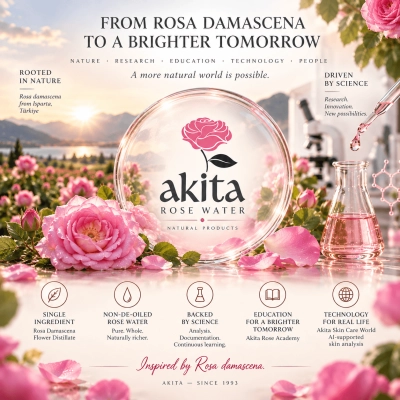
From Rosa damascena to the Future: Akita’s 2025–2026 Journey and Our Vision for 2027
From Non-De-Oiled Rose Water to scientific research, education and Akita Skin Care World: a new chapter in Akita’s journey
Some years represent more than growth for a company. They become periods of reflection—moments when a company looks beyond what it produces and asks deeper questions about what makes it different, what it has learned, and where it wants to go next.
For Akita, 2025 and 2026 have been such years.
Our journey began in 1993 and has been shaped by more than three decades of experience with natural products, botanical ingredients and skin care. At the heart of that journey has remained one remarkable flower:
Rosa damascena.
Over the years, our relationship with this flower has evolved from production into a much broader pursuit of knowledge. We have explored how it is cultivated and harvested, how distillation influences the resulting botanical distillate, how its composition can be studied, and how this knowledge can contribute to the development of natural skin care.
During 2025 and 2026, another dimension was added to this journey:
researching, measuring, documenting, educ...
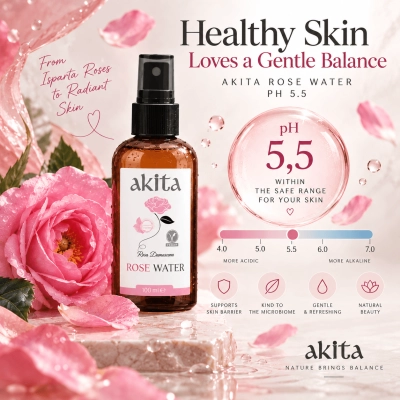
Why Does Your Skin’s pH Matter? Is 5.5 Really the Magic Number?
Your skin naturally has a slightly acidic surface. But what does that mean for your skin barrier, microbiome, and the products you use every day? Science shows that skin pH is much more interesting than a single number.
You may have seen the words “pH-balanced” on a facial cleanser, toner, or moisturizer. You may also have heard that the ideal pH for skin is 5.5.
But why 5.5?
And is everyone’s skin really pH 5.5 all the time?
The answer is more interesting than you might expect.
Your skin has a naturally slightly acidic environment at its surface. Scientists have studied this environment for decades because skin pH is closely connected with the skin barrier, the microorganisms that live on our skin, and some of the biological processes that help the skin function normally.
First, What Is pH?
pH is a way of describing how acidic or alkaline something is.
The scale generally runs from 0 to 14:
7 is neutral
Below 7 is acidic
Above 7 is alkaline
Pure water is close to neutral.
Healthy skin, however, is generally not neutral.
Its surface is naturally slightly acidic.
And that is where things become...

A practical guide to ingredients, production methods, quality testing and label transparency
Walk into a beauty store, natural health shop or online marketplace in Canada and you will find dozens of products labelled “rose water.” Their packaging may feature claims such as “natural,” “pure,” “organic,” “100% rose water” or “free from additives.”
At first glance, these products may appear almost identical. In reality, they can differ considerably in their ingredients, botanical source, production method and quality standards.
A bottle of genuine rose water may represent thousands of freshly harvested roses, careful distillation and generations of production knowledge. Another product with a similar name may simply be water combined with rose fragrance and other cosmetic ingredients.
This is why knowing how to identify genuine rose water matters.
The answer cannot be determined by scent, colour or price alone. A reliable assessment requires looking at the ingredient list, botanical species, production method, safety testing and the amount of verifiable information provided by the manufacturer.
Not Every Product Called “Rose Water” Is the Same
Rose water is often viewed as litt...
“Natural” on the front label is not enough, learn how to read the ingredients, understand the production method and recognize a genuine rose distillateRose water looks like a simple product, but choosing an authentic one can be surprisingly difficult. Many bottles display words such as “natural,” “pure” or “made with roses,” even when the formula contains added water, fragrance, preservatives or other ingredients.So how can you tell whether rose water is truly pure?There is no single home test that can prove purity with complete certainty. Colour, scent and price can provide clues, but the most reliable assessment comes from examining several details together: The ingredient list The method of production Whether rose oil has been separated The product’s natural aroma and taste profile Its microbiological stability Laboratory analysis and traceability Understanding these factors is more useful than relying on the word “natural” alone.1. Begin With the Ingredient ListIn Canada, cosmetic products must display their ingredients using the International Nomenclature of Cosmetic Ingredients, commonly known as INCI. This gives consumers a more reliable place to begin than the marketin...
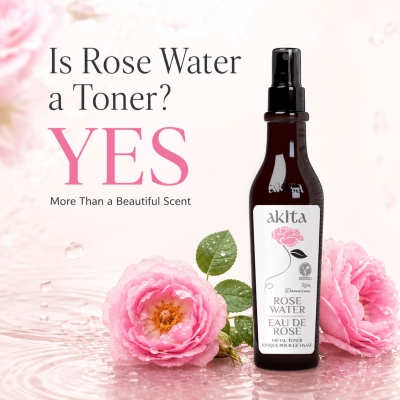
Yes, pure rose water can be used as a gentle facial toner, but its value goes far beyond its beautiful scent
Rose water is often recognized by its delicate floral aroma. Yet the fragrance is only one part of what makes genuine rose water special. When produced by distilling Rosa damascena flowers, rose water contains naturally occurring, water-soluble and aromatic compounds transferred from the petals during distillation.
This botanical composition is why high-quality rose water can serve as a simple, refreshing facial toner for daily skincare.
What Is a Facial Toner?
A facial toner is a lightweight, water-based product applied after cleansing and before serum or moisturizer. Depending on its formulation, a toner may help:
Refresh the skin after cleansing
Remove small traces of cleanser or surface residue
Prepare the skin for the next steps in a skincare routine
Provide light hydration
Leave the skin feeling softer and more comfortable
Traditional toners often contained high levels of alcohol and were designed to create a tight, dry sensation. Modern skincare has moved toward gentler formulas that focus on hydration and skin comfort rather than stripping awa...
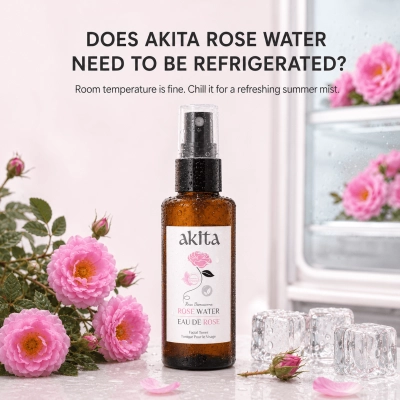
The simple answer for Canadian homes: no refrigeration is required, but chilling it can make summer skincare feel beautifully refreshing
is famous for its cold winters, but anyone who has experienced a humid Ontario summer, a heat wave in British Columbia or a sunny afternoon in Québec knows that Canadian weather is anything but predictable.
That leads to one of the most frequently asked questions about rose water:
Does rose water need to be refrigerated after opening?
For Akita Non-De-oiled Rose Water, the answer is simple:
No. Akita Non-De-oiled Rose Water does not need to be refrigerated. It can be stored at room temperature when kept away from direct sunlight and excessive heat.
You may, however, place it in the refrigerator during the summer if you enjoy the fresh sensation of a cool facial mist. Refrigeration is a matter of personal comfort, not a storage requirement.
The quick answer
Akita Non-De-oiled Rose Water can be stored:
At normal room temperature
In a cool, dry place
Away from direct sunlight
Away from radiators, fireplaces and other heat sources
Outside the refrigerator throughout the year
In the refrigerator when a cool summer...
🧪 What Is Rose Water?
Rose water is made from rose flowers. It looks like normal water, but it has special things inside from the rose. These include natural oils, minerals, and a beautiful smell.
Many rose waters sold in stores are made using roses that already had their oils taken out. That means what’s left is just "rose-scented water" — not the real thing.
At Akita Rose Water, we wanted to do it differently.
🌿 Our Science: Keeping the Rose Alive
We learned something important: The essential oil in a rose is where the magic happens. It helps your skin feel calm, soft, and healthy.
So we decided to never remove the oil from our roses.
Instead, we:
Grow organic roses — no chemicals!
Grow organic roses — no chemicals!
Pick the roses by hand early in the morning.
Use a copper still to gently steam the petals.
Collect the water with all the rose's natural goodness inside.
This is called single distillation, and it keeps all the good parts in the water.
Use a copper still to gently steam the petals.
Collect the water with all the rose's natural goodness inside.
This is called single distill...
Rose water has long been cherished for its versatile applications in skincare, wellness, and culinary arts. Among the myriad rose water products available, Akita's Non De-Oiled Rose Water distinguishes itself through a unique production process and enhanced benefits. This article delves into the virtues of rose water, emphasizing the distinctive qualities and scientifically-backed advantages of Akita's Non De-Oiled Rose Water.
The Traditional Benefits of Rose Water
Rose water, derived from the distillation of rose petals, has been a staple in beauty and wellness routines for centuries. Its acclaimed benefits include:
Skin Hydration and Refreshment: Rose water is known for its moisturizing properties, helping to revitalize and hydrate the skin.
Anti-Inflammatory Effects: The natural compounds in rose water can soothe skin irritation and reduce redness.
Antioxidant Properties: Rich in antioxidants, rose water helps protect the skin from damage caused by free radicals.
Aromatherapeutic Qualities: Its pleasant fragrance is often used to uplift mood and promote relaxation.
Introducing Akita's Non De-Oiled Rose Water
While traditional rose water offers no...