Etiket: #distillat de rose
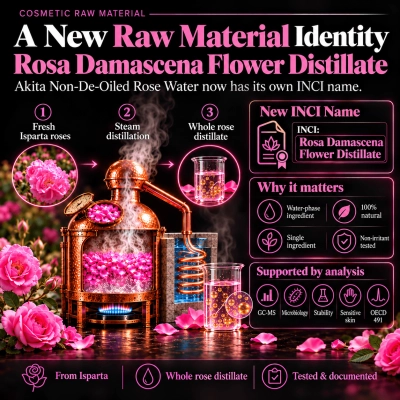
Rosa Damascena Flower Distillate: Rethinking the Water Phase in Modern Cosmetic Formulation
A new botanical raw material identity for formulators looking beyond conventional purified water
In cosmetic formulation, water is often the largest ingredient in the formula.
Yet it is also one of the ingredients that receives the least attention.
For decades, formulators have invested heavily in active ingredients, botanical extracts, peptides, oils and delivery systems while the aqueous phase has largely remained functional and invisible.
But the direction of modern formulation is changing.
Brands are increasingly looking for multifunctional raw materials, shorter ingredient lists, botanical storytelling, traceable sourcing and ingredients supported by analytical documentation.
This raises an interesting formulation question:
What if the water phase itself could contribute to the identity of the finished product?
Akita Non-De-Oiled Rose Water introduces one possible answer.
The ingredient now has a distinct INCI identity:
Rosa Damascena Flower Distillate
INCI Application No. 2025-14613
Produced from Rosa damascena flowers through Akita's non-de-oiled distillation approach...
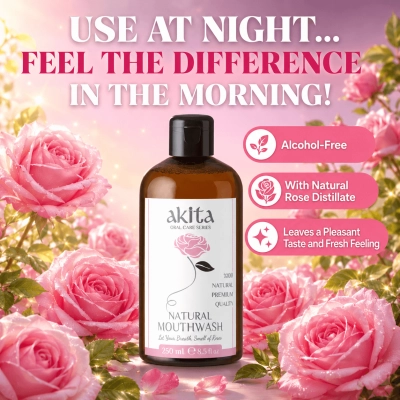
Why Add Akita Natural Rose Mouthwash to Your Nighttime Oral-Care Routine?
A refreshing final step inspired by the delicate aroma of Isparta roses
Morning breath is a common experience. Even after brushing before bed, many people wake up with an unpleasant taste or a less-than-fresh feeling in their mouth.
Why does this happen, and how can a thoughtfully chosen mouthwash complement a nighttime oral-care routine?
Why Does the Mouth Feel Different in the Morning?
Saliva plays an important role in keeping the mouth moist and naturally clearing food particles and microorganisms. During sleep, saliva flow decreases. This creates conditions in which tongue coating and odour-producing compounds can become more noticeable by morning.
Many cases of oral malodour are associated with volatile sulfur compounds. These compounds may be produced when oral microorganisms break down food debris, proteins and other materials in the mouth. Dental plaque, tongue coating, dry mouth and certain oral-health conditions may also contribute to unpleasant breath. (American Dental Association, 2026)
This is why nighttime oral care should focus on removing accumulated plaque and food debris before the ho...