Etiket: #Rose Distillation
A practical guide to ingredients, production methods, quality testing and label transparency
Walk into a beauty store, natural health shop or online marketplace in Canada and you will find dozens of products labelled “rose water.” Their packaging may feature claims such as “natural,” “pure,” “organic,” “100% rose water” or “free from additives.”
At first glance, these products may appear almost identical. In reality, they can differ considerably in their ingredients, botanical source, production method and quality standards.
A bottle of genuine rose water may represent thousands of freshly harvested roses, careful distillation and generations of production knowledge. Another product with a similar name may simply be water combined with rose fragrance and other cosmetic ingredients.
This is why knowing how to identify genuine rose water matters.
The answer cannot be determined by scent, colour or price alone. A reliable assessment requires looking at the ingredient list, botanical species, production method, safety testing and the amount of verifiable information provided by the manufacturer.
Not Every Product Called “Rose Water” Is the Same
Rose water is often viewed as litt...
Few botanical ingredients have inspired perfume, skin care and traditional wellness practices as deeply as Damask rose oil. Also known as rose otto or Rosa damascena essential oil, this intensely aromatic oil is produced from freshly harvested Damask rose petals.
Its value comes from more than its celebrated fragrance. Damask roses have a short flowering season, the blossoms must be collected and processed carefully, and only a very small amount of essential oil is obtained from a large quantity of flowers.
But what exactly is Damask rose oil? Is rose otto the same as rose essential oil? What does it smell like, and what does scientific research actually say about its benefits?
This guide explains the complete journey—from the rose fields to the finished oil.
What Is Damask Rose Oil?
Damask rose oil is the concentrated volatile oil obtained primarily from the flowers of Rosa damascena Mill. The oil is generally produced through water or steam distillation and is widely used in fine fragrance, cosmetics, aromatherapy and natural health products.
Several names may appear on product labels:
Damask rose oil
Rose essential oil
Rosa damascena flower oil
Rose otto
At...
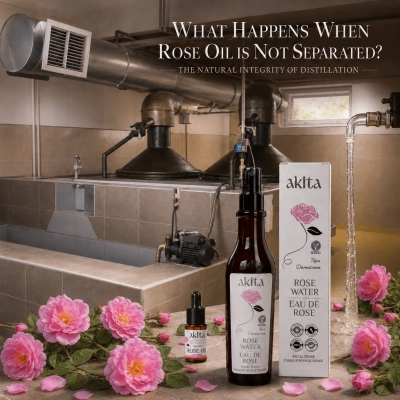
Discover how retaining the naturally occurring rose oil phase can influence the composition, appearance, aroma and character of rose distillate
When freshly harvested Isparta roses enter a distillation vessel, they produce much more than pleasantly scented water.
As heat and steam move through the rose petals, different aromatic compounds are carried away from the flowers. Once the aromatic steam is cooled, it condenses back into a liquid containing two distinct but related fractions:
An aromatic, water-based rose distillate
A small amount of water-insoluble rose essential oil
In conventional rose oil production, the visible essential oil phase is separated and collected. The remaining aromatic water is generally known as rose water or rose hydrosol.
But what happens when the naturally occurring rose oil is not separated?
The simple answer is that the oil phase produced during distillation remains within the collected distillate. This does not mean that all of the essential oil dissolves in the water. Some of it may remain dispersed as extremely small droplets, while certain water-compatible aromatic compounds stay dissolved in the water phase.
This distinction lies...