Etiket: #Rose Hydrosol
“Natural” on the front label is not enough, learn how to read the ingredients, understand the production method and recognize a genuine rose distillateRose water looks like a simple product, but choosing an authentic one can be surprisingly difficult. Many bottles display words such as “natural,” “pure” or “made with roses,” even when the formula contains added water, fragrance, preservatives or other ingredients.So how can you tell whether rose water is truly pure?There is no single home test that can prove purity with complete certainty. Colour, scent and price can provide clues, but the most reliable assessment comes from examining several details together: The ingredient list The method of production Whether rose oil has been separated The product’s natural aroma and taste profile Its microbiological stability Laboratory analysis and traceability Understanding these factors is more useful than relying on the word “natural” alone.1. Begin With the Ingredient ListIn Canada, cosmetic products must display their ingredients using the International Nomenclature of Cosmetic Ingredients, commonly known as INCI. This gives consumers a more reliable place to begin than the marketin...
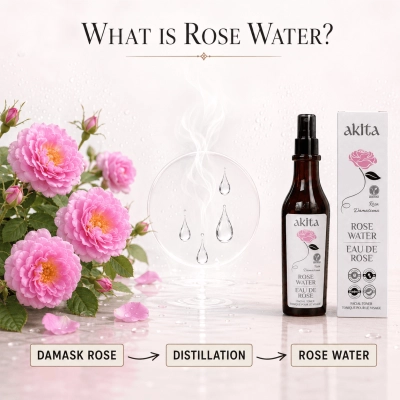
A complete guide to real rose water, rose hydrosol and Rosa damascena flower distillate
Rose water is often described simply as water that smells like roses. That description, however, leaves out what makes traditionally distilled rose water so distinctive.
Authentic rose water is an aromatic distillate produced from rose flowers—most commonly the Damask rose, Rosa damascena. During distillation, heat releases volatile and water-soluble compounds from the petals. These compounds travel with the steam, which is then cooled and collected as a clear, fragrant liquid.
The result is more than rose-scented water. It is a plant distillate whose aroma, composition and quality depend on the rose variety, growing region, harvest conditions, distillation method and whether the rose oil is separated afterward.
This distinction matters because products sold as “rose water” in Canada can be very different from one another.
What exactly is rose water?
In its traditional sense, rose water is the water-based aromatic portion collected during the distillation of fresh rose flowers.
A scientific description would be:
Rose water is a liquid distillate containing wa...
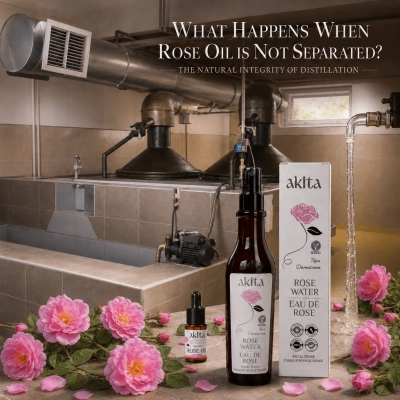
Discover how retaining the naturally occurring rose oil phase can influence the composition, appearance, aroma and character of rose distillate
When freshly harvested Isparta roses enter a distillation vessel, they produce much more than pleasantly scented water.
As heat and steam move through the rose petals, different aromatic compounds are carried away from the flowers. Once the aromatic steam is cooled, it condenses back into a liquid containing two distinct but related fractions:
An aromatic, water-based rose distillate
A small amount of water-insoluble rose essential oil
In conventional rose oil production, the visible essential oil phase is separated and collected. The remaining aromatic water is generally known as rose water or rose hydrosol.
But what happens when the naturally occurring rose oil is not separated?
The simple answer is that the oil phase produced during distillation remains within the collected distillate. This does not mean that all of the essential oil dissolves in the water. Some of it may remain dispersed as extremely small droplets, while certain water-compatible aromatic compounds stay dissolved in the water phase.
This distinction lies...
For Years, We Focused on Rose Oil, But What Did We Lose in the Rose Water?
Akita takes a different approach to rose distillation: instead of adding rose oil back later, it preserves the aromatic oil naturally present in the Rosa damascena distillate.
When Rosa damascena flowers enter a distillation vessel, attention usually turns to one highly valued result:
Rose essential oil.
Its rarity, intensive production process, and value in fine fragrance and skincare have made it the most celebrated part of rose distillation.
Yet rose oil is not the only valuable result.
Alongside a small quantity of essential oil, distillation produces a much larger volume of aromatic rose distillate. This water phase carries naturally occurring aromatic constituents transferred from the flowers during distillation.
That raises an important question:
When rose oil is separated from the distillate, what remains—and what may be removed from the rose water’s original aromatic composition?
Akita’s Non-De-Oiled Rose Water was developed around this question.
Rose Distillation Produces More Than Essential Oil
Steam distillation does not simply extract one substance from a flower.
As heat and...
The Benefits of Rose Water for Skin and Emotional Well-Being: More Than Its Scent
Rose water is not only for those who love the scent of roses. It is for people who love their skin, care for it, and seek a natural product they can use confidently over time.
When we think of rose water, its fragrance may be the first thing that comes to mind. Yet the skincare value of a genuine, natural rose distillate extends far beyond how long its scent lasts.
Rose water may be described as a skin hydrosol, hydrolat, facial spray, face mist, or natural skincare water. Whatever term you prefer, what truly matters is why you use it.
You can choose Akita Non-De-Oiled Rose Water not simply because you enjoy its natural rose aroma, but because it is a simple, natural, and versatile product that can become part of your daily skincare routine.
A beautiful aroma may fade within minutes, but the care you give your skin, the consistency of your routine, and the refreshing sensation the product leaves on your skin can continue.
🌹 The Central Idea of This Article
Rose water is not only for those who enjoy the scent of roses. It is for people who value natural products, understand their authentic ch...
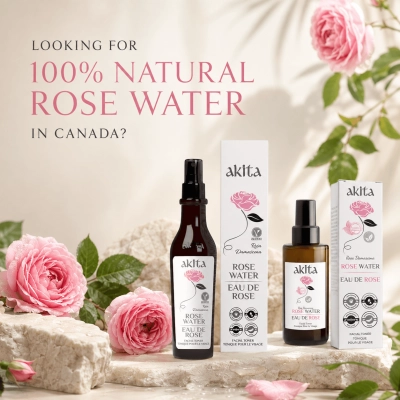
For Those Looking for 100% Natural Rose Water
For those who recognize the scent of nature, value pure ingredients, and seek a genuine skincare experience
For those who care deeply about natural products…For those who want to know exactly what they apply to their skin…For those who value pure, artisanal, and distinctive production…For those seeking more than a pleasant fragrance…
Akita Non-Deoiled Rose Water was created for you.
Authentic natural rose water does not have to smell intensely sweet or perfume-like. Alongside the delicate scent of Rosa damascena, a genuine rose distillate may contain other distinctive aromatic notes naturally carried into the product during distillation.
People familiar with natural products understand this difference. They do not judge a botanical distillate only by its first scent. They also consider its ingredients, production method, certifications, and how their skin feels with regular use.
🌹 The essential message
The quality of natural rose water should not be judged solely by the intensity of its fragrance. The type of rose, production method, preservation of its natural character, certifications, analyses, and skincare experience all m...