Is Rose Water a Toner? Benefits, Uses and What Makes a Good Rose Water Toner
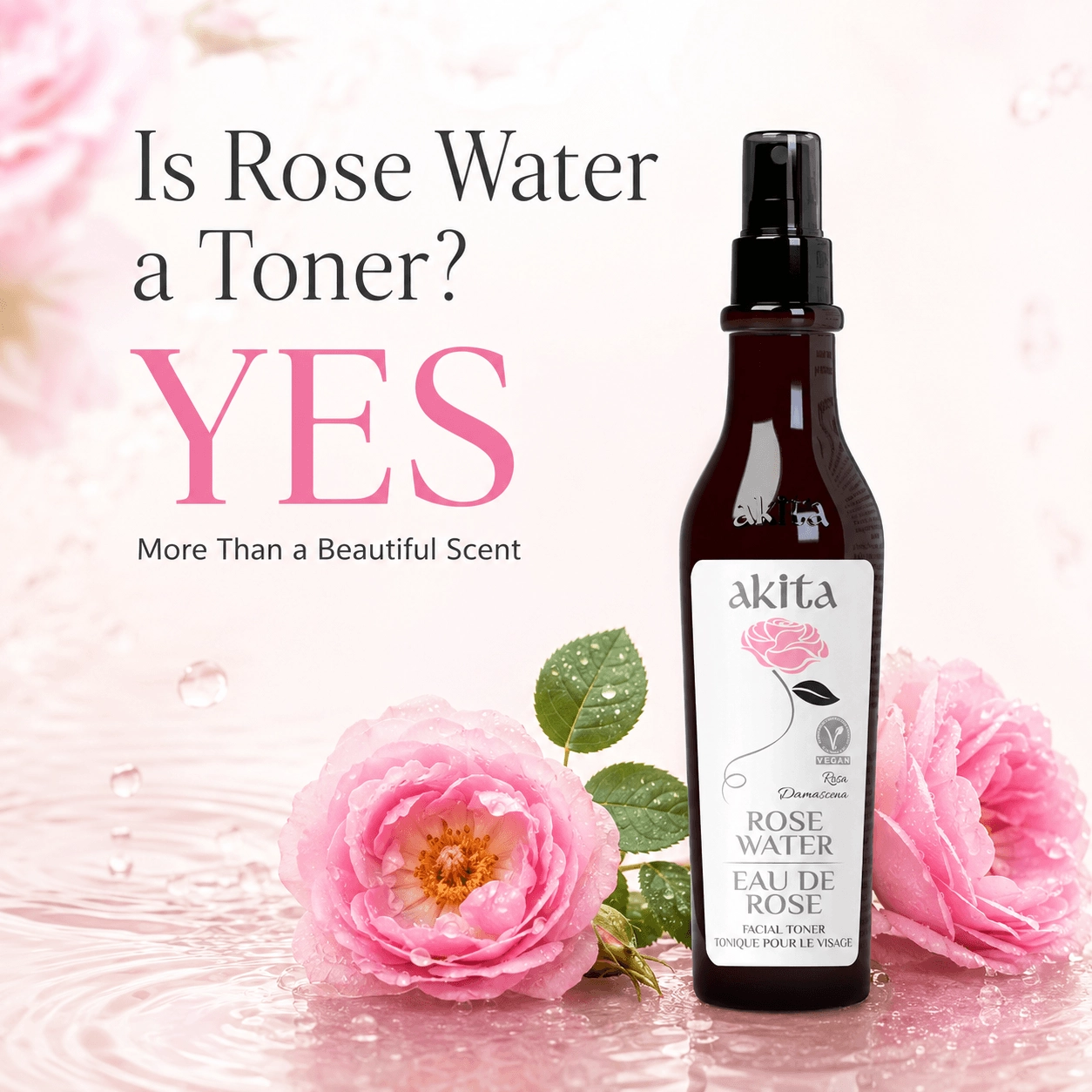
Yes, pure rose water can be used as a gentle facial toner, but its value goes far beyond its beautiful scent
Rose water is often recognized by its delicate floral aroma. Yet the fragrance is only one part of what makes genuine rose water special. When produced by distilling Rosa damascena flowers, rose water contains naturally occurring, water-soluble and aromatic compounds transferred from the petals during distillation.
This botanical composition is why high-quality rose water can serve as a simple, refreshing facial toner for daily skincare.
What Is a Facial Toner?
A facial toner is a lightweight, water-based product applied after cleansing and before serum or moisturizer. Depending on its formulation, a toner may help:
- Refresh the skin after cleansing
- Remove small traces of cleanser or surface residue
- Prepare the skin for the next steps in a skincare routine
- Provide light hydration
- Leave the skin feeling softer and more comfortable
Traditional toners often contained high levels of alcohol and were designed to create a tight, dry sensation. Modern skincare has moved toward gentler formulas that focus on hydration and skin comfort rather than stripping away the skin’s natural oils.
Pure rose water fits naturally into this gentler approach.
So, Is Rose Water a Toner?
Yes. A properly produced, skin-safe rose water can be used as a natural facial toner.
Rose water is not merely water with a rose fragrance added to it. Authentic distilled rose water is created when steam passes through rose flowers and carries some of their volatile and water-compatible compounds into the resulting distillate.
Applied after cleansing, it can refresh the face and prepare the skin for moisturizer, facial oil or serum. Its fine floral aroma also turns a basic skincare step into a pleasant daily ritual.
However, not every product labelled “rose water” has the same composition. Some are diluted, fragranced or made with synthetic perfume. The quality of the flowers, distillation process and final formula all influence what reaches your skin.
The Rose Is More Than Its Fragrance
The scent of Rosa damascena comes from a complex natural mixture rather than a single fragrance molecule. Depending on the variety, growing conditions and production method, rose distillates may contain compounds such as:
- Phenethyl alcohol
- Citronellol
- Geraniol
- Nerol
- Linalool
- Other minor aromatic constituents
These substances help create the rose’s distinctive aroma, but they have also attracted scientific interest for their biological properties. Research on Rosa damascena preparations has reported antioxidant, antimicrobial and anti-inflammatory potential. However, the strength of these effects depends on the type and concentration of the rose preparation studied. Results from rose oil, concentrated extracts or laboratory experiments should not automatically be presented as proven benefits of every rose water. PubMed literature review
That distinction matters. Rose water may be a valuable skincare ingredient, but credible skincare information should explain what the evidence can, and cannot, show.
Potential Benefits of Using Rose Water as a Toner
1. It refreshes the skin without a heavy texture
Rose water has a light consistency that works well between cleansing and moisturizing. It can help the face feel fresh without leaving behind a thick or oily layer.
This makes it especially convenient in warm weather, after travel or whenever the skin needs a quick refresh.
2. It provides light, water-based hydration
Misting the skin adds moisture to its surface and can temporarily relieve a dry or tight feeling after cleansing. For longer-lasting hydration, apply serum or moisturizer while the skin is still slightly damp. This helps reduce the loss of water from the skin’s surface.
Rose water should therefore complement, not replace, a well-formulated moisturizer.
3. It can support a gentle skincare routine
A rose water toner without drying alcohol or harsh exfoliating acids may be suitable for people who prefer a minimal routine. It can be particularly appealing when stronger toners leave the skin feeling uncomfortable.
Sensitive skin can still react to botanical substances, including natural aromatic compounds. Anyone with highly reactive skin, rosacea or known fragrance allergies should patch-test the product first.
4. It prepares the skin for the next skincare step
Applying serum or moisturizer to slightly damp skin can make these products easier to spread. Rose water provides a pleasant way to create that lightly damp base after cleansing.
It does not make every active ingredient penetrate more deeply, but it can make the routine feel smoother and more comfortable.
5. It offers more than a perfumed skincare experience
The aroma of genuine rose water comes from compounds naturally carried through distillation. This is different from adding artificial rose fragrance to plain water.
For this reason, a well-made rose distillate should be evaluated by its botanical source, production method, complete ingredient list and quality testing, not by fragrance intensity alone.
Is Rose Water Suitable for Every Skin Type?
A simple rose water toner may be used by many skin types:
- Dry skin: Use it before a moisturizer or facial oil.
- Normal skin: Apply after cleansing for freshness and light hydration.
- Combination skin: Use it as a lightweight toner without adding a heavy texture.
- Oily skin: Choose a formula without unnecessary oils or heavy additives.
- Sensitive skin: Select a tested product and perform a patch test before regular use.
Natural does not automatically mean suitable for everyone. Skin compatibility depends on the complete formula and the individual using it.
How to Use Rose Water as a Facial Toner
After cleansing your face:
- Spray rose water evenly over the face or apply it with clean hands.
- Allow it to settle for a few seconds.
- Apply your serum or moisturizer while the skin remains slightly damp.
- Use sunscreen as the final step of your morning routine.
Rose water can usually be applied morning and evening. It may also be misted onto clean skin during the day when a refreshing step is desired.
Using clean hands or a spray bottle can also avoid the rubbing and disposable cotton pads associated with traditional toner application.
What Rose Water Cannot Replace
Even an excellent rose water toner does not replace every skincare product. It is not:
- A complete facial cleanser
- A treatment for acne, eczema or rosacea
- A substitute for moisturizer
- An exfoliant unless specifically formulated as one
- A sunscreen
Its best role is as a gentle, versatile step that refreshes the skin and supports the rest of a balanced routine.
How to Choose a Good Rose Water Toner
Look beyond attractive packaging and the words “natural” or “rose-scented.” Before buying, check:
- Botanical identity: Look for Rosa damascena when seeking Damask rose water.
- Ingredient list: A pure product should not need synthetic rose perfume.
- Production method: Distilled rose water is different from fragranced water.
- Oil separation: Conventional rose-water production may remove the rose oil after distillation, while a non-de-oiled distillate retains the aromatic phase within the finished water.
- Quality and safety testing: Microbiological stability, skin compatibility and appropriate manufacturing standards matter.
- Packaging: A protected spray system can reduce repeated contact with the product.
A very strong perfume is not necessarily a sign of better quality. Genuine rose distillates can have a delicate, layered aroma that varies naturally from harvest to harvest.
Rose Water Should Be Known as Skincare, Not Just Fragrance
When people hear “rose water,” they often imagine only a pleasant-smelling traditional product. A better understanding begins with the rose itself.
Rosa damascena is not valuable merely because it smells beautiful. Its naturally occurring compounds and the way they are captured through distillation give authentic rose water its botanical character.
That is why genuine, carefully produced rose water deserves to be considered a daily facial toner—not simply a perfumed water.
Frequently Asked Questions
Can I use rose water as a toner every day?
Yes, a skin-safe rose water can generally be used every day. Follow the product directions and discontinue use if irritation develops.
Should I wash rose water off my face?
No. When it is formulated as a leave-on facial product, rose water can remain on the skin before serum or moisturizer.
Does rose water close pores?
Pores do not physically open and close. A gentle toner may make the skin look fresher and smoother, but claims that rose water permanently closes pores are misleading.
Can rose water replace moisturizer?
No. Rose water provides surface moisture, while a moisturizer contains ingredients that help hold water in the skin and support its protective barrier.
Is every rose water suitable as a facial toner?
No. Culinary rose water, artificially fragranced water and products with unsuitable additives are not necessarily intended for facial use. Choose a cosmetic-grade product with clear ingredients and appropriate safety testing.
Is rose water good for sensitive skin?
It is suitable for sensitive skin, especially when the formula is simple and properly tested.
References
- Nayebi, N., Khalili, N., Kamalinejad, M. et Emtiazy, M. (2017). A systematic review of the efficacy and safety of Rosa damascena Mill. with an overview on its phytopharmacological properties. Complementary Therapies in Medicine, 34, 129–140.
Cette revue présente les principaux constituants de Rosa damascena ainsi que les recherches consacrées à ses propriétés biologiques. Consulter sur PubMed - Mahboubi, M. (2016). Rosa damascena as holy ancient herb with novel applications. Journal of Traditional and Complementary Medicine, 6(1), 10–16.
Cette publication examine la composition, les usages traditionnels et les propriétés étudiées de différentes préparations de Rosa damascena. Consulter l’article - Bayhan, G. İ., Gumus, T., Alan, B. et al. (2020). Influence of Rosa damascena hydrosol on skin flora (contact culture) after hand-rubbing. GMS Hygiene and Infection Control, 15, Doc21.
DOI: 10.3205/dgkh000356.
L’analyse GC-MS réalisée dans cette étude a identifié l’alcool phényléthylique, le bêta-citronellol et le géraniol parmi les principaux constituants du distillat étudié. L’étude n’a toutefois pas observé d’effet antibactérien significatif après application sur les mains. Cette conclusion rappelle qu’un hydrolat de rose ne doit pas être présenté comme un antiseptique. Consulter l’étude - Ulusoy, S., Boşgelmez-Tınaz, G. et Seçilmiş-Canbay, H. (2009). Tocopherol, carotene, phenolic contents and antibacterial properties of rose essential oil, hydrosol and absolute. Current Microbiology, 59(5), 554–558.
DOI: 10.1007/s00284-009-9475-y.
Cette étude compare la composition et l’activité de plusieurs produits de la rose. Elle montre pourquoi les résultats obtenus avec l’huile essentielle, l’absolue et l’hydrolat ne doivent pas être considérés comme interchangeables. Consulter sur PubMed - Baydar, H., Kuleaşan, H., Kara, N., Seçilmiş-Canbay, H. et Kineci, S. (2013). The effects of pasteurization, ultraviolet radiation and chemical preservatives on microbial spoilage and scent composition of rose water. Journal of Essential Oil Bearing Plants, 16(2), 151–160.
DOI: 10.1080/0972060X.2013.794043.
Cette recherche porte sur la stabilité microbiologique et l’évolution de la composition aromatique de l’eau de rose selon les conditions de traitement et de conservation. Consulter la publication - Boskabady, M. H., Shafei, M. N., Saberi, Z. et Amini, S. (2011). Pharmacological effects of Rosa damascena. Iranian Journal of Basic Medical Sciences, 14(4), 295–307.
Cette revue résume les propriétés pharmacologiques étudiées de Rosa damascena. La majorité des résultats concernent cependant des extraits, l’huile essentielle ou des modèles expérimentaux, et non nécessairement une eau de rose cosmétique appliquée sur le visage. Consulter sur PubMed
Comment