Etiket: #Rosa damascena
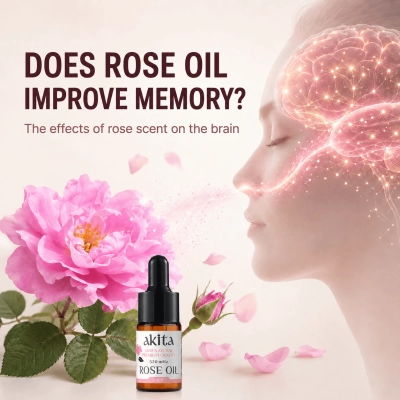
What does science tell us about Rosa damascena, rose essential oil, memory, gray matter, and the brain?
Could something as simple as the scent of a rose be associated with measurable changes in the brain?
It sounds surprising, but scientists have begun asking exactly this kind of question.
In recent years, researchers have studied Rosa damascena—the Damask rose famously cultivated in Isparta, Türkiye—and rose essential oil to better understand their possible relationship with the brain, learning, and memory.
One recent human study produced a particularly interesting finding: after one month of continuous exposure to a designated rose scent, researchers detected changes in gray matter volume using MRI brain scans.
Other studies involving Rosa damascena extract and rose essential oil have explored memory, BDNF, neurogenesis, and the systems nerve cells use to communicate.
So, does this mean smelling roses improves your memory?
Not yet.
The science is promising, but there is an important difference between discovering a change in the brain and proving that something improves memory. Here is what researchers have actually found.
🌹 One Month of...

Safe inhalation and skincare methods for Rosa damascena essential oil
If you are wondering how rose oil is used, controlled inhalation is one of the most common methods reported in scientific studies. Researchers have typically placed a small amount of rose oil on cotton or cloth and asked participants to inhale its aroma for a specified period without applying the oil inside the nose. In topical studies, rose oil has generally been diluted in a carrier oil before being applied to the skin.
For everyday use, pure rose essential oil should not be applied directly to the skin, around the eyes, or inside the mouth. For inhalation, you may place one drop on a cotton pad or aroma inhaler and smell it briefly from a distance. For topical use, it should be diluted to a low concentration in a suitable carrier oil.
When choosing rose oil, look for products that clearly state their ingredients and intended use. You can review Akita Golden Rose Oil 1 mL for product information. You may also explore Akita’s carrier oil options.
How has rose oil been used in scientific studies?
In human studies involving rose oil, the method of application has varied according to the purpose of the resea...
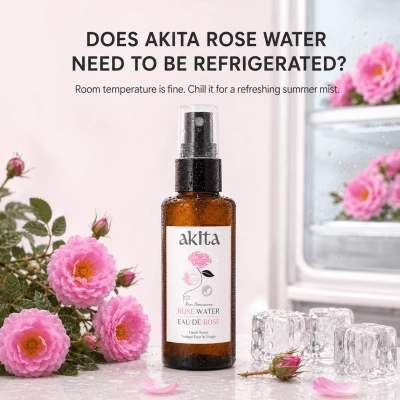
The simple answer for Canadian homes: no refrigeration is required, but chilling it can make summer skincare feel beautifully refreshing
is famous for its cold winters, but anyone who has experienced a humid Ontario summer, a heat wave in British Columbia or a sunny afternoon in Québec knows that Canadian weather is anything but predictable.
That leads to one of the most frequently asked questions about rose water:
Does rose water need to be refrigerated after opening?
For Akita Non-De-oiled Rose Water, the answer is simple:
No. Akita Non-De-oiled Rose Water does not need to be refrigerated. It can be stored at room temperature when kept away from direct sunlight and excessive heat.
You may, however, place it in the refrigerator during the summer if you enjoy the fresh sensation of a cool facial mist. Refrigeration is a matter of personal comfort, not a storage requirement.
The quick answer
Akita Non-De-oiled Rose Water can be stored:
At normal room temperature
In a cool, dry place
Away from direct sunlight
Away from radiators, fireplaces and other heat sources
Outside the refrigerator throughout the year
In the refrigerator when a cool summer...
Durée de conservation de l’eau de rose Akita Non-De-Oiled : combien de temps se conserve-t-elle?
L’étiquette indique une durée de conservation de deux ans, mais les essais de stabilité, le pH naturellement acide et l’analyse d’un échantillon vieux d’environ dix ans révèlent une histoire fascinante.
Lorsqu’un produit de soin est présenté comme naturel et sans agent de conservation ajouté, une question se pose presque immédiatement : combien de temps peut-il réellement se conserver?
Cette question est particulièrement pertinente au Canada, où un produit peut être exposé à des conditions très différentes au cours de son transport et de son utilisation : froid hivernal, chaleur dans les véhicules de livraison, variations rapides de température ou humidité dans la salle de bain.
L’Akita Non-De-Oiled Rose Water, aussi appelée distillat de rose Akita ou eau de rose non déshuilée, affiche une durée de conservation de deux ans avant ouverture. Cette durée s’applique lorsque le flacon demeure fermé, que l’emballage est intact et que le produit est conservé conformément aux indications figurant sur son étiquette.
Il est important de préciser que ce produit est conditionné dans un flacon...
The Hidden Difference Between Flower Water, Flower Distillate and INCI Naming
Two bottles can both say “rose water.” They may look similar, smell floral and be sold for the same skincare routine. But were they actually made the same way?
One product may be obtained directly through the distillation of rose petals. Another may be water blended with essential oil, fragrance or other aromatic ingredients. Even two genuine rose distillates may differ depending on whether the naturally occurring essential-oil fraction was separated during production.
That is why the words on the front of a bottle tell only part of the story.
To understand the identity of rose water, we need to look beyond its consumer-friendly name. We need to ask how it was produced, what was added or removed, what appears in its ingredient list and what the available documentation actually confirms.
Because rose water may be the name of the product—but distillate tells its production story.
The short answer: “Flower water” can be a broad consumer or commercial description. “Flower distillate” generally describes a water-based product obtained through the distillation of flowers. A genuine Rosa damascena disti...
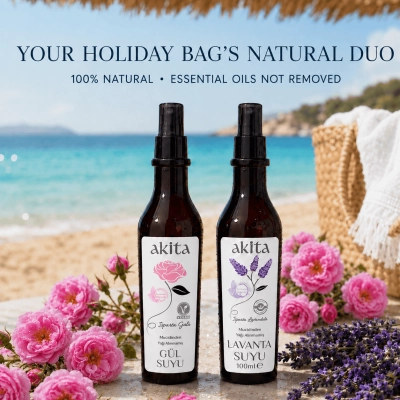
Canadian getaways come in many forms. They can mean flying across the country, driving to a lakeside cottage, spending a weekend at a cabin, camping under the stars or exploring a new city. Wherever you are headed, Akita Non-De-Oiled Rose Water and Lavender Water offer a simple way to refresh your cosmetic routine without packing a crowded collection of products.
One Duo, Many Canadian Getaways
Not every Canadian holiday includes a beach, and that is exactly why these two floral waters are so versatile.
Picture an early morning flight from Toronto, a road trip through Ontario’s cottage country, an afternoon beside the lake and a cool evening on the dock. Along the way, your skin may experience air conditioning, cabin heating, dry aircraft air, wind, sun and changes in temperature.
The two 100 ml Akita bottles fit easily into a weekend bag, personal item or travel toiletry kit. Once you arrive, they can move from your suitcase to your day bag, bathroom shelf or cottage refrigerator.
There is no complicated routine to follow. Choose the floral water that suits the moment, spray it onto clean skin and notice how it feels. Use Rose Water when you want a fresh, floral ritual. Reach...
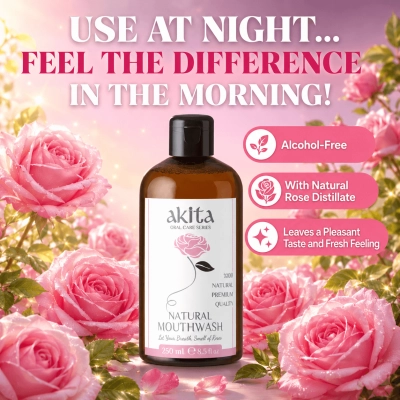
Why Add Akita Natural Rose Mouthwash to Your Nighttime Oral-Care Routine?
A refreshing final step inspired by the delicate aroma of Isparta roses
Morning breath is a common experience. Even after brushing before bed, many people wake up with an unpleasant taste or a less-than-fresh feeling in their mouth.
Why does this happen, and how can a thoughtfully chosen mouthwash complement a nighttime oral-care routine?
Why Does the Mouth Feel Different in the Morning?
Saliva plays an important role in keeping the mouth moist and naturally clearing food particles and microorganisms. During sleep, saliva flow decreases. This creates conditions in which tongue coating and odour-producing compounds can become more noticeable by morning.
Many cases of oral malodour are associated with volatile sulfur compounds. These compounds may be produced when oral microorganisms break down food debris, proteins and other materials in the mouth. Dental plaque, tongue coating, dry mouth and certain oral-health conditions may also contribute to unpleasant breath. (American Dental Association, 2026)
This is why nighttime oral care should focus on removing accumulated plaque and food debris before the ho...
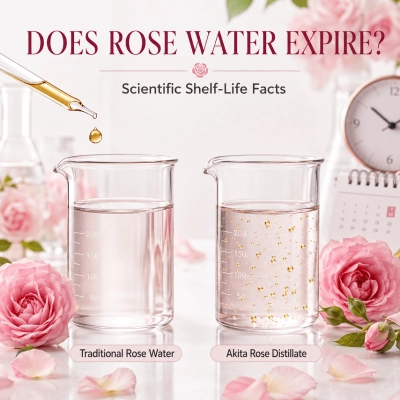
Scientific data on the shelf life of de-oiled rose water produced during rose oil production—and the difference of Akita Unde-oiled Rose Distillate
Rose water is often considered a natural product that can remain stable for many years. However, scientific research shows that not all rose waters have the same composition, production method, or storage stability.
To understand the shelf life of a rose water product, we should first ask an important question:
Is it the aromatic water remaining after rose oil has been separated, or was the rose distillate produced as the primary product without removing its naturally occurring rose oil?
This distinction matters because the production method may influence the product’s chemical composition and behavior during storage.
How Is Rose Water Produced During Rose Oil Production?
When Rosa damascena flowers are distilled with water and steam, volatile compounds from the flowers travel with the steam. After cooling, the vapor condenses back into a liquid.
The resulting distillate may contain two phases:
An aqueous phase
A volatile rose oil phase
In traditional rose oil production, the primary objective is to obtain rose oil....
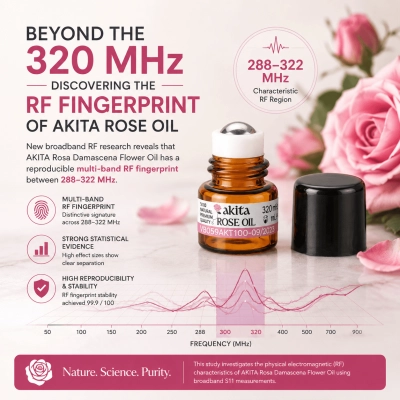
Is Rose Oil Really 320 MHz? What New Scientific Research Reveals
Beyond the 320 MHz Claim: A New Perspective on the RF Fingerprint of Rosa damascena Flower Distillate
For many years, one statement has been widely shared across aromatherapy and natural wellness communities:
"Rose vibrates at 320 MHz."
This claim has become one of the most frequently repeated facts about Rosa damascena, often presented as evidence of the flower's unique energetic properties.
But where did this number come from? Does it apply to all rose-based products, including rose water? And what happens when modern radio-frequency (RF) analysis is used to investigate this long-standing claim?
A recent exploratory study offers a different perspective. Rather than identifying a single dominant frequency, researchers observed that a non-de-oiled Rosa damascena flower distillate exhibited a reproducible multi-band RF fingerprint across a broad frequency range.
Where Did the 320 MHz Claim Originate?
An important distinction is often overlooked.
Historically, the widely quoted 320 MHz value has generally been associated with Rosa Damascena Flower Oil, the essential oil obtained during steam distillatio...
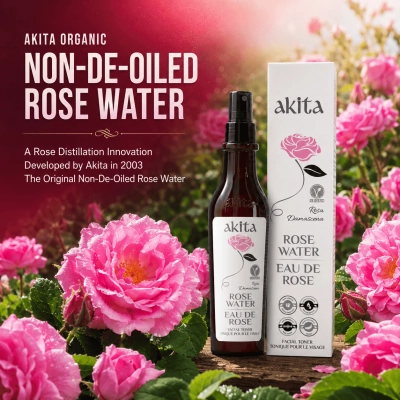
Akita Organic Non De-oiled Rose Water: A Premium Skincare Elixir Born from Nature
Akita Organic Non De-oiled Rose Water is a premium skincare product made from freshly harvested, organic Rosa Damascena, Turkey’s most precious floral treasure, grown in the heart of Isparta. Crafted with a unique, award-winning technique developed by Akita, this rose water offers unmatched purity and quality.
In the fertile lands of the Lakes Region, Rosa Damascena blooms amidst thousands of botanicals known for their therapeutic richness. These roses embody the healing essence of the soil, the sun, the stars, and the rain. Akita uses pristine water sourced from the stunning Lake Eğirdir and the mountains that nurture its rich ecosystem to create this exceptional product.
Akita has developed a specialized method that precisely calculates the optimal amount, temperature, pressure, and distillation duration, ensuring that the beneficial components of the rose are fully retained within the water.
Why Akita Rose Water is Unique:
It contains one of the richest blends of essential microelements.
It delivers a highly concentrated composition of hydrophilic aromatic co...