Etiket: #Rose Scent
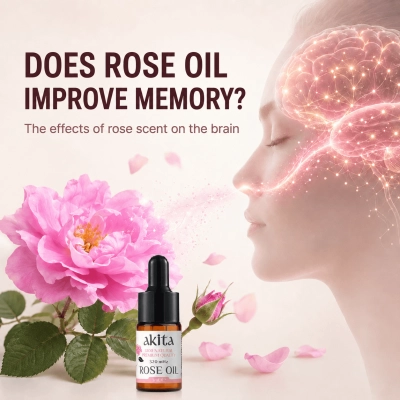
What does science tell us about Rosa damascena, rose essential oil, memory, gray matter, and the brain?
Could something as simple as the scent of a rose be associated with measurable changes in the brain?
It sounds surprising, but scientists have begun asking exactly this kind of question.
In recent years, researchers have studied Rosa damascena—the Damask rose famously cultivated in Isparta, Türkiye—and rose essential oil to better understand their possible relationship with the brain, learning, and memory.
One recent human study produced a particularly interesting finding: after one month of continuous exposure to a designated rose scent, researchers detected changes in gray matter volume using MRI brain scans.
Other studies involving Rosa damascena extract and rose essential oil have explored memory, BDNF, neurogenesis, and the systems nerve cells use to communicate.
So, does this mean smelling roses improves your memory?
Not yet.
The science is promising, but there is an important difference between discovering a change in the brain and proving that something improves memory. Here is what researchers have actually found.
🌹 One Month of...
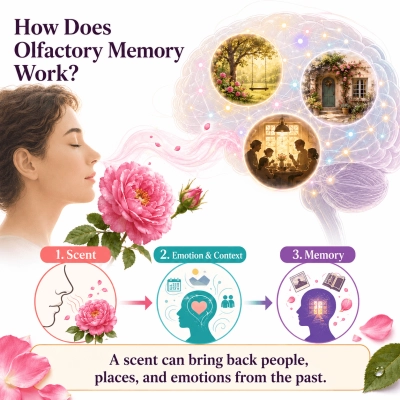
From a mother’s scent to the fragrance of roses: the invisible memory cues in our lives
A familiar soap may bring back a childhood home. A perfume may remind us of someone we have not seen for years. The scent of a rose may suddenly return us to an old garden. These experiences can revive not only an image but also the comfort, longing, or sadness associated with that time.
This shows that smell does more than help us recognize pleasant and unpleasant odours. We remember our experiences through sights and sounds, but also—often without realizing it—through scent.
What is olfactory memory?
Olfactory memory refers to the association between a smell and a person, place, event, or emotion from the past. When the same or a similar scent is encountered again, that association may be reactivated.
For someone who spent childhood summers in a rose garden, the fragrance of roses may represent more than a flower. The garden, the voices of family members, the warmth of summer, and the sense of security felt there may all have become parts of the same experience. Years later, the scent may bring some of those elements back.
“Olfactory memory” does not mean that the brain contains a separa...