Etiket: #Rosa Damascena
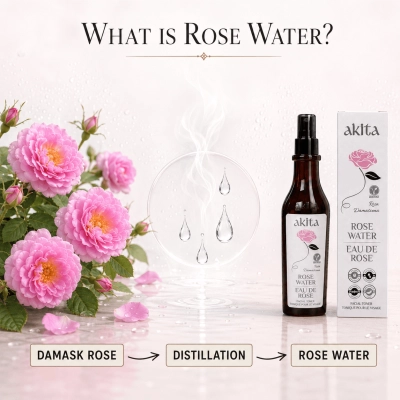
A complete guide to real rose water, rose hydrosol and Rosa damascena flower distillate
Rose water is often described simply as water that smells like roses. That description, however, leaves out what makes traditionally distilled rose water so distinctive.
Authentic rose water is an aromatic distillate produced from rose flowers—most commonly the Damask rose, Rosa damascena. During distillation, heat releases volatile and water-soluble compounds from the petals. These compounds travel with the steam, which is then cooled and collected as a clear, fragrant liquid.
The result is more than rose-scented water. It is a plant distillate whose aroma, composition and quality depend on the rose variety, growing region, harvest conditions, distillation method and whether the rose oil is separated afterward.
This distinction matters because products sold as “rose water” in Canada can be very different from one another.
What exactly is rose water?
In its traditional sense, rose water is the water-based aromatic portion collected during the distillation of fresh rose flowers.
A scientific description would be:
Rose water is a liquid distillate containing wa...
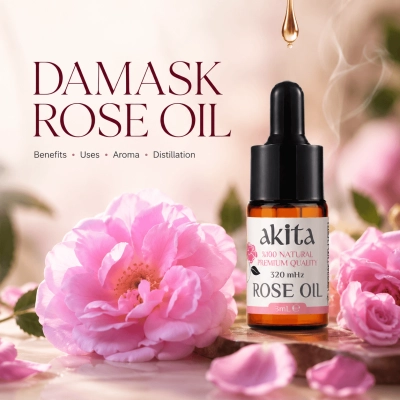
Few botanical ingredients have inspired perfume, skin care and traditional wellness practices as deeply as Damask rose oil. Also known as rose otto or Rosa damascena essential oil, this intensely aromatic oil is produced from freshly harvested Damask rose petals.
Its value comes from more than its celebrated fragrance. Damask roses have a short flowering season, the blossoms must be collected and processed carefully, and only a very small amount of essential oil is obtained from a large quantity of flowers.
But what exactly is Damask rose oil? Is rose otto the same as rose essential oil? What does it smell like, and what does scientific research actually say about its benefits?
This guide explains the complete journey—from the rose fields to the finished oil.
What Is Damask Rose Oil?
Damask rose oil is the concentrated volatile oil obtained primarily from the flowers of Rosa damascena Mill. The oil is generally produced through water or steam distillation and is widely used in fine fragrance, cosmetics, aromatherapy and natural health products.
Several names may appear on product labels:
Damask rose oil
Rose essential oil
Rosa damascena flower oil
Rose otto
At...
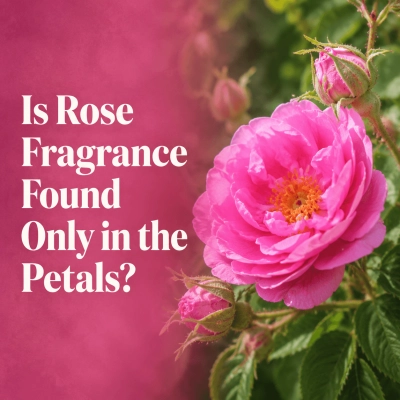
Is a Rose’s Fragrance Found Only in Its Petals? Discover the Hidden Beauty of the Whole Isparta Rose
A Rosa damascena flower is more than a collection of pink petals. Its fragrance, texture and botanical character come from a complete floral structure—petals, pollen-bearing stamens, sepals and other delicate parts working together.
When you hold an Isparta rose in your hand, the first thing you notice is its many layers of soft pink petals. It is therefore easy to associate the rose’s fragrance—and dried rose products—with the petals alone.
But Rosa damascena is not made of petals alone.
At the centre of the flower are its stamens, pistils and pollen. Beneath the petals are the sepals and receptacle that support the flower. Together, these structures form the complete botanical identity of the rose.
There is a simple and surprisingly revealing way to experience this:
Take a whole dried Isparta rose, grind it just before use and smell it immediately.
The aroma that emerges may feel deeper, warmer and more botanical than the familiar impression of sweet rose petals alone. It is not simply “a stronger rose scent.” It is a more layered encounter with the whole flower.
A Differe...
The Hidden Difference Between Flower Water, Flower Distillate and INCI Naming
Two bottles can both say “rose water.” They may look similar, smell floral and be sold for the same skincare routine. But were they actually made the same way?
One product may be obtained directly through the distillation of rose petals. Another may be water blended with essential oil, fragrance or other aromatic ingredients. Even two genuine rose distillates may differ depending on whether the naturally occurring essential-oil fraction was separated during production.
That is why the words on the front of a bottle tell only part of the story.
To understand the identity of rose water, we need to look beyond its consumer-friendly name. We need to ask how it was produced, what was added or removed, what appears in its ingredient list and what the available documentation actually confirms.
Because rose water may be the name of the product—but distillate tells its production story.
The short answer: “Flower water” can be a broad consumer or commercial description. “Flower distillate” generally describes a water-based product obtained through the distillation of flowers. A genuine Rosa damascena disti...
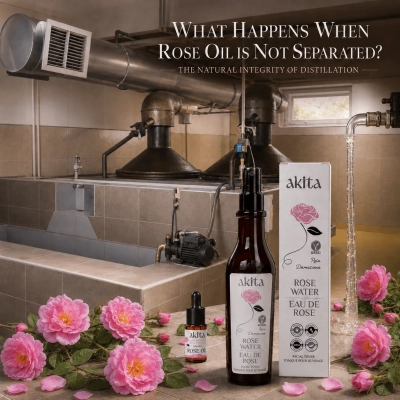
Discover how retaining the naturally occurring rose oil phase can influence the composition, appearance, aroma and character of rose distillate
When freshly harvested Isparta roses enter a distillation vessel, they produce much more than pleasantly scented water.
As heat and steam move through the rose petals, different aromatic compounds are carried away from the flowers. Once the aromatic steam is cooled, it condenses back into a liquid containing two distinct but related fractions:
An aromatic, water-based rose distillate
A small amount of water-insoluble rose essential oil
In conventional rose oil production, the visible essential oil phase is separated and collected. The remaining aromatic water is generally known as rose water or rose hydrosol.
But what happens when the naturally occurring rose oil is not separated?
The simple answer is that the oil phase produced during distillation remains within the collected distillate. This does not mean that all of the essential oil dissolves in the water. Some of it may remain dispersed as extremely small droplets, while certain water-compatible aromatic compounds stay dissolved in the water phase.
This distinction lies...
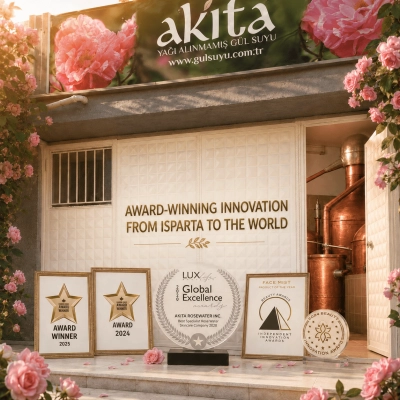
From Isparta to Canada: The Rose Water Innovation Earning International Recognition
By pioneering Non-Deoiled Rose Water, a 100% natural Rosa damascena distillate produced without separating its naturally occurring rose oil, Akita is helping redefine the value, performance, and potential of rose water in modern skincare.
A company’s awards are more than decorative symbols. Each distinction highlights a different dimension of achievement: consumer trust, product performance, clean formulation, specialized expertise, business leadership, or innovation.
Born from the celebrated Rosa damascena roses of Isparta and strengthened through years of research and product development, Akita has brought traditional rose knowledge together with modern skincare, advanced production methods, and Canadian entrepreneurship.
At the heart of this award-winning journey is one defining innovation: Akita Non-Deoiled Rose Water.
A Pioneering Approach to Rose Water
Traditional rose water is often associated with the production of rose essential oil. During conventional processing, the valuable rose oil is typically separated as the primary product, while the remaining aromatic water is collected as...
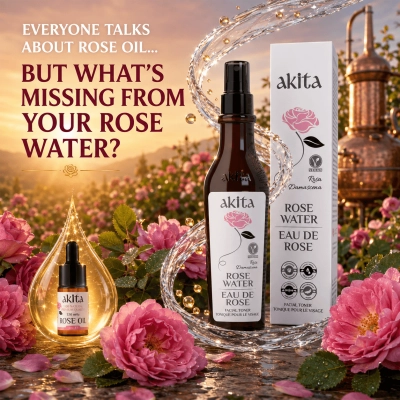
For Years, We Focused on Rose Oil, But What Did We Lose in the Rose Water?
Akita takes a different approach to rose distillation: instead of adding rose oil back later, it preserves the aromatic oil naturally present in the Rosa damascena distillate.
When Rosa damascena flowers enter a distillation vessel, attention usually turns to one highly valued result:
Rose essential oil.
Its rarity, intensive production process, and value in fine fragrance and skincare have made it the most celebrated part of rose distillation.
Yet rose oil is not the only valuable result.
Alongside a small quantity of essential oil, distillation produces a much larger volume of aromatic rose distillate. This water phase carries naturally occurring aromatic constituents transferred from the flowers during distillation.
That raises an important question:
When rose oil is separated from the distillate, what remains—and what may be removed from the rose water’s original aromatic composition?
Akita’s Non-De-Oiled Rose Water was developed around this question.
Rose Distillation Produces More Than Essential Oil
Steam distillation does not simply extract one substance from a flower.
As heat and...
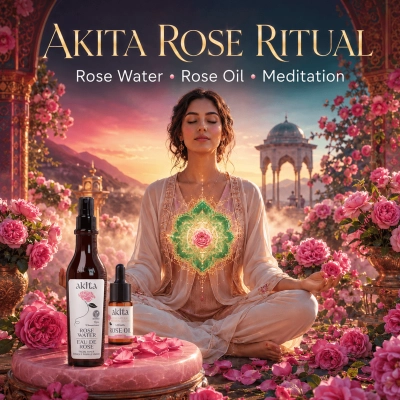
The Akita Rose Experience: Self-Observation Through Rose Water and Rose Oil Before Your Ritual
At Akita, we invite you to a ritual experience that brings together the ancient traditions of the rose with modern mindfulness practices.
This is not a medical claim. The purpose is to observe and document your personal experience through the combination of scent, breath, attention, and intention.
Some users report feeling calmer, more open, more balanced, and more at ease after rose-based rituals. These experiences vary from person to person and are entirely subjective.
Why Is the Rose Associated with Meditation and Emotional Awareness?
The olfactory system is directly connected to the brain’s limbic system, which plays a key role in emotion, memory, and internal state processing.
Because of this, rose scent may:
Trigger emotional memories
Support transition into meditation
Increase breath awareness
Encourage mental calmness
Support a sense of physical relaxation
Scientific studies suggest that aromatherapy with Rosa damascena (Damask rose) may be associated with stress perception and sleep quality improvements in some individuals. However, these eff...
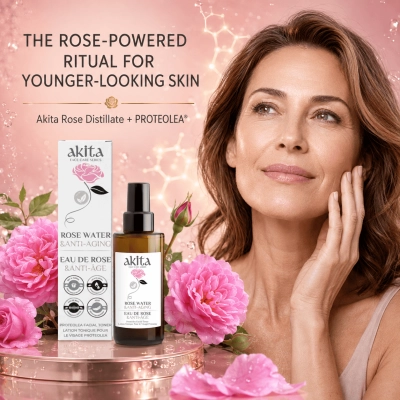
The Rose-Powered Ritual for Younger-Looking Skin: Akita Rose Water & Anti-Aging
A multi-action skincare formula combining non-de-oiled Isparta rose distillate with plant-based PROTEOLEA® to care for the appearance of fine lines, dryness, dullness and uneven texture
Does your skin look dry, tired or dull by the end of the day?
Are fine lines becoming more noticeable around your eyes, face or neck?
Perhaps you want more than a basic toner—something that combines the treasured tradition of Rosa damascena with a modern, science-informed approach to visible skin aging.
Akita Rose Water & Anti-Aging brings together two complementary skincare components:
Akita Non-De-oiled Rose Distillate, produced from Rosa damascena flowers grown in Isparta, Türkiye
PROTEOLEA®, a plant-based cosmetic active developed for multi-action anti-aging care
The result is a lightweight facial toner and mist designed to help skin look more hydrated, smooth, refreshed and youthful.
🌹 What makes this formula different?
Instead of using ordinary water as its primary skincare base, the formula is built around Akita Non-De-oiled Rose Distillate and enhanced with PROTEOLEA®.
More Than an...
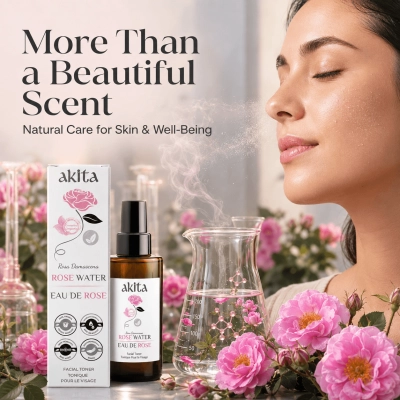
The Benefits of Rose Water for Skin and Emotional Well-Being: More Than Its Scent
Rose water is not only for those who love the scent of roses. It is for people who love their skin, care for it, and seek a natural product they can use confidently over time.
When we think of rose water, its fragrance may be the first thing that comes to mind. Yet the skincare value of a genuine, natural rose distillate extends far beyond how long its scent lasts.
Rose water may be described as a skin hydrosol, hydrolat, facial spray, face mist, or natural skincare water. Whatever term you prefer, what truly matters is why you use it.
You can choose Akita Non-De-Oiled Rose Water not simply because you enjoy its natural rose aroma, but because it is a simple, natural, and versatile product that can become part of your daily skincare routine.
A beautiful aroma may fade within minutes, but the care you give your skin, the consistency of your routine, and the refreshing sensation the product leaves on your skin can continue.
🌹 The Central Idea of This Article
Rose water is not only for those who enjoy the scent of roses. It is for people who value natural products, understand their authentic ch...