Is Rose Fragrance Found Only in the Petals?
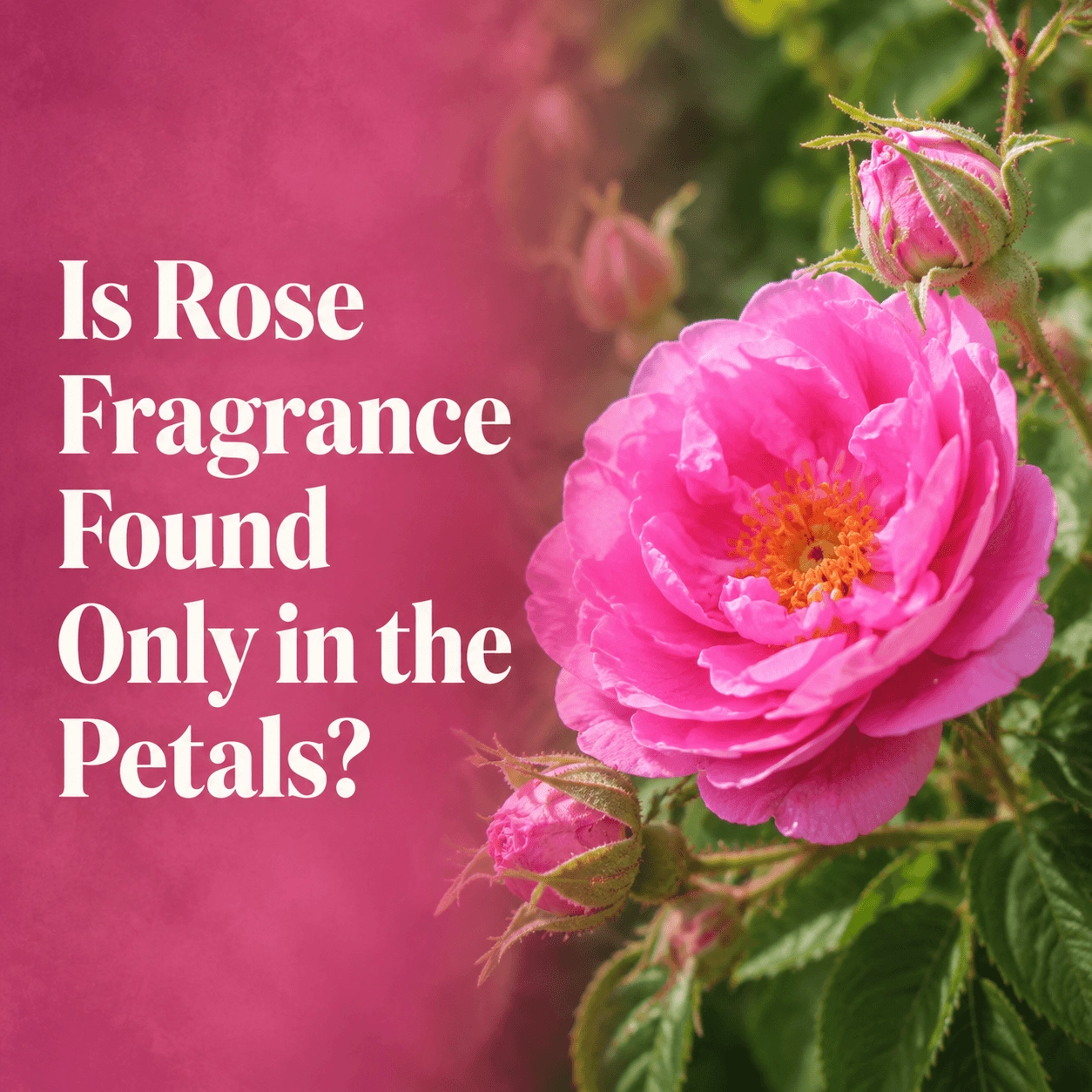
Is a Rose’s Fragrance Found Only in Its Petals? Discover the Hidden Beauty of the Whole Isparta Rose
A Rosa damascena flower is more than a collection of pink petals. Its fragrance, texture and botanical character come from a complete floral structure—petals, pollen-bearing stamens, sepals and other delicate parts working together.
When you hold an Isparta rose in your hand, the first thing you notice is its many layers of soft pink petals. It is therefore easy to associate the rose’s fragrance—and dried rose products—with the petals alone.
But Rosa damascena is not made of petals alone.
At the centre of the flower are its stamens, pistils and pollen. Beneath the petals are the sepals and receptacle that support the flower. Together, these structures form the complete botanical identity of the rose.
There is a simple and surprisingly revealing way to experience this:
Take a whole dried Isparta rose, grind it just before use and smell it immediately.
The aroma that emerges may feel deeper, warmer and more botanical than the familiar impression of sweet rose petals alone. It is not simply “a stronger rose scent.” It is a more layered encounter with the whole flower.
A Different Way to Experience Rose: The Whole-Flower Approach
Most recipes made with dried roses call for separated petals. Petals are beautiful, easy to handle and strongly associated with the classic scent and appearance of a rose.
Yet the other parts of the flower are not necessarily scentless.
Scientific research shows that petals play the principal role in producing and releasing many floral volatile compounds. Studies have also found that pollen can release its own volatile compounds, which may differ from those emitted by petals.
This means that the fragrance we perceive from a complete flower is not necessarily created by one molecule or one floral structure alone. Different parts of the flower may contribute different aromatic nuances to the overall sensory experience.
Research comparing the volatile profiles of rose petals and pollen supports this more complex understanding of floral scent. The compounds released by these structures are not identical, suggesting that each may contribute differently to the way a flower is perceived. (Research published in Horticulturae)
Studies of petal epidermal cells also demonstrate the central importance of the petal surface in producing and releasing floral volatile compounds. However, saying that “all rose fragrance is found only in the petals” would still be too absolute. (Scientific review of volatile production in petal cells)
What Happens When You Grind a Whole Dried Rose?
Grinding increases the flower’s exposed surface area and breaks several types of dried floral tissue at the same time. Aromatic compounds retained within those tissues can therefore be released more quickly.
A whole dried rose may initially have a delicate scent. Immediately after grinding, however, its aroma can become noticeably more vivid.
This simple sensory experiment may reveal three things:
Rose fragrance is not limited to one sweet or “pink” aromatic note.
The pollen-bearing centre and other floral tissues may contribute warmer, greener or more botanical nuances.
The aroma of the whole flower may be perceived as more complex than the aroma of separated petals.
This does not prove that a whole flower contains more essential oil than petals alone. Establishing that would require laboratory analysis comparing the individual parts of flowers collected from the same harvest.
The more accurate conclusion is sensory: a whole dried flower may offer a different and more layered aromatic experience than separated petals alone.
Where Is Rose Oil Found in the Flower?
Many of the volatile compounds associated with rose fragrance—including citronellol, geraniol and nerol—are produced predominantly in petal tissues. The epidermis, or outer cellular layer of the petals, plays an especially important role in producing and releasing these aromatic compounds.
However, the fragrance of a flower cannot be explained solely by the quantity of essential oil it contains. Volatile compounds released by pollen and other floral tissues may also contribute to the total aroma perceived by the human nose.
The most scientifically responsible way to describe it is:
The petals are the primary source of the characteristic fragrance of Rosa damascena, but the sensory profile of the whole flower may be more complex than that of the petals alone.
The method used to process a rose also determines which of its natural components are preserved in the final product. Distillation collects volatile and water-compatible compounds, while drying preserves the solid botanical structure of the flower.
To learn more about the different products obtained from roses, visit the Akita Rose Academy guide to rose-derived products.
Are Whole Dried Roses and Rose Powder the Same?
Both products can be obtained from Rosa damascena, but they offer different experiences and practical advantages.
| Product | Form | Best suited for |
|---|---|---|
| Whole natural dried rose | The flower’s shape and different structures remain visible | Fresh grinding, infusions, decorative presentation and sensory exploration |
| Natural rose powder | Finely ground dried rose | Convenient addition to recipes, masks and personal-care preparations |
A whole dried rose allows you to see the flower before using it. You can observe its petals, centre and sepals, smell it in its complete form and grind it only when needed.
Rose powder offers convenience. It is ready to measure and easy to incorporate into different preparations without requiring an additional grinding step.
Neither form is automatically “better.” The right choice depends on whether you value the experience of the whole flower or the practicality of a ready-to-use powder.
Try the Whole-Rose Aroma Experiment at Home
You need only one natural dried rose:
Smell the rose before grinding it.
Examine its colour, centre, stamens and sepals.
Place the entire flower in a clean grinder.
Grind it briefly.
Open the grinder and smell the rose immediately.
Compare the aroma before and after grinding.
Grinding the flower shortly before use may help its aroma feel fresher and more vivid. Once ground and exposed to air, volatile aromatic compounds gradually disperse.
This is why a whole dried rose offers something particularly valuable: the opportunity to release and experience its aroma at the moment you choose.
How Can Whole Rose Be Used in the Kitchen?
When clearly identified as food-grade and produced under appropriate growing, processing and storage conditions, dried Rosa damascena may bring an elegant floral character to drinks and recipes.
Finely ground rose can be explored in:
Cookies, cakes and pastries
Milk or plant-based drinks
Yogurt and granola
Chocolate and Turkish delight
Herbal tea blends
Traditional rose sherbets
Special-occasion desserts
Rose has a distinctive aroma, so it is best to begin with a very small quantity and adjust gradually according to taste.
Most importantly, the product must be explicitly suitable for food use. Decorative flowers and cosmetic-grade botanicals should not automatically be assumed to be edible.
Why Shouldn’t Every Dried Rose Be Consumed?
Roses purchased from florists, collected from roadsides or dried solely for decoration should not be used in food or drinks.
They may have been exposed to agricultural chemicals, preservatives, artificial colouring, added fragrance or other treatments that are not appropriate for consumption.
Before choosing a dried rose, ask:
Is the botanical species clearly identified?
Is its growing origin known?
Does the ingredient list contain only rose flower?
Is the intended use clearly stated?
Was it grown, dried and packaged under controlled conditions?
Is it explicitly identified as suitable for food use if you intend to consume it?
“Natural-looking” is not the same as traceable or suitable for consumption. The origin and intended use of the product matter.
Meet the Isparta Rose in Its Natural Form
Akita Natural Dried Rose Flower is prepared from Rosa damascena flowers grown in Isparta, Türkiye—a region internationally associated with the cultivation of fragrant Damask roses.
Instead of presenting only separated petals, the product allows you to encounter the flower in its more complete botanical form.
You can observe its natural structure, smell it whole and grind it immediately before use to discover how its aromatic character changes.
For those who prefer convenience, Akita Natural Rose Powder offers the same rose in a finely ground, easy-to-use form.
The difference is not simply visual. It is a choice between two experiences:
Whole dried rose: for discovery, fresh grinding and connection with the flower
Rose powder: for speed, consistency and convenient use
More Than Pink Petals
It is easy to notice the beauty of a rose’s petals. The more interesting discovery begins when we also recognise its pollen-bearing centre, sepals and complete botanical structure.
Perhaps the best way to understand an Isparta rose is not simply to look at it, but to experience it as a whole.
Hold a dried Akita rose in your hand. Smell it before grinding. Then grind the complete flower in a clean grinder and smell it once more.
The difference may explain the meaning of “whole rose” more clearly than words ever could.
Discover the Whole Isparta Rose
Experience Rosa damascena in the form that best suits the way you want to use it:
One remarkable flower. Two ways to experience its natural character.
Comment