Etiket: #Skincare
Rethink Your Expectations of Rose Water
Not all rose waters begin with the same intention. Discover what separates conventional rose hydrosols from Akita’s Non-De-Oiled Rosa damascena Distillate, and why production methods, ingredient transparency, and scientific testing matter.
What should you expect from a bottle of rose water?
A beautiful floral fragrance? A refreshing facial mist? A natural product made from rose petals?
Perhaps all three.
But here is a question most of us rarely ask:
What happened to the rose before its distillate reached the bottle?
Two products may both carry the words rose water. They may look equally clear, contain naturally occurring aromatic compounds, and come from the same botanical species.
Yet their production histories can be different.
One may be an aromatic water collected after rose essential oil has been separated. Another may be produced specifically to retain the naturally occurring oil fraction alongside the water-based distillate.
Both can be genuine rose-derived cosmetic ingredients.
The important question is not simply which bottle sounds more natural.
It is what the manufacturer intended to produce, how the botanical material...
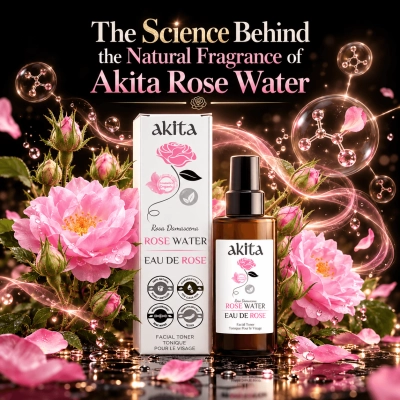
The Science Behind the Natural Fragrance of Akita Rose Water
Why does a natural Rosa damascena distillate smell different from a rose perfume? Discover the aromatic molecules, GC-MS findings, and science behind Akita's distinctive botanical fragrance.
A laboratory instrument cannot smell a rose.
But it can help us understand what makes a rose smell the way it does.
When we experience the fragrance of Rosa damascena, we are not detecting a single substance. Our sense of smell responds to a mixture of volatile molecules, each with its own chemical characteristics and potential contribution to the overall aroma.
Some create familiar floral impressions. Others may introduce fresh, green, or subtly sharp nuances.
This is especially interesting when we examine rose water.
Many people imagine that authentic rose water should smell exactly like a freshly opened rose or a sweet floral perfume.
Yet the chemistry of a botanical distillate tells a more complex story.
At Akita, we have explored this question through laboratory analysis of our Non-De-Oiled Rose Water.
What exactly creates its natural fragrance, and what can science tell us about the scent we experience?
🌹 THE E...
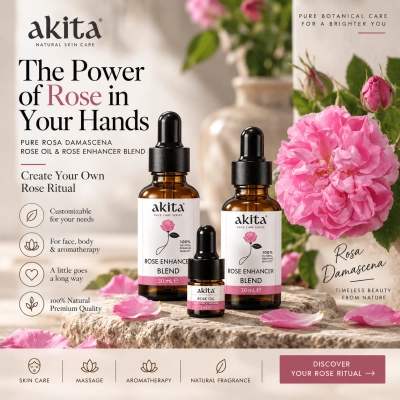
How to Use Pure Rose Oil: A Practical Guide to Skincare, Aromatherapy, Meditation & Proper Dilution
How many drops are in 1 mL of pure rose oil? How much should you add to 30 mL of carrier oil? Should you use the same dilution for your face, aromatherapy, meditation and massage? And what does science actually say about scent, memory and cognitive health?
Pure rose oil is one of those products that can be easily misunderstood.
You see a tiny 1 mL bottle and naturally wonder:
“How much can I really do with this?”
The better question is:
“How many properly diluted blends can I create from 1 mL of highly concentrated rose oil?”
Akita 1 mL Pure Rose Oil contains approximately 20 drops. Produced from Rosa Damascena through a long and carefully controlled distillation process, it is a highly concentrated aromatic oil intended to be used thoughtfully, drop by drop.
Combined with Akita Rose Enhancer Blend, those approximately 20 drops can become part of several different routines—from everyday facial care to massage, personal aroma, meditation and mindfulness.
The key is not using more rose oil.
It is using the right amount for the right purpose....
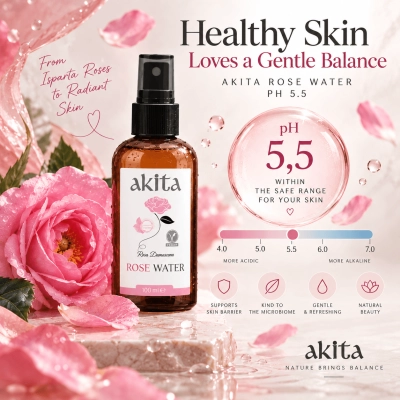
Why Does Your Skin’s pH Matter? Is 5.5 Really the Magic Number?
Your skin naturally has a slightly acidic surface. But what does that mean for your skin barrier, microbiome, and the products you use every day? Science shows that skin pH is much more interesting than a single number.
You may have seen the words “pH-balanced” on a facial cleanser, toner, or moisturizer. You may also have heard that the ideal pH for skin is 5.5.
But why 5.5?
And is everyone’s skin really pH 5.5 all the time?
The answer is more interesting than you might expect.
Your skin has a naturally slightly acidic environment at its surface. Scientists have studied this environment for decades because skin pH is closely connected with the skin barrier, the microorganisms that live on our skin, and some of the biological processes that help the skin function normally.
First, What Is pH?
pH is a way of describing how acidic or alkaline something is.
The scale generally runs from 0 to 14:
7 is neutral
Below 7 is acidic
Above 7 is alkaline
Pure water is close to neutral.
Healthy skin, however, is generally not neutral.
Its surface is naturally slightly acidic.
And that is where things become...
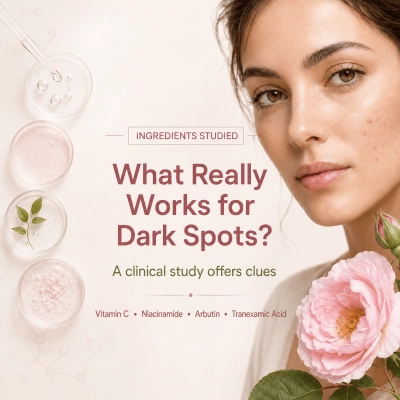
A clinical study compared a hydroquinone-free formula containing tranexamic acid, niacinamide, vitamin C and arbutin with 4% hydroquinone. What did the researchers discover?
Sun spots, acne marks and melasma can appear easily, but improving their appearance often takes time. This is because a dark spot is not simply a mark sitting on the surface of the skin. It develops when the skin produces more pigment in one area than it normally would.
Hydroquinone is one of the best-known ingredients used to treat hyperpigmentation. Although it can be effective, it may also cause redness, dryness, burning or irritation in some people.
Could a formula without hydroquinone provide similar results with less irritation?
A small clinical study published in 2020 compared 4% hydroquinone with a hydroquinone-free formula containing tranexamic acid, niacinamide, vitamin C, arbutin, epidermal growth factor and other ingredients.
The results were encouraging. After one month, the hydroquinone-free formula was rated more favourably for the overall appearance of hyperpigmentation and was better tolerated by the participants.
However, this does not mean hydroquinone is no longer useful or that every...
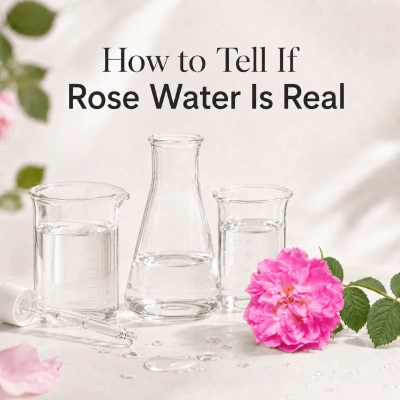
A practical guide to ingredients, production methods, quality testing and label transparency
Walk into a beauty store, natural health shop or online marketplace in Canada and you will find dozens of products labelled “rose water.” Their packaging may feature claims such as “natural,” “pure,” “organic,” “100% rose water” or “free from additives.”
At first glance, these products may appear almost identical. In reality, they can differ considerably in their ingredients, botanical source, production method and quality standards.
A bottle of genuine rose water may represent thousands of freshly harvested roses, careful distillation and generations of production knowledge. Another product with a similar name may simply be water combined with rose fragrance and other cosmetic ingredients.
This is why knowing how to identify genuine rose water matters.
The answer cannot be determined by scent, colour or price alone. A reliable assessment requires looking at the ingredient list, botanical species, production method, safety testing and the amount of verifiable information provided by the manufacturer.
Not Every Product Called “Rose Water” Is the Same
Rose water is often viewed as litt...
“Natural” on the front label is not enough, learn how to read the ingredients, understand the production method and recognize a genuine rose distillateRose water looks like a simple product, but choosing an authentic one can be surprisingly difficult. Many bottles display words such as “natural,” “pure” or “made with roses,” even when the formula contains added water, fragrance, preservatives or other ingredients.So how can you tell whether rose water is truly pure?There is no single home test that can prove purity with complete certainty. Colour, scent and price can provide clues, but the most reliable assessment comes from examining several details together: The ingredient list The method of production Whether rose oil has been separated The product’s natural aroma and taste profile Its microbiological stability Laboratory analysis and traceability Understanding these factors is more useful than relying on the word “natural” alone.1. Begin With the Ingredient ListIn Canada, cosmetic products must display their ingredients using the International Nomenclature of Cosmetic Ingredients, commonly known as INCI. This gives consumers a more reliable place to begin than the marketin...
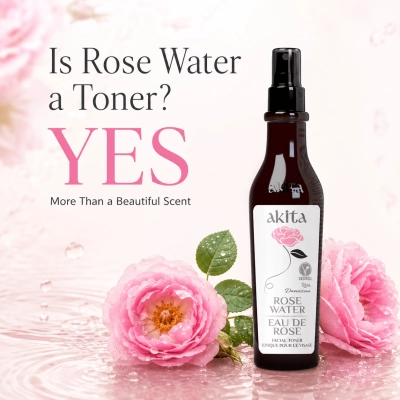
Yes, pure rose water can be used as a gentle facial toner, but its value goes far beyond its beautiful scent
Rose water is often recognized by its delicate floral aroma. Yet the fragrance is only one part of what makes genuine rose water special. When produced by distilling Rosa damascena flowers, rose water contains naturally occurring, water-soluble and aromatic compounds transferred from the petals during distillation.
This botanical composition is why high-quality rose water can serve as a simple, refreshing facial toner for daily skincare.
What Is a Facial Toner?
A facial toner is a lightweight, water-based product applied after cleansing and before serum or moisturizer. Depending on its formulation, a toner may help:
Refresh the skin after cleansing
Remove small traces of cleanser or surface residue
Prepare the skin for the next steps in a skincare routine
Provide light hydration
Leave the skin feeling softer and more comfortable
Traditional toners often contained high levels of alcohol and were designed to create a tight, dry sensation. Modern skincare has moved toward gentler formulas that focus on hydration and skin comfort rather than stripping awa...
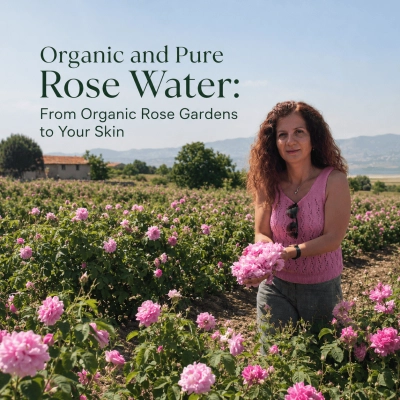
Organic and Pure Rose Water: From Akita’s Organic Rose Gardens to Your Skin
What makes rose water truly organic and pure?
“Organic rose water” and “pure rose water” are often used as if they mean the same thing. In fact, they describe two different qualities.
Organic refers mainly to how the roses are grown and how the agricultural process is managed.
Pure refers to what is inside the finished bottle.
A rose water may be produced from organically grown roses but still contain added fragrance, preservatives or other ingredients. Conversely, a product may contain only rose distillate without holding an organic certification.
This is why Canadian consumers should look beyond the words printed on the front of the bottle. The rose species, growing conditions, production method, ingredient list and supporting documents all matter.
Akita Non-De-Oiled Rose Water brings these elements together: Rosa damascena flowers grown in Akita’s organic rose gardens are distilled without separating the naturally occurring rose oil from the water. The finished product contains a single cosmetic ingredient:
INCI: Rosa Damascena Flower Distillate
What does “organic rose water” mean?
Or...
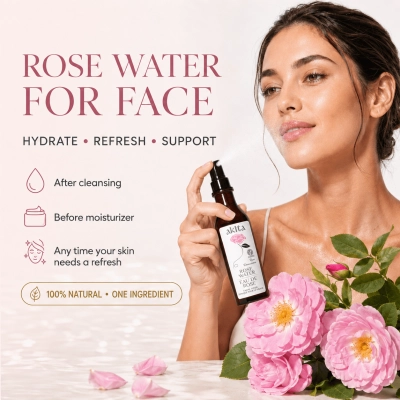
A simple, natural step that can refresh, hydrate and support your skin every day
Akita Non-De-Oiled Rose Water is more than a pleasant facial mist. It is made with one 100% natural ingredient: Rosa Damascena Flower Distillate. Independent skin analyses show that it can support hydration, smoother-looking skin, a more even-looking complexion and the skin’s natural renewal process. It has also been found safe to spray over the face while the eyes are open. Thanks to its naturally stable composition, Akita Rose Water has a long shelf life when stored correctly.
Rose water has been used in beauty routines for generations. Today, it offers an easy way to care for skin exposed to cold Canadian winters, dry indoor heating, summer sun and changing weather.
But not every product called “rose water” is made in the same way. Its ingredients, production method and intended use can make a meaningful difference. Here is what you should know before choosing rose water for your face.
What Does Rose Water Do for Your Face?
A good facial rose water can add a light, refreshing layer of moisture to your skincare routine. It can be used after cleansing, before moisturizer or whenever your skin fee...