Etiket: #De-Oiled Rose Water
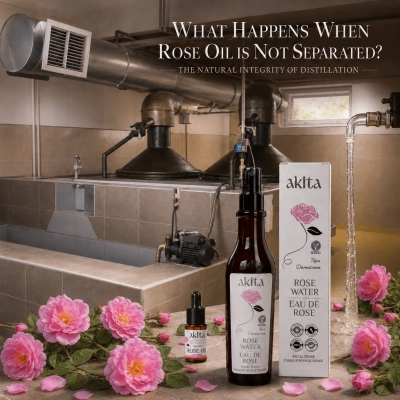
Discover how retaining the naturally occurring rose oil phase can influence the composition, appearance, aroma and character of rose distillate
When freshly harvested Isparta roses enter a distillation vessel, they produce much more than pleasantly scented water.
As heat and steam move through the rose petals, different aromatic compounds are carried away from the flowers. Once the aromatic steam is cooled, it condenses back into a liquid containing two distinct but related fractions:
An aromatic, water-based rose distillate
A small amount of water-insoluble rose essential oil
In conventional rose oil production, the visible essential oil phase is separated and collected. The remaining aromatic water is generally known as rose water or rose hydrosol.
But what happens when the naturally occurring rose oil is not separated?
The simple answer is that the oil phase produced during distillation remains within the collected distillate. This does not mean that all of the essential oil dissolves in the water. Some of it may remain dispersed as extremely small droplets, while certain water-compatible aromatic compounds stay dissolved in the water phase.
This distinction lies...
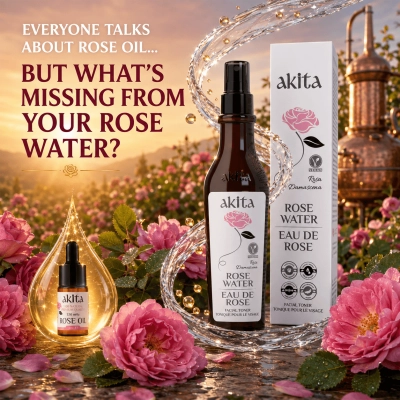
For Years, We Focused on Rose Oil, But What Did We Lose in the Rose Water?
Akita takes a different approach to rose distillation: instead of adding rose oil back later, it preserves the aromatic oil naturally present in the Rosa damascena distillate.
When Rosa damascena flowers enter a distillation vessel, attention usually turns to one highly valued result:
Rose essential oil.
Its rarity, intensive production process, and value in fine fragrance and skincare have made it the most celebrated part of rose distillation.
Yet rose oil is not the only valuable result.
Alongside a small quantity of essential oil, distillation produces a much larger volume of aromatic rose distillate. This water phase carries naturally occurring aromatic constituents transferred from the flowers during distillation.
That raises an important question:
When rose oil is separated from the distillate, what remains—and what may be removed from the rose water’s original aromatic composition?
Akita’s Non-De-Oiled Rose Water was developed around this question.
Rose Distillation Produces More Than Essential Oil
Steam distillation does not simply extract one substance from a flower.
As heat and...
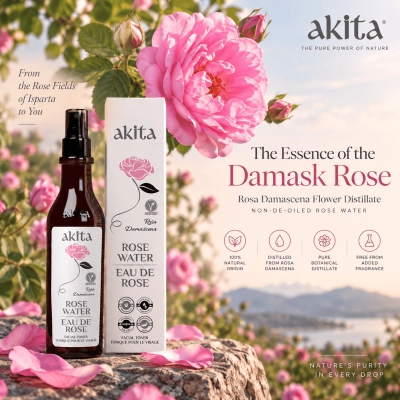
What Is Rosa Damascena Flower Distillate?
The Scientific Identity Behind Akita Non-De-Oiled Rose Water
Rose water may sound like one of the simplest botanical ingredients: roses and water. Yet the story inside a bottle can be much more complex.
The rose species, where and when the flowers are harvested, the distillation process, and what happens to the aromatic fractions during production can all influence the final distillate.
Akita’s Non-De-Oiled Rose Water, produced from Rosa damascena flowers, has been made using a distinctive approach since 2003. Rather than producing rose water as a secondary water fraction after separating the essential oil, Akita’s process is designed to retain the distillate without separating the volatile oil fraction.
The INCI name associated with this ingredient is:
Rosa Damascena Flower Distillate
INCI Application No.: 2025-14613
But what exactly does “Flower Distillate” mean? And why is the distinction between conventional rose water and a non-de-oiled rose distillate important?
To understand the difference, we need to look beyond the familiar name “rose water” and into the science of distillation.
First, What Does INCI Mean?
INCI s...
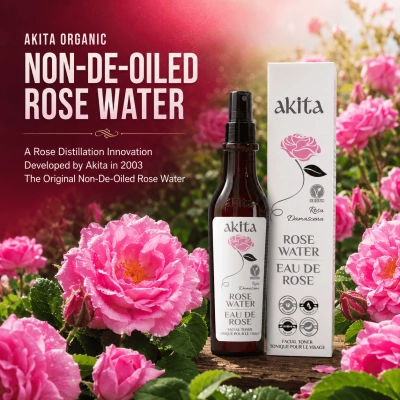
Akita Organic Non De-oiled Rose Water: A Premium Skincare Elixir Born from Nature
Akita Organic Non De-oiled Rose Water is a premium skincare product made from freshly harvested, organic Rosa Damascena, Turkey’s most precious floral treasure, grown in the heart of Isparta. Crafted with a unique, award-winning technique developed by Akita, this rose water offers unmatched purity and quality.
In the fertile lands of the Lakes Region, Rosa Damascena blooms amidst thousands of botanicals known for their therapeutic richness. These roses embody the healing essence of the soil, the sun, the stars, and the rain. Akita uses pristine water sourced from the stunning Lake Eğirdir and the mountains that nurture its rich ecosystem to create this exceptional product.
Akita has developed a specialized method that precisely calculates the optimal amount, temperature, pressure, and distillation duration, ensuring that the beneficial components of the rose are fully retained within the water.
Why Akita Rose Water is Unique:
It contains one of the richest blends of essential microelements.
It delivers a highly concentrated composition of hydrophilic aromatic co...
🌿 Clear, Radiant Skin Starts with Smarter Ingredients
In the world of cosmetic dermatology, the desire for bright, even-toned, and healthy skin has led to exciting innovations in hyperpigmentation care. At the center of this movement is a powerful, plant-derived compound: alpha-arbutin.
🔬 What Is Arbutin and How Does It Help?
Arbutin is a natural polyphenol extracted from certain plants. Its most potent form, alpha-arbutin, works by inhibiting tyrosinase—the enzyme responsible for producing melanin, the pigment that darkens the skin.
By reducing melanin production, arbutin helps:
Fade dark spots
Brighten the overall complexion
Create a more even, luminous skin tone
🌸 Targeted Treatment: Akita Anti-Pigmentation Face Serum
Akita’s Anti-Pigmentation Face Serum is specially formulated with alpha-arbutin to address pigmentation concerns directly. Its clear mission:
✅ Visibly reduce dark spots
✅ Illuminate and refresh dull skin
✅ Promote a smooth, even-toned complexion
But the magic doesn’t stop there.
💧 Synergy with Non-Deoiled Rose Water
What s...